UN experts have warned States against normalising Taliban rule in Afghanistan, saying five years of increasingly entrenched restrictions have demonstrated the need for greater international accountability rather than accommodation of the de facto authorities.
In a statement issued in Geneva on 13 August 2026, the experts said the Taliban had continued to impose sweeping restrictions on the population, particularly women and girls, while international efforts to engage with the authorities had expanded. They urged States to accelerate steps towards accountability and to make any engagement conditional on demonstrated and measurable progress on human rights.
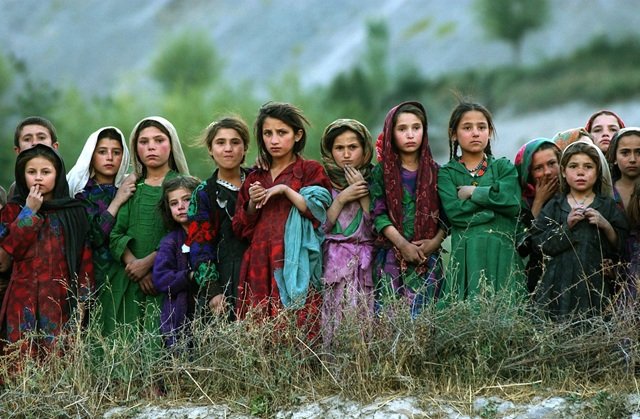
“Five years may be a short period in the life of a country, but it is a long one in a child’s life,” the experts said. A generation of girls has now been denied secondary education, while a girl who was in grade six when the ban began is reaching adulthood without another day in school.
The experts said the Taliban had further entrenched an institutionalised system of gender-based repression over the past year. They reiterated that the intentional and targeted deprivation of fundamental rights on gender grounds amounts to the crime against humanity of persecution on gender grounds and said the system could also be characterised as gender apartheid. They called on States to support the codification of gender apartheid as a distinct crime against humanity.
The restrictions extend beyond education. Women and girls remain excluded from many forms of employment, movement without a male guardian, healthcare, justice, sport, cultural life, public spaces and public affairs. Specialised institutions and frameworks providing protection and support for women and children have also been dismantled, while institutions that previously recorded and prosecuted violence against women have been abolished or weakened.
The experts pointed to new decrees and enforcement measures as further evidence of the tightening system. A decree on criminal rules of courts allows violence against women unless it “breaks bones” or “leaves obvious bruises”, while a decree concerning separation of spouses implicitly allows child marriage and makes it difficult for women and girls to escape abusive and forced marriages. The measures also discriminate against religious minorities.
Enforcement has intensified, including through corporal punishment. In 2025 alone, the de facto Supreme Court announced the flogging of at least 1,110 people, including at least 170 women, which the experts said was more public flogging than during all previous years of Taliban rule combined. At least 12 men have been publicly executed since August 2021.
Women have also been denied healthcare because of their attire or because they lacked a male guardian. In June 2026, at least 30 women and girls were jailed in Herat for allegedly violating the Taliban’s dress code. When residents protested, security forces opened fire, killing at least two people, including a boy.
The experts said repression also affects religious minorities, LGBT+ persons, people with disabilities, journalists, educators, judges, lawyers, human rights defenders and former officials. Civic space remains severely restricted, while women human rights defenders face arbitrary detention, harassment, home raids and torture and ill-treatment in detention.
The worsening rights situation has coincided with a deepening humanitarian crisis. More than 17 million Afghans — over a third of the population — faced acute food insecurity during the past winter, while nearly 4 million children were acutely malnourished. The crisis has been aggravated by drought, a contracting economy, declining humanitarian funding and the mass return of more than 2.5 million people from neighbouring countries.
The experts also raised concerns over cross-border hostilities with Pakistan. Since October 2025, such hostilities have killed 499 civilians and injured more than 1,200 people in Afghanistan. They said 269 patients were killed in an airstrike by Pakistan on the Omid Drug Rehabilitation Centre in Kabul on 16 March 2026, and called for alleged violations of international humanitarian law to be impartially investigated.
They further warned that Afghanistan is not a safe country for forced returns, particularly for groups facing heightened protection risks, including LGBT persons, those perceived to be affiliated with the former Islamic Republic and human rights defenders.
The experts called for full support for the International Criminal Court and for the Independent Investigative Mechanism for Afghanistan, established by the Human Rights Council in October 2025. They said the mechanism must be properly and swiftly resourced, with dedicated gender expertise and meaningful participation by Afghan civil society, especially women.
“There should be no moves to normalise the Taliban de facto authorities,” the experts said, unless there is demonstrated, measurable and independently verified progress against human rights benchmarks, particularly for women and girls. “For five years, Afghans’ human rights have been systematically violated, yet many continue to strive bravely and against the odds to restore them. The international community must not let them down again.”