Pakistan is experiencing one of its deadliest periods for terrorism in more than a decade, with violence in 2026 increasing in both frequency and lethality. July alone recorded more than 600 deaths, while attacks have continued into August despite sustained military operations against militant organisations. The scale of the violence has placed Pakistan at the centre of a wider regional security crisis, as militant groups exploit weakly controlled borders and instability generated by conflicts both inside and beyond the country’s immediate neighbourhood.
Pakistan ranked first in the Institute for Economics and Peace’s 2026 Global Terrorism Index, which described it as “the country most impacted by terrorism”. According to the Pakistan Institute for Conflict and Security Studies, July recorded the highest monthly death toll for Pakistani security forces since 2023 and the highest number of militant deaths in more than a decade. Pakistani military spokesman Lt. General Ahmad Sharif Chaudhry said Pakistan had recorded 3,145 “terrorism incidents” since the beginning of 2026.
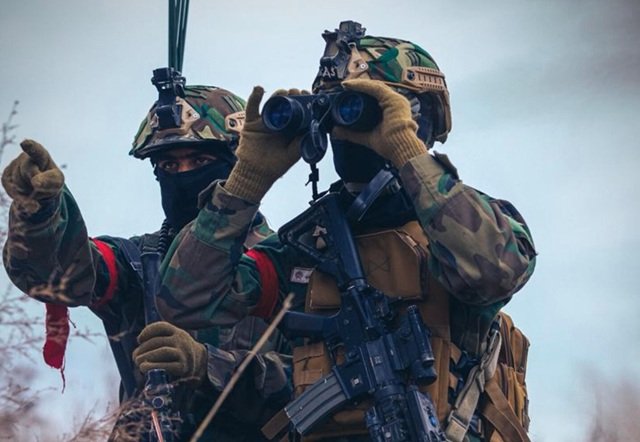
The attacks have included suicide bombings, kamikaze drones and small-arms ambushes, often targeting police stations, checkpoints and military convoys travelling along highways. Pakistan has responded with a continuous counter-terrorism campaign. On July 31, Lt. General Chaudhry said Pakistani forces had killed 2,084 militants since January, while 819 Pakistani security personnel and civilians had been killed. He said it was the first time since 2023 that the number of security personnel killed had exceeded the number of militants killed.
Yet the military losses inflicted on militant organisations have not stopped the attacks. Early August brought several high-casualty suicide bombings, reinforcing the central difficulty facing Pakistan: tactical successes against individual groups have not removed their ability to regenerate and launch further attacks.
The Tehrik-e-Taliban Pakistan, or TTP, is at the heart of the resurgence. Ranked the third-deadliest terrorist organisation in the world by the 2026 Global Terrorism Index, the TTP was formed in 2007 by several militant groups in what is now Khyber Pakhtunkhwa in north-west Pakistan. Its principal objective is the overthrow of Pakistan’s current government and the establishment of an Islamic emirate.
The organisation was particularly deadly during the early 2010s, causing more than 3,000 civilian deaths in 2012 and 2013. Pakistani counter-terrorism campaigns from 2014 onwards reduced both the frequency of attacks and the death toll, pushing the TTP into relative decline. That trajectory changed after the Afghan Taliban seized power in August 2021.
The Taliban freed hundreds of imprisoned TTP fighters and leaders and provided them with a safe haven in Afghanistan. The collapse of Afghan security forces also left large quantities of U.S.-made weapons available, giving TTP fighters access to additional military resources. Together, these developments contributed to a resurgence in the scale and lethality of TTP attacks.
The organisation has also demonstrated an increasing willingness to incorporate new methods. On July 30, the TTP claimed responsibility for an assault on a police checkpoint in Hangu district that began with explosive-laden quadcopter drones before developing into a small-arms attack. Eleven police officers and 15 TTP militants were killed. The use of drones, which the TTP has employed in attacks dating back to 2025, reflects a broader trend among terrorist organisations seeking to incorporate unmanned systems into their arsenals.
On August 2, the TTP carried out another deadly attack, with a suicide bomber killing seven police officers and nine civilians at an anti-militant protest in Swat district.
The TTP’s operations extend beyond Khyber Pakhtunkhwa. In Balochistan, Pakistan’s south-western province bordering Afghanistan and Iran, militants attacked a guard post at the Mangi Dam project in Ziarat district on July 6. Nine police officers and 15 militants were killed, while 18 police officers were kidnapped. Two days later, after the militants were surrounded by security forces, the hostages were executed and the militants were subsequently neutralised.
The attacks illustrate the vulnerabilities of Pakistan’s less developed and geographically isolated western provinces, where militant groups can place pressure on state security forces and exploit limited state capacity.
Balochistan faces another major militant threat from the Balochistan Liberation Army, or BLA. While the TTP seeks to overthrow Pakistan’s government, the BLA is an ethnonationalist secessionist organisation seeking independence for Balochistan. The province represents 44 percent of Pakistan’s landmass but only about six percent of its population. The historical region of Balochistan also extends into Iran and Afghanistan.
The BLA has targeted military and government personnel as well as private-sector workers and convoys travelling between cities and resource-extraction sites such as mines and oil wells. Its attacks are intended to deter foreign investment in Balochistan’s mineral and fossil-fuel deposits, which the organisation portrays as exploitation of the Baloch population’s share of its natural resources.
On August 2, a BLA suicide bomber attacked a state-backed militia compound in Khuzdar, killing approximately 20 people. An earlier July 7 ambush of a military convoy killed 11 soldiers and around two dozen militants. The consequences extend beyond immediate casualties, affecting transport and investment. Truck drivers have staged strikes over inadequate highway security, while the State Bank of Pakistan recorded an almost 34 percent decline in foreign direct investment from 2025 levels in mid-July.
The Pakistani military has responded with Operation Shaban, a series of search-and-destroy missions primarily conducted in Balochistan against both the TTP and BLA. More than 130 militants have reportedly been killed, while weapons and explosives discovered in cleared hideouts have been destroyed. Intelligence operations in Khyber Pakhtunkhwa have also been conducted with similar successes reported by the military.
But the underlying geography presents a formidable challenge. Pakistan’s borders with Afghanistan and Iran are long, porous and difficult to control. Cross-border sanctuaries allow militant organisations to retreat, regroup and rearm after Pakistani security forces disrupt their operations.
Regional conflict has further complicated the situation. The Israel-U.S.-Iran conflict and the 2026 Pakistan-Afghanistan war have weakened the ability of states to secure their borders while creating opportunities for militants to move between countries. Smuggling of illicit or discounted resources, including fuel, can provide additional means of financing militant activity.
The deterioration in relations with Afghanistan has become particularly significant. Pakistan has accused the Taliban government of harbouring the TTP and “providing the manpower for it”. Kabul has denied the allegations, while the United Nations Security Council has reported evidence pointing in the opposite direction.
The dispute has contributed to what Asif described as an “open war”. Afghan cross-border drone strikes have been followed by Pakistani airstrikes on Afghan cities. The United Nations has reported that approximately 500 civilians were killed by Pakistani strikes, a figure Islamabad rejects.
The continuing conflict also creates conditions in which militant organisations can exploit civilian grievances. Deaths caused by airstrikes and cross-border fighting can feed narratives of revenge and grievance, potentially providing recruitment opportunities for violent non-state actors.
Pakistan has also accused India of supporting the TTP and Balochistan-based militants, allegations that India has denied. In May 2025, Pakistan designated the BLA and other Balochistan militant groups as “Fitna al-Hindustan”, roughly translated as the “turmoil of India”. India rejected the designation at the United Nations, describing it as misinformation and pointing instead to security failures within Pakistan. Pakistan had similarly labelled the TTP “Fitna al-Khawarij”, or “outcasts”, in 2024.
The Soufan Center’s assessment points to a security problem that extends beyond the immediate battlefield. Military operations can kill militants, destroy weapons and disrupt bases, but they cannot permanently eliminate organisations that retain access to territory beyond Pakistan’s control.
The porous borders also create opportunities for other organisations, including ISIS-K, to cross between countries and compete for territory and influence. At the same time, political and social tensions inside Pakistan could generate additional pressure on the state. Ongoing repression in Azad Jammu and Kashmir over the banned Joint Awami Action Committee could contribute to further separatist violence, while the activities of hardline Islamist organisations risk opening another front of unrest.
The resurgence of the TTP demonstrates the durability of Pakistan’s terrorism challenge. After being driven into relative decline by years of counter-terrorism operations, the organisation has returned with the capacity to conduct increasingly sophisticated and lethal attacks. The BLA presents a different ideological challenge but similarly exploits weaknesses in state control and security.
For Pakistan, the task is therefore twofold: contain the immediate violence while addressing the conditions that allow militant organisations to survive beyond the reach of its security forces. As regional wars continue to reshape borders, alliances and access to resources, the country’s ability to prevent militants from regrouping may depend as much on developments beyond its territory as on the success of its military operations within it.