A trade deal without the people’s voice; an agreement beyond parliamentary scrutiny, democratic accountability, and national debate—raising profound questions about sovereignty, legitimacy, and consent.
Trade agreements are not merely commercial instruments. When they reshape market access, domestic regulation, labour laws, investment rules, digital commerce, agriculture, energy and strategic economic policy, they touch the very architecture of national sovereignty. That is why the United States–Bangladesh Agreement on Reciprocal Trade, signed on 9 February 2026, deserves far more than bureaucratic applause. It demands democratic scrutiny.
The timing alone is extraordinary. The agreement was signed just three days before Bangladesh’s national election on 12 February 2026. It was negotiated for more than nine months and formally signed by representatives of the interim administration led by Chief Adviser Dr Muhammad Yunus.
The United States Trade Representative describes it as a legally binding agreement containing extensive commitments by Bangladesh, including preferential access for American industrial and agricultural products, changes to non-tariff barriers, labour protections, digital-trade provisions, regulatory reforms and other economic commitments.
The United States, meanwhile, designedly reduced its reciprocal tariff on Bangladeshi goods to 19 percent, with specified products potentially receiving zero reciprocal tariffs.
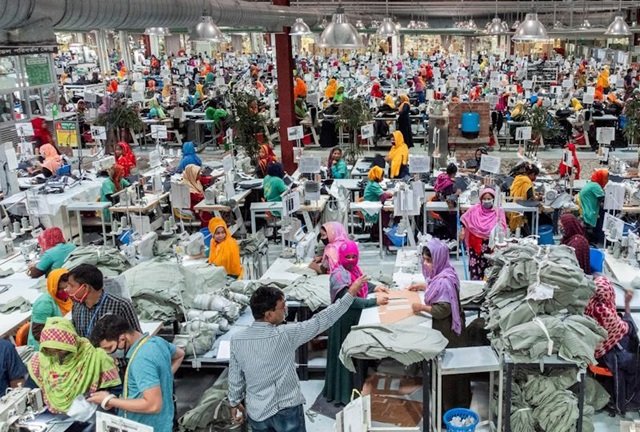
The economic benefits may not be amply real. Bangladesh’s exporters, particularly the apparel sector, have legitimate reasons to welcome lower American tariffs. But economic benefit cannot extinguish constitutional principle. A nation is not merely a marketplace; it is a sovereign republic whose fundamental economic choices must ultimately command democratic legitimacy.
And here lies the troubling question: where was Parliament?
The national election was held on 12 February 2026. The new government took oath on 17 February 2026. The new national parliament is in full-swing operational. But six months have now passed since the agreement was signed.
Yet, according to the concern at the heart of this debate, the nation has not witnessed a substantive parliamentary examination of a pact carrying such extensive blackball implications for Bangladesh’s economic policy and sovereign decision-making.
That silence is more disturbing because the agreement was concluded secretly on the eve of a national election. The people were about to exercise their sovereign right to choose their representatives. Instead, an unelected interim administration entered into an agreement whose commitments could extend well beyond the political lifespan of that administration.
Bangladesh may need stronger commercial relations with the United States, its largest export market. It needs investment, technology, market diversification and predictable access to global markets. But partnership between sovereign states must rest upon transparency, reciprocity and democratic legitimacy—not opacity.
The agreement itself reaches considerably beyond tariffs. Washington states that Bangladesh committed to address non-tariff barriers, accept specified and dictated American regulatory standards, modify aspects of labour legislation, facilitate digital data transfers, address state-owned-enterprise distortions, strengthen anti-corruption measures and undertake regulatory reforms.
Such commitments cannot reasonably be treated as routine administrative housekeeping.
The central issue, therefore, is not whether Bangladesh should trade with America. It is whether any unelected authority should be able to make far-reaching commitments on behalf of the Bangladeshi people without full parliamentary accountability.
Democracy does not end at the ballot box. It begins there.
A government may negotiate. Officials may sign. Diplomats may celebrate. But when an agreement potentially affects national economic sovereignty, elected representatives must have the opportunity to examine its clauses, question its negotiators, assess its long-term consequences and determine whether the national interest has genuinely been protected.
The United States itself publicly describes the agreement as legally binding. That makes democratic oversight even more imperative.
Bangladesh should therefore demand transparency, not secrecy; parliamentary scrutiny, not executive silence; national interest, not political expediency.
A trade agreement can open markets. It must never close the doors of democracy.
The people of Bangladesh did not surrender their sovereignty when they opened their markets to the world. Nor should sovereignty be quietly diluted through agreements concluded without adequate democratic examination.
The question before Bangladesh is consequently simple—and profound:
Who had the mandate to make these commitments in the name of the Republic?
And after six months of silence, Parliament—and the nation—deserve an answer.