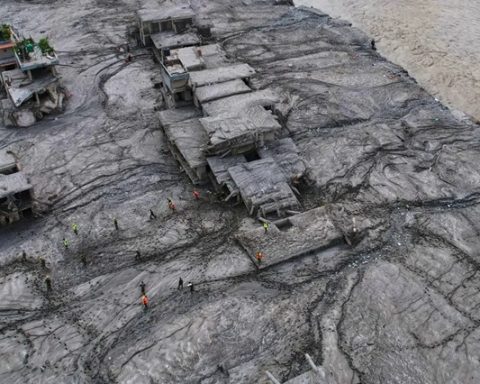

For a nation still recovering from its 2022 economic collapse, Cyclone Ditwah was not just a weather event. It was a fiscal earthquake. When the cyclone made landfall on the eastern coast on November 28, 2025, it unleashed Sri Lanka’s worst natural disaster since the 2004 Indian Ocean tsunami, triggering catastrophic floods and landslides across all 25 districts. Within days the official death toll had already passed 600, with over 200,000 people displaced and more than 6,000 homes completely destroyed and roughly 100,000 more damaged. Two months on, the death toll stood at 649, with 173 still missing, and around 2.3 million people — nearly a tenth of the population had been directly affected. The World Bank’s rapid damage assessment put direct physical losses at US$4.1 billion, about 4% of GDP, with infrastructure damage alone exceeding $1.7 billion. But the numbers only tell half the story.
A Crisis Within a Crisis
President Anura Kumara Dissanayake has been blunt about the injustice at the heart of this disaster. In an interview with Newsweek, he said Sri Lanka “contributes negligibly to global emissions” yet faces “existential climate shocks that can destroy years of development progress overnight,” warning that “we will be trapped if we don’t act now.”
That trap is already tightening. A preliminary employment assessment by the International Labour Organization found that roughly 374,000 workers 244,000 men and 130,000 women across agriculture, industry and services have had their livelihoods disrupted, with potential income losses of US$48 million a month. The same ILO brief estimated that 16% of national GDP, valued at around $16 billion, is now at risk, concentrated in a handful of hard-hit districts.
Meanwhile, the country remains trapped in a debt spiral. In December 2025, a coalition of more than 120 international economists including Nobel laureate Joseph Stiglitz, inequality scholar Thomas Piketty, development economist Jayati Ghosh, and former Argentine economy minister Martín Guzmán called for an immediate suspension of Sri Lanka’s external sovereign debt payments. Their joint statement warned that the disaster is poised to “absorb and potentially exceed” the extremely limited fiscal space created by the current debt restructuring package, even as the country keeps borrowing more from the IMF to cope. Sri Lanka’s debt service already consumes around 25% of government revenue, leaving little room for reconstruction, let alone health and education.
Research groups are drawing the same conclusion from a different angle. ODI’s analysis of the disaster describes the risk of a “climate debt trap”, where high debt burdens and climate vulnerability compound each other, squeezing a country’s ability to both respond to a crisis and invest in resilience against the next one. It’s not yet certain Sri Lanka has fallen fully into that trap, the group notes, but the cyclone landing on top of a recent default has already pushed 2026 growth forecasts down toward 4–5%, short of budget projections.
Pakistan’s Pain, Sri Lanka’s Mirror
Sri Lanka is not alone in this pattern. Pakistan’s catastrophic 2022 floods submerged roughly a third of the country, displaced tens of millions of people, and pushed the nation to the edge of default — a disaster inflicted on a country that, like Sri Lanka, contributes a tiny fraction of global emissions. The structural parallel is stark: both nations have been forced to choose between servicing foreign debt and rebuilding shattered communities, discovering in real time that climate vulnerability and debt vulnerability have become the same problem.
A Fork in the Road
Dissanayake has appealed to international partners to help build what he calls an “escape plan” out of the climate trap climate-resilient infrastructure, economic diversification away from vulnerable sectors, and investment that costs more upfront but avoids the cycle of repeated reconstruction.
But appeals are not policy. As the economists’ statement argues, the existing debt restructuring framework was never built to absorb a shock of this scale, and creditors now face a choice: treat climate-driven disasters as the systemic risk they are, or keep treating them as one-off exceptions while vulnerable nations quietly refinance their way deeper into crisis. Sri Lanka’s Disaster Management Centre and international partners are still tallying the human cost more than 170,000 people remained in relief centres or with host families as of late January 2026. The fiscal cost is still being written.
Cyclone Ditwah was a storm. What happens next whether Sri Lanka gets room to rebuild or is pushed further into debt to pay for a disaster it didn’t cause will be a policy choice.