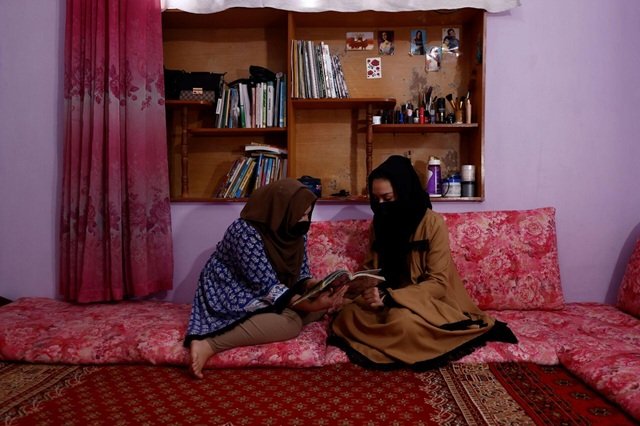
The Taliban returned to power nearly five years ago with grand promises of stability, but their ruling apparatus has instead pushed Afghanistan into a cycle of self-inflicted economic ruin and social regression. At the heart of this collapse lies a cruel and shortsighted strategy aimed at stripping women and girls of their fundamental rights. By systematically barring women from public life, banning girls from secondary schools, and prohibiting female employment, the Taliban regime is not just suppressing half its population; it is actively tearing down the foundation of the nation’s economic and political future.
The economic cost of this systemic oppression is staggering. A recent Bloomberg analysis citing United Nations findings reveals that restrictions on women’s education and work drain roughly $84 million every year from Afghanistan’s already fragile economy. Around 3.8 million Afghan girls currently sit at home, forcibly excluded from secondary education. Looking further ahead, UNESCO warns that if these severe bans on secondary and higher education continue through 2066, roughly 600,000 women will never enter the workforce. That loss translates to an astronomical $9.6 billion in forfeited economic output over the coming decades. In a country where millions rely on international aid simply to survive, destroying billions of dollars in potential productivity is not merely poor governance; it is a reckless, destructive policy that ensures widespread poverty for generations to come.
Beyond financial catastrophe, the Taliban’s war on women directly undermines Afghanistan’s place on the global stage. Diplomatic isolation remains a heavy burden on the regime, yet its leaders refuse to make the necessary changes. Former Afghan President Hamid Karzai recently emphasized that the Taliban will continue to struggle for international legitimacy as long as they enforce these bans. World leaders and international bodies have repeatedly made their position clear: access to education, work, and public life for women remains a non-negotiable prerequisite for normalization. Major diplomatic initiatives, including the 2022 Oslo talks and the 2023 Doha meeting, attempted to persuade the regime to choose a more reasonable path, but Taliban leaders have stubbornly rejected every opportunity for reform.
While countries like China, Iran, and India maintain commercial contact out of pragmatic proximity, and Russia stands as the sole nation offering formal recognition, the vast majority of the international community refuses to endorse a government that treats women as second-class citizens. By ignoring global demands and violating basic human rights, the regime cuts off vital foreign investment, global trade partnerships, and international financial support that ordinary Afghan citizens desperately need.
The consequences of this pathetic strategy extend far beyond economic metrics and diplomatic paralysis; they pose a severe threat to regional security and internal stability. Banning young women from standard secondary education creates a dangerous void in society. With formal classrooms locked shut, religious seminaries often remain the only educational option available to young girls. Analysts rightly warn that replacing comprehensive, modern education with narrow, ideological instruction increases the risk of long-term radicalization and instability across the region. When a government deprives its youth of critical thinking, science, and global knowledge, it creates an environment ripe for extremism rather than growth.
A nation cannot function, let alone prosper, when its leaders intentionally paralyze half of the workforce. Female teachers, doctors, engineers, and entrepreneurs build the vital infrastructure of any thriving society. Denying women the right to earn a living strips families of vital income, drives households into starvation, and dismantles healthcare and education systems that desperately require skilled personnel. The Taliban regime continues to frame these cruel restrictions as cultural or religious preservation, but their actions expose a clear fear of an educated, independent populace.
The path forward for Afghanistan requires an immediate end to these oppressive bans. The Taliban must realize that no amount of military control can substitute for economic vitality and international respect. Reopening secondary schools and universities to girls, reinstating women in the workforce, and guaranteeing their basic human freedoms are not mere concessions to foreign powers; they are absolute necessities for national survival. Until the regime abandons its self-defeating crusade against women, Afghanistan will remain locked in isolation, impoverished by design, and robbed of its true potential.