“‘There are no heroes, there are no villains.’ That is what the long-term demographic history of India tells us,” says historian Ravi K. Mishra. The statement goes to the centre of his argument about one of the most politically charged questions in contemporary India, the relationship between population growth, regional development and political representation. Mishra disputes the familiar proposition that southern India successfully controlled its population while the northern states failed to do so. He argues that the conclusion rests largely on a restricted reading of demographic history, one that begins too late and therefore mistakes a later outcome for the product of a particular policy. “The effect becomes the cause,” he says. His argument is based on a reconstruction of India’s demographic record extending back to the nineteenth century, rather than beginning with the post-independence population data most often used in contemporary political discussions. Seen across that longer period, he argues, the demographic histories of India’s regions follow different sequences of transition, growth and decline. The question, therefore, is not simply why the north has a higher population today or why the south has lower fertility, but how those differences emerged over more than a century.
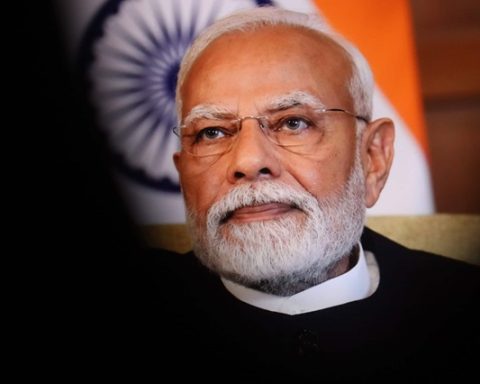
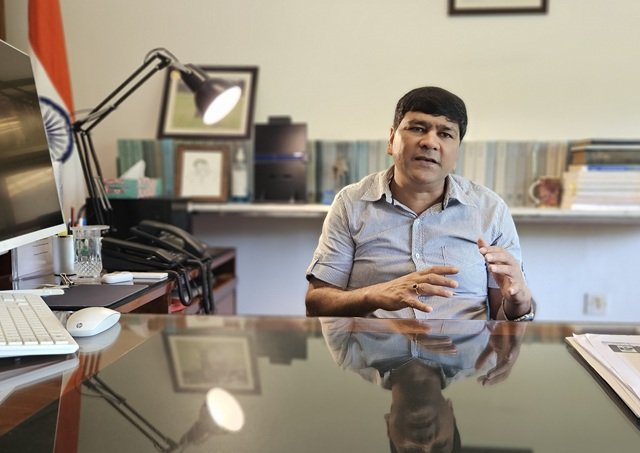
Last weekend, in his neat, well-ordered office at the Prime Ministers’ Museum & Library in New Delhi, I sat down with Dr. Ravi K. Mishra for a lengthy discussion about his research, his historical method and the questions that have shaped his work. Mishra is a historian associated with the Prime Ministers’ Museum & Library, where he combines administrative responsibilities with academic research. His scholarship extends across Indian political history and comparative history, including his work on China and Canada. His book, Demography, Representation, Delimitation: The North-South Divide in India, draws on census records extending from the nineteenth century, together with district gazetteers, boundary commission reports, partition-related records and other historical material. He has also worked extensively on the writings and papers of major figures in modern Indian political history, including C. Rajagopalachari and Atal Bihari Vajpayee. At PMML, he works within an institution whose resources include a major library, archives, an oral history division, microfilms, a publications division and the Pradhan Mantri Sangrahalaya. He describes the institution’s approach in straightforward terms. “We have always stuck to empirical evidence and facts in whatever research we ourselves conduct,” he says. When it comes to scholars using the institution’s resources, he adds, “we only facilitate their research. It is for them to decide how they want to present it.”
The foundation of Mishra’s demographic argument is chronology. His research constructs a continuous comparative series from 1881 to 2011, rather than treating the period after independence as the principal frame through which India’s population history should be understood. “In India the divide between the North and South in terms of population growth is not real. It is just apparent,” he says. The distinction is important because demographic transition unfolds over long periods. Mishra argues that southern India began the transition roughly half a century before the north. Kerala was the first major region in his reconstruction to enter the process, followed by Tamil Nadu, Karnataka and Andhra Pradesh. Eastern India, which he classifies as Bengal, Assam and Odisha, entered relatively early as well, followed by western India. The northern region in his classification consists principally of the Hindi belt, excluding Punjab and Jammu and Kashmir. It was the last major region to enter the demographic transition. “Demographic transition is a process that can be understood only over the long term,” he says. “You cannot understand it if you cover just a few decades like 30, 40, 50 years.”
Kerala provides an important starting point for this chronology. Mishra points to the population growth recorded there during the nineteenth and early twentieth centuries and connects it with a combination of political, social, environmental and public-health conditions. He refers to the administration of Travancore and Cochin, the social and educational work undertaken by the Syrian Christian Church, favourable climatic conditions, fertile agricultural land and what he considers relatively better public sanitation and health facilities. His explanation begins with mortality rather than fertility. “Demographic transition starts not with a rise in fertility rates but with a decline in mortality rates,” he says. When mortality falls while fertility remains comparatively high, more children survive. Infant and child mortality decline, adult mortality can also fall, and improved nutrition contributes to longer survival. Population consequently grows more rapidly before fertility itself begins to decline. In Mishra’s reading, the sequence seen in Kerala was subsequently repeated elsewhere. The states that entered demographic transition earlier also moved through the high-growth phase earlier and began experiencing falling fertility earlier.
History requires both the micro and macro approach in an almost equal measure.
This sequence is central to his challenge to the standard explanation of the North–South demographic divide. The widely repeated account, he argues, attributes the southern decline in fertility primarily to the family-planning programme introduced after independence, while explaining higher fertility in the north through inadequate implementation of population-control measures. Mishra rejects that causal interpretation. “But this is a myth,” he says. “There is no empirical evidence to support this argument at all.” He does not dispute the statistical difference between the regions. His argument concerns what those differences mean historically. By the 1960s, when northern population growth and fertility had moved decisively ahead of the south, the southern states had already travelled much further through the demographic transition. The later divergence in fertility, viewed without the preceding decades, could therefore appear to have been produced by policy. Viewed across the longer chronology, Mishra argues, the sequence looks different. “The effect becomes the cause,” he says, describing the tendency to treat the lower fertility of the south as proof that population-control policies had produced the demographic transition in the first place.
His calculations of regional population shares provide another part of the argument. Using census and gazetteer material, Mishra reconstructs an approximate population for the territory corresponding to present-day India in 1881 by removing the populations of areas that are now Pakistan and Bangladesh. He arrives at roughly 205 million people. On his regional classification, the north accounted for approximately 50 per cent of that population, while the south represented slightly less than 22 per cent. The proportions did not remain stable. The southern share increased during the following decades and reached more than 26 per cent by 1951, before declining to approximately 20.5 per cent by 2011. The northern share fell from around 50 per cent in 1881 to about 43 per cent in 1951 and 42 per cent in 1971, before rising again to roughly 46.5 per cent by 2011. Mishra uses these movements to illustrate a broader demographic principle. No region can be expected to preserve a fixed percentage of a national population indefinitely. Growth, stagnation and decline occur simultaneously in different parts of a country.
That principle takes the discussion directly into the question of delimitation. Mishra rejects the argument that parliamentary representation should remain frozen because some states reduced their fertility while others experienced faster population growth. “There is no statistical scenario under which any state within a country or a region within a country … can ever maintain a fixed proportion or percentage over a period of time,” he says. Even where population growth has slowed or reached replacement level, he argues, internal differences remain. Some areas continue to grow, some become stagnant and others can begin to lose population. Demographic change therefore makes permanent proportional protection difficult to justify statistically. His position on delimitation is framed in constitutional rather than regional terms. “It is a constitutional argument that I am giving,” he says. “I am only saying that we need to follow the constitution.”
Mishra does not, however, propose a simple redistribution of the existing 543 Lok Sabha seats. His preference is to expand the House and then allocate additional seats according to contemporary population without reducing the representation currently held by any state. Kerala is central to his example. The state has 20 Lok Sabha seats, while Jharkhand has 14, despite the two having broadly comparable populations. If the existing 543 seats were redistributed strictly according to current population, Mishra says Kerala could fall to approximately 13 or 14 seats. He considers that politically difficult and proposes a different route. His modelling keeps Kerala at 20 seats while adding seats elsewhere to bring representation closer to contemporary population levels. Using the 2011 census, he says his calculation produced approximately 728 seats. Using 2026 population projections, the figure was approximately 794. He presents these as models rather than final numbers, with the eventual allocation depending on the actual census data.
The reasoning behind the proposal also rests on Mishra’s broader understanding of political influence. He does not regard the number of parliamentary seats as a complete measure of a state’s national political weight. “A state’s political weight at the national level is determined by multiple things,” he says. Economic strength, industrialisation, development, overseas communities and the capacity of political leadership to advance state interests all enter the equation. Tamil Nadu, he notes, has a large and influential diaspora and a significant economic base. Bihar, by comparison, has a different demographic and economic profile and a less influential diaspora. Mishra also points to differences in political organisation and the willingness of state leaders to articulate regional interests at the national level. Parliamentary representation is therefore one element among several. An increase in the number of northern seats, in his view, does not automatically translate into a corresponding decline in the wider political influence of southern states.
His comparison with the United Nations serves a different purpose. He points to the principle that member states of the General Assembly receive one vote regardless of their population, wealth or financial contribution. For Mishra, however, the comparison is not a proposal to apply the UN system to India. It is an illustration of the principle of formal equality within a particular institutional arrangement. His central question is whether the constitutional principle of equality of representation can be set aside because political leaders in some states fear a reduction in their parliamentary weight. He points specifically to Article 81 of the Constitution in discussing the principle of representation and argues that the existing freeze on delimitation cannot be treated as a permanent constitutional settlement.
The history of that freeze is itself part of Mishra’s argument. He places its introduction in 1976, during the Emergency, and connects it with the political circumstances surrounding India’s population-control policies at the time. He refers to the widespread forced sterilisation programme and to the influence of international organisations and foundations in promoting population control as a development priority in the developing world. In his account, international agencies including the United Nations, the World Health Organisation, the Rockefeller Foundation and the Ford Foundation contributed to the political climate in which rapid population growth was regarded as a future geopolitical threat, particularly in countries such as India and China. Mishra questions the assumption that population growth has a direct and universal relationship with economic underdevelopment. Countries, he says, have experienced rapid population growth alongside rapid economic growth, rapid population growth alongside weak economic growth, slow population growth alongside strong economic growth, and combinations in which both remained slow. Population and development therefore cannot be reduced to a single causal formula.
It is a constitutional argument that I am giving. I am only saying that we need to follow the Constitution.
The constitutional question becomes sharper when Mishra considers the idea of an Indian “federal balance”. He questions the assumption that India can be understood through the same constitutional model as the United States. “India is not a confederation. It is not even a classical federation,” he says. “It is a union of states.” His distinction is historical as well as constitutional. The American states existed as political entities before joining the federal union and retained extensive constitutional powers. India’s states, by contrast, have been repeatedly reorganised after independence. Their boundaries have been changed, their names altered and new states created through constitutional and legislative processes. Telangana provides one example. Mishra also draws on his own experience of Uttar Pradesh and the later creation of Uttarakhand. “People’s loyalty also changes,” he says, pointing to the way political identity can shift when territorial arrangements change.
He does not suggest that states have no constitutional authority. India’s Constitution distributes legislative responsibilities through the Union List, State List and Concurrent List, and state governments exercise substantial powers within that structure. His point is that their constitutional position differs significantly from that of states in a classical federation. “States actually have very limited sanctity” compared with the American model, he says, because the territorial organisation of the Indian Union has been subject to change. The distinction is even clearer when discussing regional categories. “The Constitution of India does not recognise regions at all,” Mishra says. North, South, East and West are geographical or political classifications rather than constitutional units. For him, this matters because contemporary political arguments can give these regional categories a permanence that they do not possess in constitutional law.
The demographic discussion also brings caste into the question of representation. Mishra points to the increase in the combined share of Scheduled Castes and Scheduled Tribes in India’s population, from 19.5 per cent in 1951 to approximately 25 per cent in 2011. He also cites the increase in the Muslim population share from 9.8 per cent in 1951 to 14.2 per cent in 2011, and says the next census could place it above 15 per cent. He notes that comparable historical data for Other Backward Classes are not available to the same extent. Mishra connects these changes with differences in education, income, occupation and fertility, arguing that demographic growth has historically been higher among poorer and less educated populations. “So it is not North versus South,” he says. “Actually it is the rights of the people who constitute the weaker sections of the society.” Since the proportions of Scheduled Castes, Scheduled Tribes and other disadvantaged groups are higher in parts of northern India, population-based representation inevitably has a social dimension beyond the simple regional division.

The discussion of demographic change forms only one part of Mishra’s historical work. At PMML, he sees his administrative responsibilities and academic interests as complementary rather than conflicting. The institution, he says, has developed over almost six decades and now contains several distinct but related resources for historical research. Its library and archives, oral history division, microfilms and publications division serve researchers, while the Pradhan Mantri Sangrahalaya provides a public-facing presentation of post-independence history through the lives and contributions of India’s prime ministers. Mishra says that his academic training has allowed him to work across both areas, with the support of senior administrators, directors, the executive council and colleagues. His position on historical interpretation is restrained. The institution preserves and provides access to evidence, while scholars determine how they interpret and present that material.
His interest in C. Rajagopalachari reflects the broader range of political questions that he believes deserve renewed historical attention. Mishra identifies Rajaji’s economic thinking after independence as an area that has not received sufficient attention. In particular, he points to the Swatantra Party, which represented a markedly different economic position from the dominant political thinking of the period. Rajaji defended property rights and opposed the expanding state control associated with the License-Permit-Quota system. “The right to property needs to be respected,” Mishra says. He places this position within the economic conditions of the 1950s, 1960s and 1970s, when India was pursuing a strongly state-directed development model. In Mishra’s account, Rajaji’s importance lies partly in the fact that he articulated an alternative position at a time when there was little organised political space for an economically conservative argument.
His assessment of Atal Bihari Vajpayee is different because he sees considerably less distance between the historical record and the popular understanding of the former prime minister. Mishra has edited volumes of Vajpayee’s parliamentary writings and regards his parliamentary career as an important part of the history of Indian democracy. Vajpayee remained a parliamentarian for roughly five decades, and Mishra points to his oratory, his contribution to Hindi, his speech at the United Nations in Hindi, and his efforts to improve India’s relations with China and Pakistan. He recalls the Lahore bus journey and the Agra summit with Pervez Musharraf as examples of Vajpayee’s attempts to pursue dialogue with Pakistan. He also points to Pokhran-II in 1998 as a major decision in India’s national-security policy, arguing that Vajpayee presented the nuclear tests as a measure of deterrence rather than aggression. Another feature Mishra stresses is Vajpayee’s ability to attract support beyond the traditional boundaries of the Bharatiya Jana Sangh and later the BJP. He describes this as an inclusive political approach that allowed Vajpayee to develop a national constituency extending across regions, castes, communities and social classes.
Comparative history provides another connection between Mishra’s different areas of scholarship. His work on China and Canada, alongside his research on India, has reinforced his belief that historians need to work through more than one comparative framework. One is temporal, comparing societies across different periods. The other is spatial, comparing regions, nations, communities or continents. Both, he argues, are necessary because societies change and those changes become more intelligible when examined against other historical experiences. “History requires both the micro and macro approach in an almost equal measure,” he says. A region or community has to be examined in detail, but the evidence also needs to be connected to larger historical processes. Without that second movement, an isolated historical development can appear exceptional when it may form part of a much wider pattern.
His demographic comparison of India with Britain and France illustrates this method. Drawing substantially on data associated with economic historians Angus Maddison and Paul Bairoch, Mishra looks at population trajectories over several centuries. Around 1500, he says, what is now Britain had a population of approximately four million, compared with around 15 to 16 million in France. India’s population, by his estimate, was approximately 150 million. Britain subsequently experienced a major increase in population, accompanied by extensive overseas migration and settlement across places including the United States, Canada, Australia, New Zealand and South Africa. The contemporary populations of Britain and France are now broadly comparable, despite their very different demographic positions five centuries ago. India’s population has also increased substantially, but Mishra argues that when India, Pakistan and Bangladesh are considered together, the ratio between their combined population and Britain’s remains lower than the ratio between India and what is now Britain around 1500.
The significance of such comparisons for Mishra lies less in the individual figures than in the scale of historical perspective they provide. “I am not critiquing or anything. Just telling you the number,” he says. His point is that population growth in India over the last 150 years needs to be situated within global demographic history before it can be described as exceptional. Britain’s transformation from a country of roughly four million people into a society connected to a much larger population of people of British origin is one example of how demographic trajectories can change dramatically over centuries. France followed a different trajectory. India followed another. The differences cannot be understood by looking at a single period or by isolating one variable.
This is also why Mishra is reluctant to predict which interpretations of post-independence Indian history future historians will overturn. He does not regard historiography as fixed. New evidence, new methods and new scientific techniques can alter established interpretations. Archaeological research and the scientific analysis of material evidence, in particular, can change the questions historians are able to ask and the conclusions they can reach. “I don’t believe that historiography whether of pre-independence India or post-independence India is written in stone,” he says. What matters to him is that historical scholarship remains grounded in evidence and professional method. The conclusions may change, but the discipline should retain its commitment to empirical investigation.
That commitment also shapes his understanding of Indian history in relation to neighbouring countries. India’s neighbours have their own cultures, civilisations, histories and national identities, but the historical connections between them and India are extensive. Cultural, linguistic and civilisational similarities exist alongside political differences and distinct national histories. Mishra therefore sees comparative history as a way of placing Indian developments within a wider regional and global context without reducing the histories of neighbouring societies to extensions of Indian history.
The same principle runs through his reading of India’s demographic past. Political arguments about population, representation and delimitation tend to focus on the present distribution of people and seats, while Mishra insists that the relevant history began much earlier. His reconstruction places southern India’s demographic transition decades before the north entered the same phase, traces subsequent changes in regional population shares and questions the attribution of those changes primarily to government population-control policies. He then connects the demographic record to the constitutional question of representation and to the changing territorial organisation of the Indian Union.
There is no statistical scenario under which any state within a country or a region within a country can ever maintain a fixed proportion or percentage over a period of time.
His broader historical method is similarly centred on duration, comparison and evidence. The population of a region cannot be separated from the demographic stage through which it has passed. A political institution cannot be understood independently of the constitutional structure in which it operates. A historical figure cannot be adequately assessed without considering the political circumstances of the period in which he or she worked. And India’s history, in Mishra’s approach, cannot be fully understood without comparing it with developments elsewhere. The argument is not that one interpretation should replace another by virtue of political preference. It is that historical conclusions have to remain open to evidence gathered across time and examined at more than one scale.
For Mishra, the long record of India’s population therefore provides a case study in the importance of historical method. The North–South divide looks different when the period of examination is extended from the post-independence decades to the nineteenth century. The political implications of delimitation look different when representation is considered alongside the wider sources of state power. India’s federal structure looks different when compared with the constitutional history of the United States. The significance of Rajaji looks different when his economic ideas are examined against the dominant politics of the early republic. Vajpayee’s career acquires additional dimensions when his parliamentary writings are read alongside his diplomatic and national-security decisions. And India’s demographic growth takes on a different meaning when placed beside the population histories of Britain, France and other parts of the world.
“History requires both the micro and macro approach in an almost equal measure,” Mishra says. It is a concise description of the method running through his research. The detailed record matters, but so does the wider pattern. The census table matters, but so does the century that produced it. The political argument matters, but so does the historical evidence against which it can be tested. His work proceeds from the premise that contemporary political questions cannot be separated from the longer histories that produced them, and that those histories are best approached through evidence accumulated across generations rather than through the political categories of a single moment.