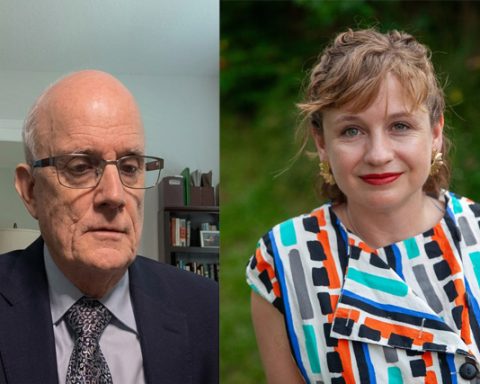
Parvinder Singh Jhota spent years confronting suspected drug dealers in Punjab. On October 13, 2026, the 42-year-old anti-drug activist was shot dead inside a medical store in Mansa during a confrontation over the alleged sale of addictive medicines. Four others were injured. Police subsequently arrested the suspected gunman, shop owner Ashwani Kumar, in Rajasthan.
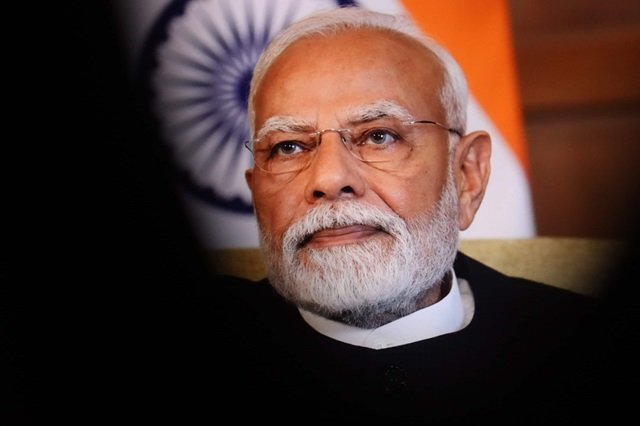
Narendra Modi’s BJP-led government faces criticism as Punjab grapples with gangster violence, targeted killings, narcotics trafficking and a bitter political confrontation with the Aam Aadmi Party (AAP) government. Union Home Minister Amit Shah has criticised Punjab’s handling of the drug trade, while AAP leaders have questioned the Centre’s treatment of organised-crime suspects.
On October 21, the Central Bureau of Investigation (CBI) formally took over Jhota’s murder case, registering an FIR and deploying investigators to Mansa. An expert post-mortem was arranged at Chandigarh’s Postgraduate Institute of Medical Education and Research, alongside a magistrate-led inquest.
The intervention followed demands from Jhota’s family, Chief Minister Bhagwant Mann’s decision to transfer the investigation and Shah’s visit to the bereaved family. It raises a larger question: can India’s security institutions effectively investigate criminal networks operating across states, prisons and international borders?
A Pattern of Targeted Violence
Jhota’s murder followed attacks involving police officers, village leaders and public figures.
On October 11, Assistant Sub-Inspector Iqbal Singh of Punjab Police’s Counter Intelligence wing was shot dead in Tarn Taran. Investigators examined a possible connection with his nephew’s earlier murder.
On October 6, motorcycle-borne gunmen killed Ashwani Devgan, an AAP-associated sarpanch, in Tarn Taran. Three days earlier, influencer Madhusudan Singh, known as Mad Sandhu, was murdered in Amritsar. Police subsequently arrested a suspect in Mumbai.
Earlier attacks killed police personnel in Amritsar, Majitha and Gurdaspur. Former village leaders were also murdered in Ludhiana and Bathinda.
These incidents involved different circumstances and cannot automatically be attributed to one criminal organisation. Their geographical spread nevertheless raises questions about intelligence gathering, firearms trafficking and preventive policing.
According to Institute for Conflict Management data, fatalities in specified gangster- and militancy-related incidents increased from nine in 2024 to 31 in 2025. The latter included 19 civilians, three militants and nine gangsters. Twenty-one deaths were classified as targeted killings, overlapping with those victim categories.
These figures are not Punjab’s overall homicide statistics. They reflect a narrower category of violence but warrant scrutiny of the authorities’ capacity to detect and disrupt threats.
The Bishnoi Network and the Custody Dilemma
Lawrence Bishnoi’s alleged criminal network illustrates the difficulty of investigating organisations whose suspected leaders are imprisoned outside jurisdictions where offences occur.
Bishnoi remains incarcerated in Gujarat’s high-security Sabarmati jail. Investigators accuse his associates of coordinating shootings, extortion and other offences across India and overseas. His organisation gained notoriety following the 2022 murder of Punjabi singer Sidhu Moosewala.
According to The Indian Express, India’s Ministry of Home Affairs renewed restrictions in August 2026 preventing Bishnoi’s physical transfer from Sabarmati jail.
The restrictions, linked to Section 303 of the Bharatiya Nagarik Suraksha Sanhita, require investigators to pursue legally authorised alternatives, including questioning inside the prison and virtual court appearances.
Restricting high-risk prisoner transfers can prevent escape attempts and attacks. But it also makes timely investigative access and coordination between authorities essential.
AAP politicians have accused the BJP-led Centre of protecting Bishnoi. Those allegations remain unproven; custody restrictions alone do not establish political patronage or deliberate obstruction.
The relevant issue is whether investigators can obtain evidence, question suspects and establish links between imprisoned organisers and crimes committed by associates.
The network’s alleged international activities complicate that task. In September 2025, Canada designated the Bishnoi gang a terrorist entity. In July 2026, the US Department of Justice announced charges against 37 defendants associated with three alleged India-based transnational criminal enterprises.
Those proceedings do not establish responsibility for Punjab’s October killings. They illustrate the international jurisdictional challenges surrounding organised-crime investigations.
Modi’s Federal Security Test
Jhota’s murder has sharpened confrontation between the BJP-led Centre and Punjab’s AAP administration.
Shah criticised the Mann government’s response to narcotics trafficking, while Mann transferred the murder investigation to the CBI following demands from Jhota’s family.
Punjab Police is responsible for ordinary criminal investigations, local intelligence and public safety. The Centre oversees major national investigative institutions, border-security functions and international law-enforcement cooperation.
Criminal networks, however, operate across these boundaries. An alleged organiser may be imprisoned in Gujarat, associates may operate in Punjab and financial intermediaries may work overseas.
The Bishnoi custody restrictions demonstrate how central decisions shape investigative options available to state authorities. The Jhota case raises a separate question: whether a central investigation can restore public confidence while maintaining effective cooperation with local police.
Neither case proves that federal fragmentation caused a killing. Both illustrate how overlapping jurisdictions can complicate investigations.
Effective cooperation requires timely intelligence-sharing, secure suspect interviews, coordinated financial investigations and preservation of digital evidence.
Jhota’s murder also raises questions about protecting citizens who challenge suspected narcotics networks.
Before his death, Jhota had documented allegations of illegal drug sales and criticised police inaction. His complaints required investigation, while credible threats against him warranted appropriate assessment and protective measures.
The CBI must now establish the circumstances of his death and examine whether earlier complaints received an adequate official response.
Beyond Political Blame
Punjab’s AAP government remains responsible for local policing and public safety. Modi’s administration faces questions concerning central investigative powers, custodial arrangements and cooperation across jurisdictions.
Effective security policy requires more than arrests following attacks. Investigators must identify organisers, disrupt criminal financing, protect threatened individuals and secure convictions through admissible evidence.
The October 21 CBI intervention provides an immediate opportunity for cooperation between politically opposed administrations. Its effectiveness should be assessed through credible findings and subsequent legal outcomes, not competing claims of political credit.
For Modi’s government, the challenge is ensuring national security institutions support investigations across state boundaries. For Punjab’s administration, it is providing residents with timely protection and effective local policing.
The decisive test of India’s security strategy is not how many agencies mobilise after a killing, but whether they can work together to prevent the next one.