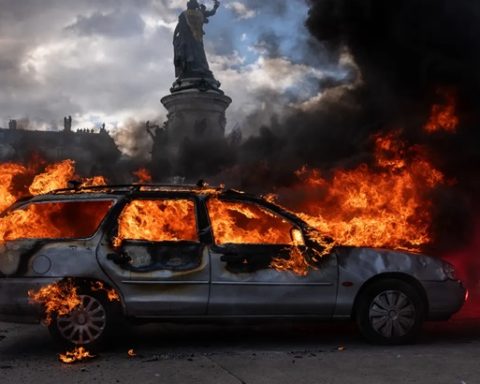

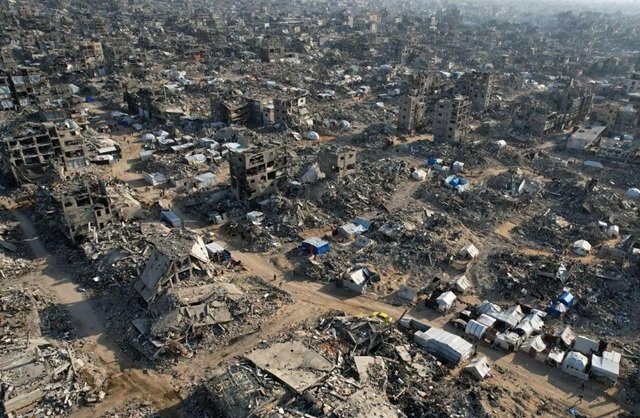
There are moments when the decline of a power can be measured in statistics, military setbacks or shifting alliances. And there are moments when something deeper seems to be happening — something we recognise before we can fully measure it: an entire historical order begins to lose the confidence, coherence and authority that once allowed it to shape the world in its own image.
For those of us who grew up in societies that experienced colonialism not as an abstraction in a history book but as a memory still carried by families, cities and generations, this question is inevitably more than academic. We have seen the extraordinary power of the West, learned from its knowledge, encountered its institutions and contradictions, and watched its promises of universality collide, too often, with the realities of power.
Today, as the Middle East is again shaken by war, Gaza devastated, Iran confronted, American power tested and the international order increasingly contested, we find ourselves returning to a thinker who understood that civilisations cannot ultimately be measured by the weapons they possess or the wealth they accumulate.
Long before “multipolarity” became the vocabulary of contemporary geopolitics, Malek Bennabi had offered another way of reading history: through man, time, ideas, moral energy and the mysterious moment when a society acquires the capacity to enter history — or begins to lose it.
Perhaps this is why Bennabi speaks so directly to our present. Not because he predicted it. But because he gave us a language with which to think about it.
The Equation of History
In a timely and readable recent book titled Why History Matters, Dr Yakoob Ahmed engages themes from theology and civilisation to imagination and storytelling with a view to reviving historical consciousness as both an intellectual and spiritual imperative.
In it, he reminds us of the oft-cited saying according to which history tends to repeat itself and the quote widely attributed to American humourist Mark Twain suggesting that “history does not repeat itself, but it rhymes”. One way to examine the idea that humans are destined to repeat the actions of the past, Ahmed says, is “through the rise and fall of states, the inevitable end of power, and the cyclical patterns of tyranny that ultimately come to a close.”
He also rightly observed that Ibn Khaldun was not the only Muslim thinker who made the case for cycles in history, nor that only Muslims wrote about cyclical theories. Indeed, during the 18th and 19th centuries, Ahmed adds, thinkers in Western Europe and the Ottoman Empire examined Ibn Khaldun’s ideas to establish where and how nations tend to repeat themselves, and where lessons can be learned.
He specifically mentioned the Scottish 18th-century historian Alexander Fraser Tytler, who claimed that democracies follow a predictable cyclical pattern, evolving from having virtuous intentions to becoming corrupted, and later declining.
Conventional political science commonly diagnoses the deep and accelerating shift characterising the modern landscape of global geopolitics — that is, the transition away from a unipolar world anchored by Western hegemony towards a fragmented, multipolar reality — through macroeconomic volatility, demographic deficits or logistical overreach.
Such a view stems from a secular understanding of reality, typically supposed to be grounded in the scientific method, empirical evidence, rational enquiry and experimentation, while largely excluding religious interpretations.
For his part, Malek Bennabi offered a profoundly different diagnosis. By way of a method reflective of his personal intellectual and religious culture — consisting essentially in bridging traditional Islamic sociology, mid-20th-century Western historiography and modern structural analysis — he approached history not as a sequence of random interactions or pure material accumulations, but as a rigorous biological and psychological cycle governed by structural laws.
As outlined earlier, Bennabi treated sociology with the precision of mathematics through his famous triad: Civilisation = Man + Soil + Time.
These three fundamental elements, Bennabi explains, exist in every human group, yet they remain static, inert materials until they are vitalised by an ideological or spiritual catalyst.
He mapped the lifecycle of any civilisation across three psychological and chronological stages. Hence, when an intense moral breath tames the primal instincts of a society, it binds individuals into a unified social network — the Stage of the Spirit — turning raw human potential into an engine capable of historical creation: institutions, sciences, law and physical architecture.
Conversely, when that spiritual catalyst loses its active energy, the social network disintegrates and dissolves into individualism, hyper-consumerism and a worship of material objects, thereafter initiating an irreversible slide into ethical decay, which in turn unavoidably leads to societal collapse — the Stage of the Instinct.
How does Bennabi’s view compare to some other influential classical and contemporary civilisational theorists?
During the classical and modern eras, two towering figures, Abdurrahman Ibn Khaldun and Arnold Toynbee, profoundly influenced the history of ideas concerning the study of the destiny of human civilisations, particularly through their monumental works, the Muqaddimah and The Study of History, respectively.
It is therefore not surprising that Bennabi was considerably influenced by their theories.
That being said, while Ibn Khaldun asserted that “Asabiyyah” — social bonds and group solidarity — naturally develops among rugged desert groups and nomadic states and is subsequently dissolved by urban luxury within a strict four-generation cycle, thus paving the way for the rise of a new group with a stronger asabiyyah, Bennabi deepened this observation.
He posited that social cohesion is not generated spontaneously by environment or blood alone; rather, it is a secondary manifestation of a primary spiritual or religious catalyst.
He further argued that luxury is not toxic because it is comfortable, but because it breaks the social network by shifting focus from transcendent duties to immediate individual instincts.
Similarly, Bennabi’s framework closely parallels Arnold Toynbee’s concept of “Challenge and Response”. Both scholars rejected racial or strictly geographical explanations of historical primacy.
Toynbee argued that when a “Creative Minority” stops offering innovative solutions to existential challenges, it degenerates into a “Dominant Minority” that can only govern through coercive violence.
Bennabi provided the inner psychological anatomy for this transition: the loss of creativity is the direct consequence of a society entering the Stage of the Instinct, where its ideas turn into hollow cultural artefacts, leaving behind nothing but raw force.
All Roads Lead to Rome
In more recent times, thinkers like Paul Kennedy, Francis Fukuyama, Samuel Huntington and others provided diverging opinions but shared a strongly marked materialistic perspective.
In his acclaimed book The Rise and Fall of the Great Powers, historian Paul Kennedy traces the postures of the world’s leading nations over five centuries, starting with the Habsburg Empire in the 16th century.
In it, he argues that empires project military power according to their economic resources but eventually the high cost of maintaining military supremacy weakens their economic base.
As a result, they tend to respond by spending more on defence and thus weaken themselves further by diverting essential resources away from new, productive investment.
Bennabi would view Kennedy’s fundamentally materialist analysis of “imperial overstretch” as a symptom, not a cause, given that, for him, economic and military imbalances occur only after a civilisation has entered its Stage of the Instinct, and also because a society rich in “moral capital” can survive material scarcity, whereas a morally bankrupt society will collapse regardless of its GDP or military spending.
Huntington argued that post-Cold War conflicts would trigger along cultural and religious fault lines. Bennabi anticipated this friction but offered a deeper diagnostic.
He contended that the tension between the West and the Islamic world is not an inherent clash of civilisations, but a clash between a dying, over-materialised civilisation — the West — and a stagnant, “colonisable” society — the Islamic world — that has yet to rekindle its original spiritual formula.
Bennabi’s entire philosophy stands as a direct refutation of Francis Fukuyama’s thesis positing that Western liberal democracy was the final endpoint of human ideological evolution.
Bennabi warned against confusing “civilisation” with “accumulation”, considering that buying, copying or implementing Western political institutions and consumer products does not make a society civilised.
Without a living spiritual and moral anchor, he explained, consumerist democracy is merely the final, sterile stage of the Stage of the Instinct.
Two decades before Fukuyama, Bennabi used the concept of the “end of history”, but from radically different civilisational lenses.
While Fukuyama — who views history as a linear, evolutionary process — argued that history “ends” because the ultimate political and ideological consensus, that is Western liberal democracy and market capitalism, has been reached, Bennabi — who views history as a cyclical law of nature — argued that history “must end at some point” when a specific civilisational cycle has exhausted its psychological and spiritual momentum.
History then does not stop permanently; it resets so that a “new point” of civilisational genesis can begin.
As for the “Last Man”, Fukuyama — drawing from Friedrich Nietzsche — sees him as a secure, materially satisfied individual devoid of great passions, higher ideals or willingness to struggle, in other words, a figure representing the psychological stagnation of a triumphant Western model.
Conversely, Bennabi observed a similar stagnation in the Muslim world, which he termed the “colonisability” stage: when a civilisation’s initial moral and spiritual impulse dies out, its people become passive consumers of other civilisations’ products, losing their agency in making history.
Historian and demographer Emmanuel Todd famously predicted the collapse of the Soviet Union using mainly infant mortality rates.
In his 2004 book La Défaite de l’Occident (The Defeat of the West), he argues that the war in Ukraine, as well as the American nihilism exhibited in Gaza, acts as a revealer of the terminal decline of the West, triggered by internal self-destruction rather than just the power of its adversaries.
Organised around demographic, industrial and religious factors, Todd’s analysis concludes that the West in general and the United States in particular are in a deep state of social disintegration.
Moreover, the total disappearance of Protestantism, which, he says, historically drove the strength of the Anglo-Saxon world — literacy, discipline and work ethic — left an ideological and moral vacuum.
Thus, deprived of religious or collective guidance, the West has plummeted into a metaphysical void and a self-destructive impulse, resulting in a divorce between elites and the working class.
In short, Todd is of the opinion that the Western bloc survives only through the aggressive expansion of an already hollow model.
The concluding remark of the book is particularly grim: “If we want to anticipate America’s strategic choices, we must urgently abandon the axiom of rationality. The United States is not looking for gains by weighing costs. In the village of Washington, in the land of mass shootings, in the era of zero religion, the primary impulse is a need for violence.”
Like Bennabi, Todd looks at the biological metrics of “Man” and “Time”. In particular, his observation of rising nihilism and declining birth rates in the West aligns precisely with Bennabi’s Stage of the Instinct, where individual gratification supersedes the generational transmission of civilisation.
In the same vein, jumping on the bandwagon of thinkers like Edward Gibbon in particular, historian Peter Heather and economist John Rapley contend, in their new book Why Empires Fall, that empires inevitably sow the seeds of their own destruction through an internal “imperial life cycle”.
The authors show how an empire’s own success enriches and modernises its geographic “periphery”, only to see these newly empowered outside regions rise up to challenge and overtake the imperial core.
In such a pattern they find striking parallels between ancient Rome and the modern West, led by the United States, including — interestingly enough in light of the ongoing unjust US-Israeli war on Iran — the fact that “the eventual revival of Persia as a peer competitor put unsustainable pressure on Rome’s declining fiscal and military capacities.”
In concluding, they stress that Western global primacy cannot be recovered, but total collapse is not a foregone conclusion if leadership adapts.
To preserve the West’s core interests, they say, Western leaders must stop trying to police the world and instead focus on creating a multipolar global framework.

By doing so, “Not only would the form of the Western nation state — originally built on leveraged wealth flows from the rest of the planet — have managed to negotiate a moment of potentially existential crisis, but it would have generated a post-colonial legacy of real greatness, of which its citizens could be genuinely proud.”
It is important to point out here that the literature on the historiography of how empires rise and fall, and more specifically the one on the parallel between the fate of ancient Rome and that of the modern West under the leadership of the United States, has exploded in recent decades, especially following the fall of the Soviet Union and, consequently, the emergence of the United States of America as the sole “hyperpower”.
Almost two decades before Heather and Rapley, Cullen Murphy wrote a compelling book on this very subject.
In it, he explores how the Roman and American populations saw their political elites and their insular cultures; looks at the consequences of military overstretch and the widening gap between military and civilian society; sees both states weakened through “privatisation” and vexed by the paradoxical issue of borders; and argues that America most resembles Rome in “the burgeoning corruption of its government and in its arrogant ignorance of the world”.
With regard to this last point, he writes: “The Romans were aware, to be sure, that all previous empires had fallen. But they saw their own empire as the culminating work of creation. The torch had been passed, once and for all. Roma Aeterna! In the eyes of a Roman living in the empire’s Golden Age, Rome would never die.”
Outside of academia, French President Emmanuel Macron was one of the few Western leaders to publicly acknowledge this historical shift.
At a conference on August 27, 2019, at the Élysée Palace, he delivered a significant speech to his ambassadors accredited worldwide, in which he notably declared: “We are undoubtedly witnessing the end of Western hegemony over the world,” due to Western errors and the emergence of new powers.
The President analysed the transition from an international order shaped since the 18th century by the West — France, the United Kingdom and then the United States — to a new balance of power disrupted by geopolitical missteps and American choices.
The Fate of the “Jewish State”: Like Father, Like Son
In his recent book The Monstrosity of Our Century, Amir Nour devoted an entire chapter to the complex issue of the fate of what Israelis call the “Jewish state”.
He expressed his conviction that this “state” — created from scratch with the active complicity and multifaceted support of the West in 1948 in a geographical and civilisational area entirely different from the history, culture and aspirations of the Zionist settlers who came primarily from Central and Eastern Europe — lacks both the legitimacy and the demographics necessary to guarantee its long-term survival.
Nour offered his perspective on what he considers the only lasting solution to a conflict originating in World War I and whose dramatic consequences risk multiplying in the future absent an urgent and definitive settlement.
Past and present upheavals throughout the West Asian region prove beyond a doubt that such a lasting solution could be nothing other than the creation of a democratic state, or confederation, in Palestine where Muslim, Jewish, Christian and other citizens will have the same constitutional rights and obligations, and share the common desire to achieve peace and prosperity in a “holy land”, transformed by an “unholy alliance” between a supremacist Zionist ideology and nihilist West only pursuing its vested interests, into a land of genocide and other tragedies, of which the Palestinians are the principal sin-offerings.
This viewpoint, long considered by representatives of the said alliance as a chimera, or even anathema, is today increasingly shared and defended by figures who are authorities in Western academic circles and, more significantly, among young Jews and a significant fringe within the American Democratic Party, as evidenced by recent polls conducted by bodies known for their seriousness.
To back up our point, we will share in the lines that follow some viewpoints similar to Nour’s, expressed by well-known personalities from different cultural and religious backgrounds.
In his latest book Israël. Une course vers l’abîme (Israel. A Race to the Abyss), renowned Jewish historian and specialist of Nazi Germany and the genocide of the Jews of Europe, Omer Bartov gives a searing critique of Israel’s trajectory from a post-Shoah refuge to what he describes as an ethno-nationalist regime engaged in “systematic war crimes, crimes against humanity, and genocidal acts” in Gaza.
The grandson and son of fervent Zionist figures, the Israeli-American academician wonders what “went wrong” in the realisation of the Zionist dream, an ideology, he says, that has now become “indefensible” and must be relegated to the dustbin of history.
It is important to note here that in November 2023, Bartov believed that there was no evidence a genocide was happening in Gaza, and in an interview with Democracy Now! the same month he explained that neither the two-state solution nor a binational state is realistic, saying that “A binational state wouldn’t work, and an independent Palestinian state has become practically impossible. The only solution is a confederation, two distinct but interdependent states, with shared institutions.” Without a political solution, he says, Israeli society will sink a little deeper into a moral and psychological abyss every day.
He, therefore, places his hope in international pressure, particularly from Germany, which would force Israel to accept the creation of a confederation based on openness and cooperation, linking two distinct states, one Palestinian and the other Israeli, separated by a border set along the “1967 Green Line”, the one that existed before the so-called Six-Day War.
Pr John Mearsheimer argues that history is not a neutral backdrop in international politics. It is “a living force that shapes perceptions, fuels grievances, and molds the behaviour of states and societies.”
The Six-Day War of 1967 — which left Israel in control of Jerusalem, the West Bank, Gaza and the Golan Heights — he rightly reminds us, was a humiliation for the Arab world and a turning point in regional memory.
That defeat still echoes in Arab political culture, and the longer those territories remain occupied, the more deeply they entrench hostility towards Israel, not only among Palestinians but across the wider region.
Beyond the Middle East, especially in Africa, Asia and Latin America, Mearsheimer adds, Israel is increasingly viewed through the lens of colonial history, and “in a multipolar world where the voices of the Global South carry more weight, this perception magnifies Israel’s isolation.” Moreover, resentment is not confined to the Arab-Muslim worlds and the other countries of the Global South.
In Europe, Mearsheimer explains, memories of colonialism and guilt over the Holocaust initially produced strong sympathy for Israel, but “as the decades have passed, the sympathy has waned.” This shift in European sentiment is significant because Europe remains an important partner in international diplomacy, and its criticism adds to Israel’s isolation in global forums.
Even more significant for Mearsheimer is the fact that in the United States, which has provided Israel with a unique combination of military aid, diplomatic cover and economic assistance that no other state on earth has enjoyed for such an extended period of time, consensus is eroding as younger Americans evaluate Israel primarily through the lens of contemporary politics, namely respect for human rights and international law rather than Cold War ideologies and alliances.
For them, “the narrative of eternal victimhood rings hollow when it conflicts with the lived reality of Palestinians under occupation.” History, Mearsheimer concludes as a serious warning to Israel, “is full of examples where states dependent on external guarantees found themselves exposed when their patrons shifted course.”
Concurring broadly with Mearsheimer’s views, Wadah Khanfar, a prominent Palestinian journalist and former Director of the Al Jazeera Network, explicitly compares the current conflict and contends that Western and Israeli strategists evaluate their conflicts in the Arab-Muslim world solely in terms of physical destruction and technological superiority.
In doing so, they overlook the civilisational psychology of the region, and much like the Crusaders, the Mongols, Napoleon Bonaparte and Western colonialists experienced in their entanglements with the peoples of the region, “bombing infrastructures does not erase a people’s will for dignity or their collective memory.”
The escalation against Iran and the siege of Gaza only entrench long-term resistance, turning Israel into a pariah state that is unmanageable for Washington. For Khanfar, the war on Gaza and the strikes against Iran are not isolated events, but the convulsions of a dying Western order.
Escaping the colonial era and Western hegemony in the Middle East, he says, relies on a dual dynamic: an internal impulse — the youth rejecting passive elites and rewriting the global narrative — and an external geopolitical coalition, namely an expanded Islamic alliance.
Only through such a synergy will the region cease to be a playground for major powers and “once again become the author of its own history.”
Conclusion
Only through such a synergy, Khanfar argues, will the region cease to be a playground for major powers and “once again become the author of its own history.” And perhaps this is where we should return, one final time, to Bennabi. Because the decline of one civilisation is not the birth certificate of another.
The weakening of Western hegemony, however profound it may become, will not by itself restore the historical agency of the Arab-Muslim world. Nor will American retreat, Israeli isolation, multipolarity or the emergence of new powers automatically produce a new civilisation. Bennabi would probably have regarded such expectations as another form of dependence: waiting for history to be delivered by the decline of others instead of creating it ourselves.
This, ultimately, is why history matters to us. We come from a region that has known conquest and resistance, humiliation and renewal, colonisation and independence. We have inherited both wounds and possibilities.
And we have learned that military superiority can occupy territory, destroy cities and impose political orders — sometimes for generations — but it cannot indefinitely command memory, dignity or the human desire to recover agency. Empires eventually discover this. Peoples rarely forget it.
Bennabi’s enduring lesson is therefore neither a prophecy of Western collapse nor a promise of Muslim renaissance. It is considerably more demanding: no civilisation inherits the future simply because another civilisation is losing its grip on the present. History does not reward those who wait beside the ruins of an exhausted order. It begins again with those capable of transforming Man, Soil and Time into meaning, responsibility and action. The question before us is therefore no longer merely whether an age is ending. It is whether we are ready to help write what comes next.