For more than three years, Manipur has offered India a warning it can no longer afford to treat as a peripheral crisis.
The northeastern state bordering Myanmar has been fractured by violence between the predominantly Hindu Meitei community, concentrated largely in the Imphal Valley, and the mainly Christian Kuki-Zo communities of the surrounding hills. What began as an explosive ethnic confrontation in May 2023 has hardened into displacement, territorial separation and competing political demands.
Manipur is becoming a test of whether India can reconcile territorial integrity with minority protection, political representation and the increasingly securitized management of its borderlands.
That test has acquired a new dimension. Discussions between India and Myanmar over an unresolved section of their boundary in Manipur have brought territorial sovereignty into an already combustible mix of ethnic separation and competing claims to land. India’s Ministry of External Affairs has acknowledged discussions over unsettled portions of the boundary, while reporting indicates that a possible territorial exchange is among the options being examined. Nothing has been finalized.
A conflict that has redrawn Manipur
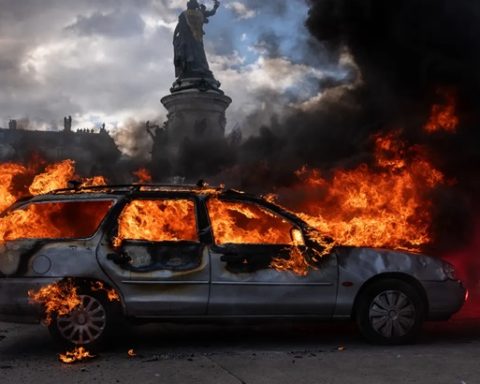
Hundreds have been killed since violence erupted in 2023, while tens of thousands have been displaced. Communities that once lived in closer proximity have become separated by increasingly ethicized territories and security buffer zones.
UN experts have documented allegations of sexual violence, extrajudicial killings, destruction of homes, forced displacement, torture and other serious abuses. They also expressed concern about the adequacy of the authorities’ response, drawing particular attention to abuses and displacement affecting the Kuki population, especially women and girls.
When citizens cannot safely return home because of ethnicity, when security zones separate communities, and when political demands revolve around territorial separation, violence begins to reshape the political geography of the state itself.
Kuki-Zo organizations have consequently pushed for a separate political-administrative arrangement, including demands for a Union Territory with a legislature. For supporters, greater political separation is presented as necessary for security, representation and political survival.
New Delhi faces a difficult dilemma. Accepting territorial separation could establish a precedent with implications beyond Manipur. Rejecting it without creating a credible political alternative, however, leaves unresolved how coexistence can be restored after years of violence and displacement.
The Myanmar border adds another flashpoint
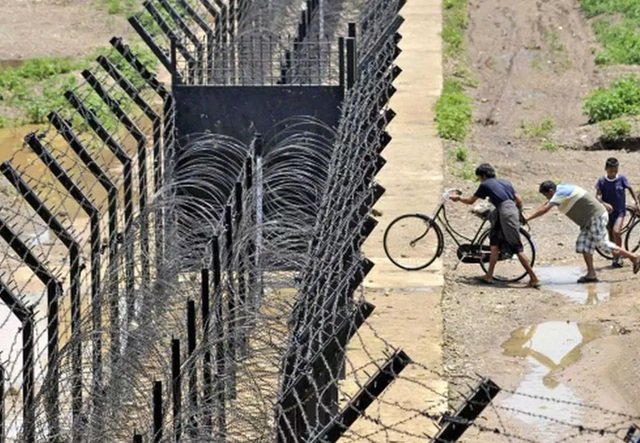
Recent reporting indicates that the Indian government has been examining options concerning the unresolved section of the India-Myanmar boundary between pillars 65 and 68 in Chandel district. An official document cited in media reporting referred to approximately 1.4 square miles being proposed for exchange as part of efforts to complete demarcation.
The distinction between discussion and decision is crucial. India has not announced a finalized territorial transfer. The Ministry of External Affairs has acknowledged discussions concerning unsettled border areas, while maintaining that no final decision on a possible exchange has been announced.
Yet even the possibility has generated opposition because affected communities argue that decisions over territory cannot be separated from identity, ancestral land and political consent.
Meitei organizations have raised concerns about territorial integrity, while Kuki organizations in Chandel have opposed territorial changes affecting what they regard as ancestral land without consultation with affected indigenous communities.
This produces a striking convergence. Communities divided by years of ethnic conflict can nevertheless find common ground when they believe decisions concerning Manipur’s territory are being made without adequate local participation.
The issue is further complicated by Manipur’s hill areas, where Naga communities have longstanding territorial aspirations. These sensitivities are also rooted in Manipur’s political history. Its merger with India in 1949 remains an important reference point in competing narratives surrounding identity, political authority and territorial integrity.
In Manipur, land is therefore not simply geography. It represents identity, history, security and political power.
India’s borderland dilemma
Manipur illustrates a larger challenge confronting the Indian Union. Some of its most sensitive security problems lie in peripheral regions where international borders intersect with ethnic communities whose histories and cultural connections predate those borders.
The India-Myanmar frontier passes through regions where communities maintain historical and social connections across the boundary. For New Delhi, the frontier presents concerns involving insurgency, irregular migration, weapons trafficking and instability generated by Myanmar’s continuing internal conflicts.
India therefore has legitimate reasons to seek a more clearly demarcated and effectively managed border. But for communities living along that frontier, policies conceived primarily through national security can have immediate consequences for villages, families, livelihoods and ancestral land.
A government sees an international boundary that must be fenced, demarcated and secured. A village may see farmland, burial grounds and family networks divided by a line negotiated hundreds of kilometres away.
Neither perspective can simply be ignored. The danger lies in treating greater central control as a substitute for resolving what is fundamentally also a political problem.
Security cannot substitute for reconciliation
India has deployed considerable security resources in Manipur, but security deployment cannot by itself rebuild a fractured society.
Meiteis have concerns about territorial fragmentation, demographic change and insurgency. Kuki-Zo communities increasingly frame their demands around physical security, political representation and autonomy. Naga communities have their own historical political aspirations.
These competing narratives cannot simply be compressed into a law-and-order problem. Nor can peace mean merely the absence of large-scale fighting.
A sustainable settlement requires conditions under which displaced people can return safely, serious abuses can be addressed, communities can participate meaningfully in political negotiations, and security arrangements are regarded as legitimate by those they are intended to protect.
The physical separation created during the conflict also risks acquiring political permanence. If displacement continues and communities remain unable or unwilling to return, temporary buffer zones can gradually become durable ethnic boundaries.
Manipur’s warning for India
India’s federal and democratic system has long been tasked with accommodating extraordinary religious, linguistic and ethnic diversity. Manipur tests that capacity when different communities make competing claims over security, territory, representation and political authority.
Territorial integrity matters. So do minority rights, accountability and meaningful political participation. A durable settlement requires balancing these imperatives rather than treating some primarily as security concerns.
The India-Myanmar border discussions make that challenge clearer. A geographically small territorial adjustment can acquire enormous political significance when communities already fear losing land, security or political influence.
The controversy also offers New Delhi an important lesson. In a conflict-affected borderland, consultation over border demarcation is not merely an administrative requirement; it can become part of conflict prevention.
Manipur therefore needs more than a top-down security response. It requires a credible political process involving Meitei, Kuki-Zo and Naga representatives, displaced communities, civil society, and state and central authorities.
The unusual convergence of opposition to a potential territorial exchange across Manipur’s ethnic divide suggests that common interests have not disappeared entirely. It does not erase the grievances behind the conflict, but it demonstrates that political interests do not always have to follow rigid ethnic lines.
New Delhi should use that opening to pursue consultation rather than allow another territorial controversy to deepen existing mistrust.
If displacement becomes permanent and territorial decisions are perceived as being made without meaningful local participation, Manipur’s divisions will become progressively harder to reverse.
The question is therefore no longer simply when Manipur’s violence will end. It is whether India can address the political grievances beneath that violence before a temporary ethnic division becomes a permanent fault line within the Union.