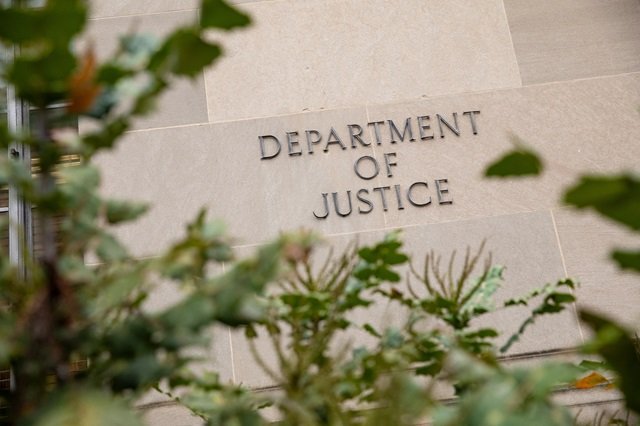
Ohio State University has agreed to pay a US$2.1 million settlement to resolve allegations that it failed to disclose employees’ ties to China when applying for federal grant funding, the US Department of Justice announced on Monday.
The settlement concerns grants awarded by Nasa and the National Science Foundation (NSF) that provided funding to the university between November 2012 and August 2023. Both agencies required the public university to disclose “foreign government support received by any principal investigator (PI) or co-PI on the grant application”.
The NSF, established by Congress in 1950, funds scientific research through grants, while Nasa oversees the US space programme and conducts research in areas including aeronautics and space exploration.
According to the Department of Justice, the settlement resolves allegations that, since 2014, annual faculty activity reports submitted to Ohio State identified affiliations with Chinese universities and state-run research organisations, but that the university did not disclose the information to Nasa or the NSF.
The department also alleged that Ohio State learned in 2019 that a principal investigator working on Nasa grants was participating in the Thousand Talents Programme, a Chinese government-backed initiative aimed at recruiting individuals with knowledge or access to foreign technology and intellectual property.
The university allegedly did not notify Nasa or the NSF about the researcher’s participation until 2023, four years after it became aware of the affiliation. The Justice Department said the US subsequently identified additional employees working on the grants who were affiliated with, collaborated with or received funding from China.
The department stressed that the allegations had not been established as liability. “The claims resolved by the settlement are allegations only and there has been no determination of liability,” it said.
The case centres partly on the Thousand Talents Programme, a state-backed recruitment initiative launched in 2008 to attract overseas Chinese academics through cash grants supporting research and living costs.
US intelligence officials have accused the programme of “[facilitating] the legal and illicit transfer of US technology, intellectual property and know-how” to China. Beijing has consistently rejected such allegations, describing the programme as a legitimate form of academic exchange.
The Ohio State case comes amid heightened scrutiny in the United States of foreign affiliations involving researchers receiving federal funding. The allegations concern a period spanning more than a decade and involve grants from two major US government agencies responsible for supporting scientific research and space-related programmes.
The disclosure requirements at issue were intended to ensure that federal agencies were informed about foreign government support received by researchers involved in grant applications. According to the Justice Department, the university’s faculty activity reports contained information about certain Chinese affiliations that was not subsequently disclosed to the federal agencies.
The settlement also highlights the financial consequences universities can face when questions arise over compliance with federal grant requirements. Ohio State agreed to the payment without an admission of liability, while the government explicitly stated that the claims remained allegations.
The Justice Department also noted that US federal law has prohibited the use of federal grant funds for collaborations with China, Chinese universities or Chinese-owned companies since 2011.
The dispute therefore places the university’s handling of foreign affiliations at the centre of a broader US concern over the relationship between international academic collaboration, federal research funding and the protection of American technology and intellectual property.
For Ohio State, the US$2.1 million agreement resolves the allegations relating to its disclosure practices, while the Justice Department’s statement makes clear that no determination of liability was made as part of the settlement.