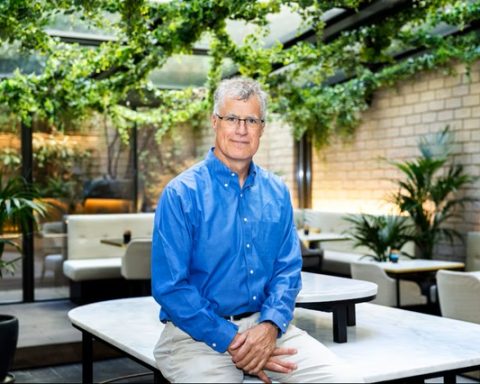
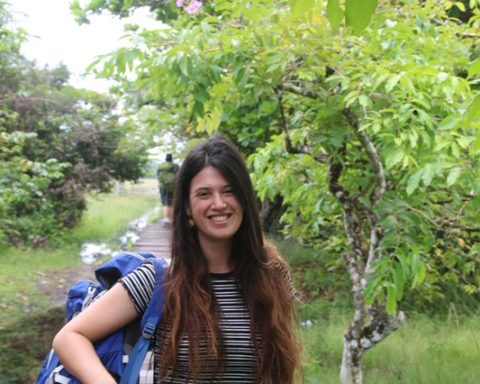
Billionaire investor Bill Ackman has turned his daughter’s devastating medical crisis into an extraordinary test of an experimental therapy, after doctors transferred mitochondria from her leg muscle to her eyes in an unprecedented attempt to restore her sight.
Ackman’s 26-year-old daughter, Lucy, collapsed in her Brooklyn apartment in February after suffering a brain haemorrhage that left her unable to move, speak or see. Ackman responded by securing specialist care at New York City’s Mt. Sinai Hospital and consulting a network of contacts around the world before supporting an experimental treatment that has also attracted growing interest among scientists studying longevity.
In May, the US Food and Drug Administration gave Lucy’s medical team emergency authorisation to transplant mitochondria, the energy-producing components of cells, from her leg muscle to her eyes. The procedure was intended to determine whether the transplanted mitochondria could assist healing in her optic nerves and potentially restore vision.
The treatment places Ackman’s personal experience within a broader expansion of privately funded research into longevity and novel medical therapies. Ackman, who made billions as a hedge fund manager, has pledged more than $400 million to establish an institute focused on brain research, rehabilitation, recovery, human optimisation and longevity.
His plans come as other wealthy technology and investment figures pursue similarly ambitious approaches to extending human health and lifespan. Sam Altman has backed Retro Biosciences, while Jeff Bezos is reportedly a funder of Altos Labs. Peter Thiel, Sergey Brin and Larry Ellison have also invested in life-extension research, while Elon Musk co-founded Neuralink, a brain-implant company. Neuralink co-founder Max Hodak’s latest start-up, Science, has raised hundreds of millions for a retinal chip intended to restore some vision to people suffering from age-related macular degeneration.
The growing involvement of billionaires in such research comes alongside declining federal support for science. According to a Post analysis cited in the source material, at least 2,700 fewer scientific projects were supported by the National Institutes of Health in fiscal 2025, representing about a 15% reduction in competitive grants from the previous year. More than 100 advisory committees to science agencies were also terminated, while changes at the Food and Drug Administration have contributed to a staff exodus.
For Lucy’s doctors, however, the mitochondrial treatment emerged from research rather than simply private enthusiasm for longevity. David Putrino, a Mt. Sinai neuroscientist responsible for her care, said he and colleagues had spent about a year working on mitochondrial transplantation. In April, they encountered a Nature study showing that mitochondrial transplantation had helped a mouse recover from an optic nerve injury. The findings prompted the team to consider attempting the treatment in a human patient.
The doctors approached Lucy’s family and sought emergency regulatory permission, known as an eIND, to use the investigational therapy. Putrino said the FDA review demonstrated what he described as the “rigor, speed and compassion” of its scientists. The authorisation, referred to as “compassionate use”, permits access to investigational treatments when no alternative standard therapies are available to save a patient’s life.
Mitochondria have traditionally been understood as the cell’s energy-producing machinery, converting food into adenosine triphosphate, or ATP. Researchers have increasingly identified additional functions, including roles in clearing damaged cells, prompting interest in their potential contribution to regeneration and healing.
The first reported transplantation of mitochondria from one part of the human body to another took place in 2017, moving mitochondria from abdominal muscle to the heart. Dozens of procedures have since been performed, including a transplant to the brain in 2024. Lucy’s treatment marked the first attempt involving human eyes.
The initial results were limited. During the first few weeks, Lucy regained the ability to perceive light, according to an unpublished paper submitted by Putrino’s team to Nature. The treatment caused no harm to her eyes, an important finding given that it had never previously been performed in a human eye. After about a month, however, the benefit appeared to fade.
Scientists remain divided over the approach. Stanford University professor Daria Mochly-Rosen said some researchers question whether injecting a relatively small number of mitochondria can produce meaningful benefits when the human body contains trillions of them, while others doubt whether mitochondria can readily survive implantation.
Ackman nevertheless remains optimistic. He has said that doctors are working on a method to administer the treatment to Lucy’s eyes more frequently and that mitochondria have “amazing potential”.
Alongside his daughter’s treatment, Ackman has committed more than $400 million to what he calls the Ackman Oxman Institute, or AOI, an organisation intended to focus on patients rather than primarily producing academic papers. He has said he wants it to become a leading centre for brain research, rehabilitation, recovery, human optimisation and longevity.
For Lucy, however, the ambition remains intensely personal. Ackman has said that her recovery will be difficult but that he remains optimistic she will eventually return to normal function. Of all the abilities she lost after the haemorrhage, he says, restoring her sight will be the hardest.