On August 27, 2026, the Balochistan Government announced bounties, ranging from 1 million to 1.5 million rupees, on nine Baloch women, for their alleged linkages to Fitna al Hindustan (A state term for Baloch insurgents. These women hail from Gwadar, Jiwani and Turbat. The announcement was made by Babar Yousafzai, Adviser on Media Affairs to the Balochistan Interior Minister, who said the Government considered the women highly wanted and urged members of the public to provide information to the authorities. Officials added that the identities of informants would be kept confidential. A poster published by the Government identified the suspects as Hanifa Bibi, daughter of Sher Muhammad; Ayesha, daughter of Abdul Rasheed; Iqra, daughter of Ali; Ruqayya, daughter of Waleed; Hafsa, daughter of Iqbal; Zahra, daughter of Malik Muhammad; Amina, daughter of Abdul Rashid; Zareena, daughter of Wahid Baksh; and Aziza, daughter of Ibrahim.
This announcement came at the heels of recent cases of “enforced disappearances” of Baloch women, and appeared to be intended to distract attention from these state atrocities.
On August 23, 2026, a 20-year-old woman, Safia Baloch, the daughter of Abdul Khaliq, a student and resident of the Killi Zayak area of Basima in the Washuk District of Balochistan, was “forcibly disappeared” by personnel of the Counter Terrorism Department (CTD) and Inter-Services Intelligence (ISI) from provincial capital Quetta at approximately 1:00 a.m.
On August 5, 2026, a 17-year-old woman, Aqsa, was “forcibly disappeared” along with her father, Abdul Qudoos Zarakzai, by Security Forces (SFs) during a raid on a residential quarter in the Civil Colony of Khuzdar District in Balochistan. At approximately 10 p.m. in the night, personnel from CTD and plainclothes officials carried out a joint raid and took away Abdul Qudoos Zarakzai and Aqsa.
On July 30, 2026, three Baloch women, identified as Rafia Bibi, Tania and Javeria, who belong to the Nechari tribe, were reportedly detained at the Lak Pass FC checkpoint near Quetta and later “forcibly disappeared”. Their family said no information had been provided about their whereabouts and that they had not been informed of the reasons for their detention.
In a statement citing the “enforced disappearance” of Safia Baloch, Dr. Shalee Baloch, an organizer of the Baloch Women’s Forum (BWF), stated on August 26, 2026, that the continued abduction and enforced disappearance of Baloch women had reached an “alarming and intolerable” level. In her statement, Dr. Shalee named several women, Habiba, Mahjabeen, Nasreena, Humaira, Najma and now Safia Baloch, who represented a growing pattern of Baloch women being forcibly disappeared. Dr Shalee added that the targeting of Baloch women reflected a “colonial logic of domination”, alleging that militarisation, arbitrary detention, surveillance, collective punishment and intimidation have historically been used to subjugate colonized peoples.
Organisations including the Voice for Baloch Missing Persons (VBMP) and the Human Rights Council of Balochistan (HRCB) have repeatedly raised concerns over women who they say were detained by SFs and intelligence agencies and subsequently remained unaccounted for, with some later being presented before the media as suicide bombers after months of detention. In recent years, the Baloch Yakjehti Committee (BYC) and other Baloch human-rights groups have documented what they described as an increase in enforced disappearances involving women, and have repeatedly called for detainees to be produced before courts if there are criminal charges against them.
According to an HRCB report released on August 27, 2026, 23 women have been “forcibly disappeared” by SFs between January and July 2026. According to rights organizations, these incidents mark a critical and dangerous escalation in the region, where enforced disappearances historically targeted men, but have increasingly targeted women directly. HRCB and other human rights organizations have raised an alarm over these abductions, which targeted women from diverse backgrounds, including human rights activists, healthcare workers, students, and housewives.
Earlier, on January 13, 2026, BYC released a report highlighting the pattern of enforced disappearances of Baloch women and girls across Balochistan during 2025, emphasising the use of collective punishment and gender-based human rights violations. Titled Enforced Disappearances of Baloch Women in 2025: Collective Punishment and Gender-Based Human Rights Violations in Balochistan, the report noted that at least 12 women and girls were forcibly disappeared across different Districts of Balochistan over the course of the year. BYC underlined that these cases did not represent isolated incidents but pointed to a systematic practice in which enforced disappearance is used as a tool of repression. The report states that the victims included female students, woman health workers, minor girls, and an eight-month pregnant woman. In several instances, multiple members of the same family were targeted during single operations, causing long-term psychological, social, and economic harm to entire families and communities.
Over the years, enforced disappearances in Balochistan have predominantly targeted men, leaving women to bear the social, economic, and psychological consequences within their families and communities. Since 2025, however, the pattern appears to have shifted, with women increasingly emerging as direct targets of state action. This development marks a significant expansion in the nature and scope of alleged State repression in Balochistan.
Forced confessions have become a recurring practice used by the state in Pakistan to shape public narratives around dissent in Balochistan. Women are first subjected to enforced disappearance, held in custody for prolonged periods without due process, and exposed to coercion and abuse. After weeks or months in detention, they are suddenly brought before the public, often through staged appearances or recorded videos, to “confess” to acts they have consistently denied. The case of Mahal Baloch was one of the earliest examples of this pattern. In February 2023, Mahal Baloch was taken into custody by CTD during a late-night raid on her home in the Satellite Town of Quetta, without a warrant. Authorities later claimed she had been arrested with explosives and accused her of links to militant activity, including involvement in a suicide attack, allegations her family strongly denied. Despite being kept on physical remand for fifty-five days, authorities failed to present any substantial evidence against her. Instead, a video later surfaced in which she appeared to “confess” to militant involvement. This statement was made while she remained in police custody, not before a court of law.
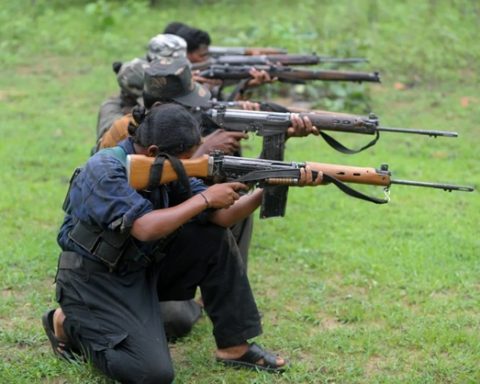
The participation of some Baloch women in insurgent groups, including female fidayeen (suicide) attacks on SFs and state establishments, has forced to government to resort to its ‘regular’ method of disappearances targeting women, which it has been following with Baloch men since decades. The first use of female suicide bombers by the Baloch insurgent groups was reported in April 26, 2022, when the Baloch Liberation Army (BLA) carried out a suicide attack at the Confucius Institute at the University of Karachi, which resulted in the deaths of five persons, including three Chinese nationals, their Pakistani driver and a security guard. While claiming responsibility for the attack, BLA released the image and name of the attacker, female suicide bomber Shaari Baloch aka Bramsh, who was a member of BLA’s Majeed Brigade, a suicide squad. She had joined Majeed Brigade two earlier ago.
The second woman suicide attack came on June 24, 2023, when a BLA-Majeed Brigade bomber, Sumaiya Qalandrani Baloch, attacked a VIP Army convoy that was going from Turbat Airport to the Inter-Services Intelligence (ISI) headquarters in the Turbat city of Kech District. The attack resulted in the death of one FC trooper and injuries to another five.
On August 26, 2024, a third female suicide attack was reported when BLA-Majeed Brigade suicide bomber Mahal Baloch carried out a car-bomb attack at the gate of an FC camp in the Bela area of Mastung District.
The fourth female suicide attack was reported on March 3, 2025, when Majeed Brigade suicide bomber Mihikan Baloch attacked a military convoy on the national highway near the Mughalzai area of Kalat District, resulting in the death of FC trooper Attaullah, and injuries to four others.
The last female suicide attack in this series was on November 30, 2025, when Majeed Brigade suicide bomber Zareena Rafiq aka Tarang Maho attacked the FC Headquarters in the Nokundi area of Panjgur District, resulting in the death of one FC trooper and injuries to another seven.
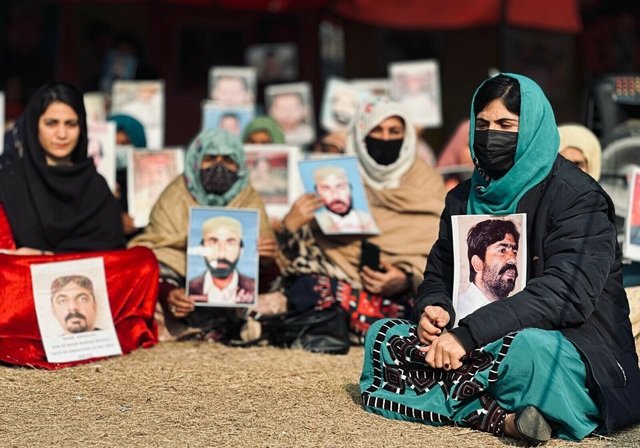
While the participation of a small number of Baloch women in insurgent attacks has drawn attention, women in Balochistan have also become increasingly visible in non-violent political activism over the past decade, particularly around the issue of enforced disappearances and extra-judicial killing. They have led prolonged protests over “missing family members,” relatives they accuse security agencies of forcibly disappearing. Hundreds of women and family members undertook a massive march covering roughly 1,000 miles from Turbat town (Kech District) in Balochistan to Islamabad, and staged sit-ins outside the Islamabad Press Club, demanding the recovery of missing persons, drawing national attention. BYC, a civil rights movement founded by Dr. Mahrang Baloch, was led the effort. Protesters faced Police blockades, tear gas, water cannons, and temporary detentions upon reaching the capital. Despite of state atrocities, Dr. Mahrang Baloch and Sammi Deen Baloch organized and spearheaded these non-violent demonstrations.
Mahrang Baloch founded BYC in July 2018, as a grassroots movement advocating the rights of the Baloch community, with a particular emphasis on mobilising women and the families of individuals allegedly subjected to forcible disappearances. In its annual report released on February 3, 2026, BYC documented 1,223 cases of forcible disappearances and extrajudicial killings across Balochistan and adjoining regions during 2025, including affected areas in Sindh and Punjab. On August 26, 2026, the Baloch National Movement’s (BNM) human rights wing, PAANK (Tr: Shield or Protection), reported at least 556 people were forcibly disappeared and 227 others were subjected to extrajudicial or custodial killings across Balochistan between January and June 2026. A PAANK statement added that a further 171 individuals were released during the same six-month period, describing the figures as amounting to an average of roughly 93 enforced disappearances and 38 killings every month. The Human Rights Council of Balochistan (HRCB) recorded 1,455 disappearances, with 1,052 persons remaining missing. The Voice for Baloch Missing Persons (VBMP) estimates that more than 7,000 persons have disappeared since the insurgency began, even as its continuous protest against enforced disappearances in Quetta had reached 6,207 consecutive days by June 26, 2026.
While describing the growing involvement of Baloch women in the Baloch resistance movement, BYC leader Sammi Deen Baloch told Arab News in an interview on February 25, 2025:
We see that our men, our brothers and sons, were systematically taken from their homes, from educational institutions, dragged away while they slept at night. In such circumstances, the only option left for Baloch women was to take this fight into their own hands, to step forward and lead the battle for justice themselves.
This shift among Baloch women, from the quiet grief to active resistance, has significantly altered the nature of the state’s response. Rather than addressing the underlying drivers of Baloch resentment, the SFs have increasingly sought to suppress dissenting voices among women, treating their growing mobilisation as a security challenge rather than a manifestation of longstanding political and social grievances.