OpenAI has claimed to have solved one of the most celebrated problems in the history of mathematics: the “existence and smoothness” problem of the Navier–Stokes equations, one of seven Millennium Problems identified by the Clay Mathematics Institute, each carrying a $1 million prize. The problem has remained unresolved for almost 90 years.
On paper, the announcement represents a potentially historic achievement. Only one Millennium Problem, the Poincaré conjecture, has previously been solved, and an accepted Navier–Stokes solution would mark the first time a machine had resolved a mathematical problem of this magnitude. OpenAI’s announcement, however, has been overshadowed by an increasingly bitter dispute over priority, authorship and research ethics.
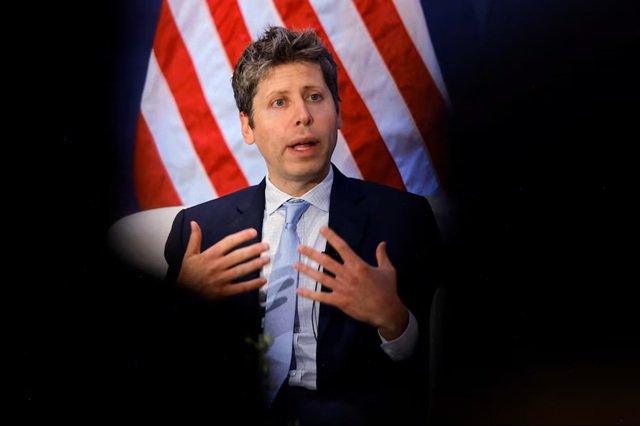
The controversy began with rumours that AI models developed by Anthropic had solved a Millennium Problem. “Es cierto que nos metimos en esto porque la semana pasada circulaban rumores en internet de que los modelos de Anthropic habían resuelto un problema del milenio, y teníamos curiosidad por saber si el nuestro también podía hacerlo”, OpenAI chief executive Sam Altman wrote on X.
OpenAI says it began training its new model against the Millennium Problems on 1 September after hearing that Tristan Buckmaster, a mathematician at New York University, and Levent Alpöge, an Anthropic researcher working on the project in a personal capacity, had already solved one.
That account was not entirely accurate. Buckmaster and Alpöge, using a method devised by Spanish mathematicians Diego Córdoba and Luis Martínez-Zoroa, had made progress towards Navier–Stokes on 15 August, but had not completed the solution. Fields medallist Terence Tao, one of the few mathematicians capable of assessing whether the approach could succeed, described their work as a “notable achievement” and said he saw no obvious obstacle to extending the method to Navier–Stokes. OpenAI subsequently used that direction to complete its own proof.
The night before OpenAI’s announcement, Buckmaster published a statement accusing the company of learning about his private, unpublished research during the previous week. He claimed OpenAI already had a proof before contacting him and had offered him a choice between joint publication or writing the result himself while attributing the achievement to an OpenAI model.
According to Buckmaster, OpenAI scientist Sébastien Bubeck twice pressed for Alpöge to be excluded from authorship because of his connection to Anthropic. Bubeck has described Buckmaster’s account as “false and incendiary”, while acknowledging that excluding Alpöge was discussed because he was an Anthropic employee.
A further dispute concerns whether OpenAI could have accessed Buckmaster’s notes and prompts through Codex, its programming tool. If confirmed, such access would raise serious questions about the privacy and integrity of OpenAI’s products.
OpenAI maintains that its researchers and agents did not access the researchers’ work before it became public. It nevertheless says it cannot completely rule out the possibility that “de-identified” data derived from users’ interactions with its products contributed to improving its models.
The controversy has therefore expanded beyond the question of who solved Navier–Stokes. Tao has questioned what incentive researchers would have to share promising ideas before completing them if rumours could trigger competitors with greater resources to deploy thousands of agents and millions of dollars in computing power. He has also criticised the concealment of failed attempts and called for standards that recognise both the mathematical idea and the final result.