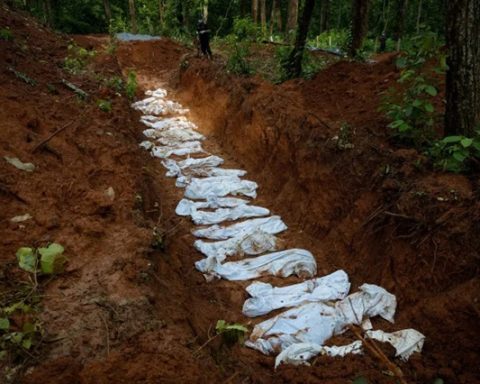
At least 124 land and environmental defenders were killed worldwide in 2025, according to Global Witness, bringing the number of documented killings and long-term disappearances since 2012 to more than 2,375. The figures are stark, but the organisation warns that they represent only a partial picture: repression, conflict, limited access to information and the systematic targeting of defenders through non-lethal means make many attacks difficult to verify.
The overwhelming concentration of lethal violence remains in Latin America. Eighty-five per cent of documented killings in 2025 occurred in the region, with Colombia recording 39 deaths, Brazil 26, Honduras 12, Mexico 10, Guatemala eight, Peru four, Nicaragua three and Ecuador three. Global Witness attributes the persistence of these attacks in part to insecure land tenure, weak state protection and the growing influence of organised crime.
Yet the report argues that the violence cannot be understood simply through the number of people killed. Criminalisation, threats, smear campaigns, surveillance and digital harassment increasingly form what it describes as a “hidden iceberg” beneath the most visible attacks. In some countries, defenders are accused of terrorism, extortion, vandalism or other offences while challenging mining, logging, agribusiness, infrastructure and other projects affecting their territories.
The experience of the Dayak Indigenous communities in Indonesia offers a particularly detailed example. In West Kalimantan, customary leader and farmer Tarsisius Fendy Sesupi attempted to resolve a land dispute with pulpwood company PT Mayawana Persada through the Dayak traditional justice system. The company had cleared farmland claimed by his community, while residents said eucalyptus and acacia plantations contaminated water sources and damaged fisheries.
Fendy negotiated directly with company representatives. The company agreed to pay a customary fine of 16 million Rupiah, around $900, and attend a ritual intended to restore spiritual and social balance. But when the ceremony was due to take place, no company representative arrived. Instead, Fendy received a police summons after a criminal complaint alleged that he had extorted Mayawana employees.
In August 2025, he was officially accused of extortion and violent coercion, offences carrying a maximum nine-year prison sentence. Four months later, police attempted to arrest him after a media briefing in Pontianak. Fendy says he has received 28 police summonses since beginning to defend his community’s land rights. In early 2026, a judge rejected his attempt to have the charge dismissed.
The dispute sits within a much larger transformation of the territory. Indonesia’s Ministry of Forestry granted Mayawana a 136,710-hectare concession in 2010. More than 88,000 hectares were forested at the time. Global Witness reports that the company subsequently cleared 35,000 hectares, including 19,000 hectares of orangutan habitat, while 30,000 hectares of peatland were converted into pulpwood plantation.
For the Dayak communities living inside the concession, the consequences extend beyond the loss of farmland. At Bukit Sabar Bubu, a sacred forest regarded as the resting place of Dayak ancestors, residents had established customary practices and regular patrols to protect the area. When those patrols paused during planting season in June 2020, part of the hill was cleared.
Around five kilometres away, farmer Petrus Pecun says nearly all of his 50-hectare farm was eventually converted into pulpwood plantations. Another resident, Emiliana, describes guarding her rubber plantation for days with so little food that she and her husband went without eating. The forest also supplied rattan and bamboo used for weaving. As the forest disappeared, so did the materials and livelihoods associated with it.
Resistance brought further criminal proceedings. Dayak leaders installed customary markers prohibiting further company activity and community members detained 13 pieces of heavy excavation machinery after notifying police. Fendy later imposed the customary sanction against Mayawana. Other leaders faced arrests and police summonses. Ahmad Syukri of Link-AR Borneo describes a recurring pattern in which community action to defend land rights is followed by an attempt to criminalise the person leading the struggle.
Global Witness says this pattern is spreading across Asia. Satya Bumi documented 35 criminalisation cases involving 191 individuals in Indonesia in 2025, more than half of the 64 attacks against environmental defenders it recorded that year. The organisation argues that such accusations can weaken community solidarity and civic space while increasing defenders’ vulnerability to further violence.
The threat is not confined to Indonesia. In Mexico, human rights lawyer Ricardo Lagunes Gasca and Nahua Indigenous leader Antonio Díaz Valencia disappeared on 15 January 2023 after participating in a community assembly concerning longstanding problems around a mining project managed by Ternium-México. Their families continue to search for them. In the Philippines, environmental defenders Jhed Tamano and Jonila Castro were abducted in September 2023 while opposing an airport project. After their release, they faced legal proceedings and accusations that were later dismissed, while their petition for judicial protection remains before the Supreme Court.
In Chile, the disappearance of Mapuche defender Julia Chuñil Catricura remains unresolved. She disappeared on 8 November 2024 while defending native forest from deforestation. In January 2026, three of her children were arrested and criminalised, although Pablo and Jeannette were subsequently released after being placed under house arrest because of a lack of evidence against them. The family’s lawyer also became the subject of scrutiny, although prosecutors confirmed in August 2026 that no case was currently open against her in relation to the investigation.
In Nigeria, meanwhile, community leaders and forest defenders from Ekuri Forest faced intimidation, arrest and detention following complaints linked to illegal logging interests. They were released after local environmental organisations and lawyers intervened. The communities nevertheless continue to patrol the forest through eco-guards and advocate for community forest rights.
The wider pattern is also visible in the geography of killings. Colombia recorded 39 deaths in 2025, with 35 linked to land conflicts. Brazil recorded 26, with most connected to ancestral territory recognition and demarcation. Honduras recorded 12, including 10 small-scale farmers in Colón, an area affected by land conflict and strategic cocaine routes. The Philippines recorded 12, the highest total outside Latin America.
Organised crime is a recurring factor. Global Witness says suspected links to organised crime were identified in more than one-third of killings in 2025. In Colombia’s Cauca department, 13 defenders were killed, including four Indigenous Guards. Coca cultivation has increased fivefold over a decade, while illegal mining and other criminal economies have intensified pressure on forests and communities. In Peru’s Ucayali region, coca cultivation increased by more than 600 per cent between 2019 and 2023, reaching more than 12,000 hectares during a period in which five Kakataibo leaders were killed.
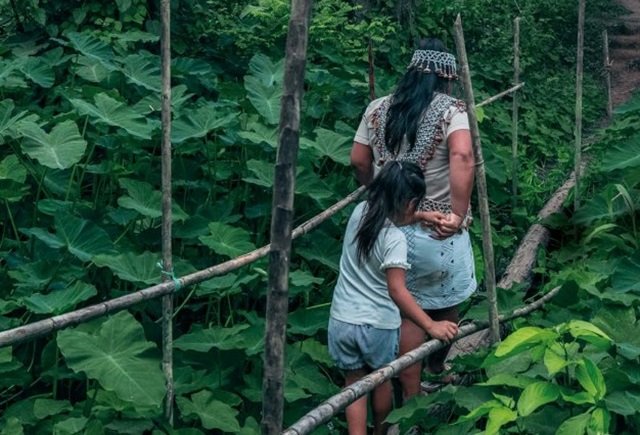
For communities such as the Kakataibo, the response has increasingly been collective. Their Indigenous Guard, established in 2022, has grown to more than 150 members across 10 communities. Its members patrol territory, monitor coca cultivation and illegal logging, and organise responses through community assemblies. The model reflects a central argument running through the Global Witness report: defenders are often attacked not as isolated individuals but because they belong to communities defending collective land, resources, culture and political rights.
The report therefore calls for protection mechanisms that go beyond individual security. It advocates collective land rights, stronger recognition of customary governance, meaningful Free, Prior and Informed Consent, community-led early-warning systems, legal and psychosocial support, specialised investigative units and stronger action against those who finance or organise attacks.
It also calls for governments to confront laws used to criminalise peaceful activism, address organised crime through rights-based approaches, strengthen digital protections and support Indigenous, Afro-descendant, peasant and community-led systems of territorial governance.
At the international level, Global Witness urges stronger implementation of corporate human-rights and environmental due diligence, including through the EU Corporate Sustainability Due Diligence Directive, the EU Deforestation Regulation and UK forest-risk commodity law. It also calls for wider ratification and implementation of the Escazú Agreement, which provides specific protections for environmental defenders in Latin America and the Caribbean.
The report’s methodology carries its own warning. Global Witness says its database is rigorously reviewed, but acknowledges that the figures are likely an underestimate. Its dataset records cases where there is a reasonable and suspected link between a killing or disappearance and activism defending land or the environment, using information from families, civil society groups, official sources and partner organisations.
The number — 124 defenders killed in 2025 — is therefore not presented as the full measure of the crisis. Behind it are disappearances that remain unresolved, criminal cases that can stretch for years, families searching for missing relatives, communities losing forests and farmland, and defenders confronting threats after taking collective action.
The central question raised by the report is consequently broader than how many defenders are killed each year. It is whether the people protecting forests, territories and communities can exercise those rights without becoming targets themselves. For Global Witness, protecting ecosystems ultimately requires protecting the people who defend them.