For two centuries, mathematicians have struggled with a deceptively simple question: can the equations that describe the movement of fluids suddenly break down?
Now, according to reporting by New Scientist, OpenAI says its artificial intelligence systems have found a mathematical construction demonstrating that such a breakdown can occur in the Navier–Stokes equations, one of the seven celebrated Millennium Prize Problems carrying a $1 million prize for a valid solution.
The development is significant not simply because of the mathematical problem involved, but because of how the result was produced. OpenAI reportedly deployed more than 10,000 AI agents working in different configurations. Within roughly 88 hours, the system had generated a solution that researchers are now attempting to understand, verify and place within the broader history of mathematical research.
The Navier–Stokes equations were formulated roughly 200 years ago to describe fluid motion. They underpin an enormous range of modern engineering and scientific applications, from the design of aircraft wings to modelling fluid behaviour in artificial hearts. Yet the equations contain a fundamental mathematical mystery. Researchers have long wanted to establish whether sufficiently violent behaviour — known as a “blow-up” — can occur within the equations.
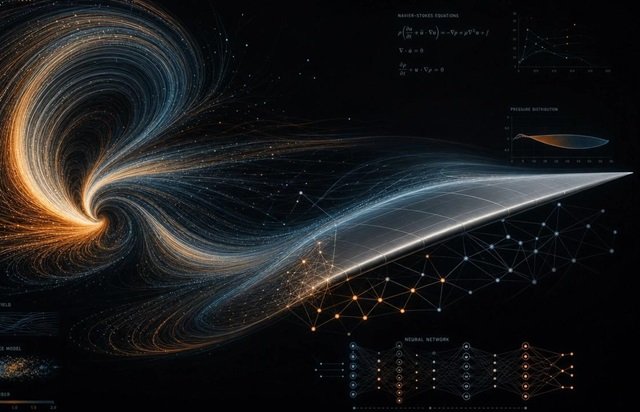
A blow-up does not mean that a real-world fluid suddenly becomes physically infinite. Rather, it describes a mathematical situation in which a quantity associated with the fluid, such as velocity, becomes unbounded within a finite period. The image is almost absurd: an ordinary whirlpool intensifying until its mathematical intensity becomes infinite.
As New Scientist has reported, the recent result builds on decades of human mathematical work. In 2014, Thomas Hou and collaborators demonstrated a mechanism capable of producing blow-up behaviour for the Euler equations under particular conditions. Later, Luis Martínez-Zoroa and Diego Córdoba developed a method involving thin layers of fluid that could generate blow-ups for both Euler and Navier–Stokes equations. Their approach, however, depended upon an unrealistic external force and therefore did not resolve the Millennium Prize problem in its required form.
A further breakthrough came from Tristan Buckmaster of New York University and Levent Alpöge of Anthropic, who removed that problematic requirement in the Euler equations and related settings. OpenAI subsequently entered the problem after learning of progress being made by the mathematicians. Its AI agents developed a related but ultimately distinct approach, according to New Scientist.
The resulting construction describes a rotating structure that becomes progressively longer, thinner and more intense until its mathematical behaviour becomes infinite in finite time while requiring only a finite amount of force.
That distinction matters. The discovery does not mean that aircraft will suddenly become unstable or that bathwater can physically turn into an infinite whirlpool. The Navier–Stokes equations remain extraordinarily effective approximations for real-world fluids. As University of Washington researcher Steven Brunton explained to New Scientist, mathematical models have limits, and the point at which the equations blow up represents a point at which the model no longer provides an adequate description of physical reality.
For engineers, therefore, very little changes immediately. For mathematics, however, the implications could be much broader.
The central issue is no longer simply whether AI can solve difficult mathematical problems. Increasingly, it is whether humans can understand the solutions that AI produces.
That concern has been articulated particularly forcefully by Terence Tao, the Fields Medal-winning mathematician at the University of California, Los Angeles. Speaking to New Scientist, Tao warned that the speed at which AI companies can generate mathematical results risks overwhelming the slower processes through which mathematics has traditionally developed.
A mathematical discovery does not become part of the discipline merely because a computer produces a purported proof. It must be checked, explained, accepted, communicated, taught and eventually incorporated into the accumulated body of mathematical knowledge.
AI may be exceptionally effective at the first stages. The later stages remain overwhelmingly dependent on human mathematicians.
This creates a paradox. Artificial intelligence may dramatically accelerate mathematical discovery while simultaneously making mathematical understanding more difficult. A computer can search through enormous numbers of possibilities and produce a formally verifiable argument without necessarily revealing the conceptual reason why the argument works.
That distinction has always mattered. Mathematicians do not merely want to know that a proposition is true. They want to know why it is true, what broader principle explains it and whether the discovery opens a route towards other problems.
The controversy surrounding OpenAI’s Navier–Stokes announcement illustrates the emerging tension. New Scientist has reported that the sudden competition created by AI systems contributed to human researchers publishing work more rapidly than they otherwise might have done. Tao argues that the resulting race risks shifting mathematical culture towards speed and priority rather than clarity, collaboration and explanation.
There is an irony here. Mathematics has repeatedly been transformed by new technologies and new conceptual tools. René Descartes’ connection between geometry and algebra was once regarded with suspicion because it replaced intuitive geometric reasoning with symbolic manipulation. Centuries later, that transformation became fundamental to modern mathematics, calculus and physics.
AI could eventually produce a comparable transformation.
But there is an important difference: previous mathematical revolutions expanded the tools available to humans. AI potentially introduces a system capable of producing mathematical results at a speed that humans cannot match.
That leaves mathematics facing an unfamiliar problem. If machines increasingly discover the answers, humans may have to devote more effort to discovering the explanations.
The Navier–Stokes breakthrough therefore represents two developments at once. It is a remarkable advance in the use of AI for mathematical research, and it is an early warning that the traditional relationship between discovery, proof and understanding may be changing.
As New Scientist has reported, the immediate challenge is not simply to establish whether OpenAI’s result survives scrutiny. It is to understand the mathematics sufficiently well for the discovery to become useful knowledge.
The machines may have accelerated the search for an answer. The harder question is whether they have accelerated — or complicated — our ability to understand it.