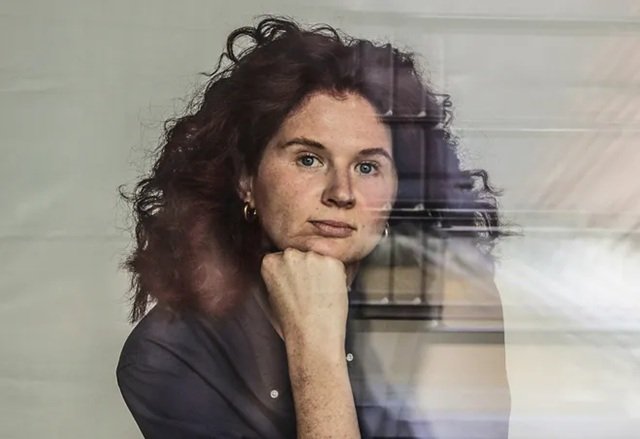
At 27, Verena Bahlsen entered the leadership of the family company that had produced biscuits for generations. Two years later, she was gone. The departure marked the end of an unusually public chapter in the life of an heir to one of Germany’s best-known family businesses, but it also opened a period in which Bahlsen began examining questions that had little to do with corporate strategy and much to do with identity, privilege, relationships and money.
In an interview published by DIE ZEIT in its 2026 edition, Bahlsen discusses those questions alongside the publication of her book Panikjahre. The interview presents a portrait of a woman attempting to understand the distance between inherited wealth and personal achievement, between family loyalty and independence, and between the privileges of money and the limitations they can impose.
Bahlsen says that her decision to leave the family company followed disagreements about its direction. She describes a family structure in which she had three siblings and two parents, making it impossible simply to disregard everyone else and pursue her own course. At the same time, she says, subordinating herself was not an option. “I didn’t want to put on little suits and discuss Ebit margins,” she tells DIE ZEIT. “So I left.”
Her experience was not entirely without precedent within the family. Bahlsen recalls how her father and his brothers had themselves disagreed over the company’s direction in the 1990s, ultimately leading to its division because none of them was willing to give way. The conflict surrounding her own departure therefore took place within a longer family history in which business ownership, succession and personal relationships were closely intertwined.
The family’s corporate history also carries a much darker historical dimension. In 2019, Bahlsen attracted intense criticism after comments about forced labourers employed by the company during the Nazi era were widely reported. She later apologised, describing the statement as a “huge mistake” and “inexcusable”. More fundamentally, she says that she and her family had previously failed to confront the company’s role during the Nazi period, including the fact that her grandfather Werner Bahlsen had been a member of the NSDAP.
According to Bahlsen, she subsequently spent more than four years examining the company’s history with historian Manfred Grieger. She says she repeatedly worked through archival material with him and came to understand that her ancestors had committed acts for which she was not personally responsible but from which she continues to benefit. DIE ZEIT reports that the historical research found that Bahlsen had caused suffering to more forced labourers during the Nazi period than had previously been understood.
That reckoning forms part of a broader story in Bahlsen’s account: the difficulty of separating personal identity from an inherited family name. In her interview with DIE ZEIT, she describes herself as having spent years presenting a version of herself to others that differed from her private identity. Her book, she says, represents an attempt to place more of herself openly into the public sphere.
Much of that book concerns a subject that might appear far removed from corporate wealth: loneliness, romantic relationships and shame. Bahlsen says that after leaving Bahlsen, she became particularly interested in loneliness, love and shame. In her mid-twenties, she had never had a relationship and believed that she was not desirable. She describes the experience as producing panic and embarrassment, particularly within the social environment in which she had grown up.
Her later relationship with Max, a partner who had considerably less money and a very different background, changed her perspective on wealth. Bahlsen tells DIE ZEIT that her partner was unemployed when they met and had little interest in her wealth or in becoming rich. She pays for their holidays, while everyday expenses are shared, and the couple have deliberately restricted their spending.
The change, she suggests, is not simply financial. Before the relationship, she had grown up in circumstances where expensive experiences could seem almost limitless. She recalls attending an English boarding school, eating at expensive restaurants in London at weekends and travelling with her parents to desirable destinations. When she travelled to London with Max, however, he was seeing places he had never previously visited. His excitement changed the way she experienced them herself.
This experience led Bahlsen to question what unlimited wealth can do to a person. Asked by DIE ZEIT whether money can corrupt, she says that people can begin buying unnecessary things in an attempt to make themselves happy, but that money can also encourage someone to become a worse person. “In the worst case, it destroys you,” she says.
She describes having once lived inside a “bubble”, without fully appreciating that many people could not afford to travel constantly or live in the same way. Working at Bahlsen brought her into closer contact with people from more ordinary circumstances, changing her understanding of the world around her.
Yet the material realities of inherited wealth remain substantial. Bahlsen and her siblings each own 23.75 per cent of Bahlsen, which made around €60 million in pre-tax profit in 2024. She says the family does not individually negotiate how much is distributed to them because this is governed by contractual arrangements. A wealth manager works with the family to determine what proportion of annual profits is donated and what is reinvested.
Asked whether inheritance is fair, Bahlsen gives a direct answer: “No.” Inheritance, she says, is inherently unfair because it has no connection to what an individual has earned during their own lifetime. On the question of whether heirs should face higher taxes, however, she declines to take a public position, saying that she follows the inheritance-tax debate but does not want to add to what she describes as clickbait.
Her post-Bahlsen life has also involved creating her own business. Through Gezeiten Design, the small advertising agency she founded, she works on branding for companies, including websites, logos, packaging and brands. The difference from her earlier corporate position is that she says she now has the freedom to choose work because she wants to do it rather than because she needs the money.
That distinction lies at the heart of her reflections on wealth. Her financial circumstances have remained largely secure because of inheritance, while the income she has earned through employment, freelancing, her agency and her book has followed a very different trajectory. The contrast is one of the central themes presented through the personal charts accompanying the DIE ZEIT interview, which trace wealth, earnings, happiness, panic, conflict, dating and coaching across her life.
Her account also includes decisions shaped by anxiety about relationships and motherhood. In her mid-twenties, she froze her eggs because she feared she would not meet a partner in time to have children. She says the decision involved substantial time and money and that she still receives bills connected with the treatment. She later met Max through an intensive period of dating.
Their relationship is itself unconventional. Bahlsen tells DIE ZEIT that they have an open relationship, although dating outside the relationship has become less frequent. She acknowledges periods of conflict, including falling in love with other people and twice separating from Max before returning to the relationship.
The family relationship, meanwhile, has survived her departure from the company. Bahlsen describes the separation from her father as more of a process of becoming independent than a rupture. She says that he made decisions she would have made differently, but adds that he has always been there for her and that she considers him “really cool”.
The family has also developed its own mechanisms for dealing with disagreement. Bahlsen says they try to discuss conflicts afterwards rather than pretending nothing happened. Her father, she recalls, has repeated since her childhood that they must always have enough time to talk. She credits family coaching with helping them become better at doing so.
Her experience ultimately leaves her with a complicated view of wealth. Money has given her freedoms that many people do not possess, including the ability to leave a powerful family company and build a different professional life. But it has also shaped her understanding of relationships, responsibility, privilege and personal identity.
For Bahlsen, the central question is therefore not simply how much money a person possesses, but what unlimited financial security does to the way that person sees the world. Her story, as presented in DIE ZEIT, is less a conventional account of an heiress inheriting a business than an examination of what happens when inherited wealth provides almost everything except a ready-made answer to the question of who one is.