Japan is seeking 6.7 billion yen (US$43 million) in next financial year’s initial budget to combat a longhorn beetle that is destroying cherry trees and threatening agricultural production, ecosystems and the country’s famous spring cherry blossom season.
The Environment Ministry’s proposed allocation represents an elevenfold increase from the 600 million yen initially earmarked for measures against invasive species in the 2026 financial year. The funding would support efforts to eradicate the red-necked longhorn beetle and strengthen protection for trees, including plum and peach varieties, that are vulnerable to infestation.
Officials have warned that continued growth in the beetle population could cause significant agricultural damage. The threat extends beyond farming, with the ministry saying widespread infestation could make cherry blossom viewing more difficult, increase the risk of trees falling and disrupt ecosystems.
The response comes after damage was reported across Japan. The environment and farm ministries established a joint task force in July and adopted a strategy earlier this month that calls for technical and financial assistance to local governments dealing with the beetle.
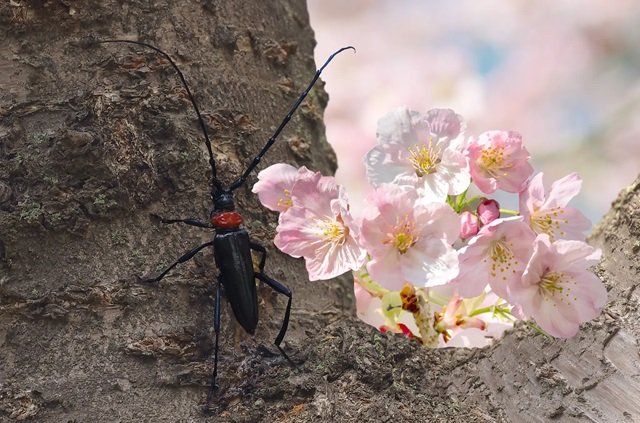
Native to China, the Korean peninsula, Taiwan and Vietnam, among other areas, the red-necked longhorn beetle typically measures between 2.5cm and 4cm in length. It was first confirmed in Japan in 2012 and has since been detected in multiple parts of the country.
The beetle’s life cycle makes the problem particularly difficult to tackle. Adult insects are most prevalent between May and August, while larvae emerge from eggs laid in cracks in trees and burrow deep into the wood. They feed inside the tree for two to three years before pupating, allowing infestations to develop largely out of sight.
Japan classified the beetle as an “invasive alien species” in 2018. Under the designation, breeding, keeping, importing, selling or releasing the insect into the wild is prohibited.
Local authorities have also introduced financial incentives in an effort to contain the spread. The town of Kawajima in Saitama prefecture pays 100 yen for every beetle captured and killed, while the city of Oyama in Tochigi prefecture offers 500 yen for 10 beetle carcasses.
The government has already directed additional resources towards protecting cherry trees because of their importance to tourism. For the 2026 financial year, the Environment Ministry received an additional 600 million yen from international tourist tax revenue to protect cherry trees as an “important tourism resource”.
The ministry said, however, that the amount available from the same source for the next financial year has not yet been determined.
The proposed increase in funding reflects the growing concern over a pest that threatens both natural and economic interests. Japan’s cherry trees are central to the annual spring tradition of cherry blossom viewing, while the same species and other flowering and fruit trees face a less visible threat from larvae feeding inside their trunks and branches.
With the beetle already established in various parts of the country, authorities are now seeking substantially greater resources to prevent its further spread before damage to trees, agriculture and ecosystems becomes more difficult to control.