For decades, Sri Lanka’s national airline has occupied an uneasy place in the country’s public life: a source of national pride on one hand and a continuing financial burden on the other. SriLankan Airlines has repeatedly been associated with enormous losses, allegations of corruption and irregularities, flight cancellations and controversy surrounding aircraft purchases. Its maintenance and fuel costs have also been described as serious factors when compared with competing airlines.
Yet the airline remains the country’s national carrier, making its future more than a question of commercial performance. For a country that has recently emerged from an unprecedented financial crisis and continues to face significant economic challenges, the fate of a state-owned airline has become part of a much larger debate over how public resources should be used and how state enterprises should be structured.
The burden extends beyond those who regularly travel by air. The source material points out that even people who have never taken a flight and those who depend on assistance such as Aswesuma ultimately bear part of the cost through public finances. Every loss recorded by the airline and every rupee spent servicing its debts places further pressure on government revenue, reducing the resources available for development.
The history of the problem stretches back well beyond the present company. Air Ceylon was established as a government enterprise in 1947. Lacking adequate financial resources, it struggled for a decade while working in partnership with foreign airlines. By 1978, only two aircraft and a limited number of destinations remained.
The introduction of the open economic system created new opportunities for tourism and for serving the rapidly expanding labour market in the Gulf region. The government therefore decided to establish a new airline capable of operating long-distance services. The foundation was laid for Air Lanka. In September 1978, one of Air Ceylon’s final two aircraft was destroyed in a bomb attack, and the old airline was subsequently abolished.
The government of the time, which was pursuing an economic model influenced by Singapore, sought advice from Singapore’s national airline, established under Lee Kuan Yew. The advice given to President J. R. Jayewardene was that Sri Lanka did not require a national airline at that stage. The source material argues that the advice remains relevant today. Air Lanka nevertheless began with considerable enthusiasm before quickly becoming embroiled in difficulties. Parliamentary debate records subsequently revealed controversies surrounding aircraft purchases. Meanwhile, the damage inflicted on tourism by terrorism in the north, followed by the events of Black July in 1983, further constrained the airline’s expansion.
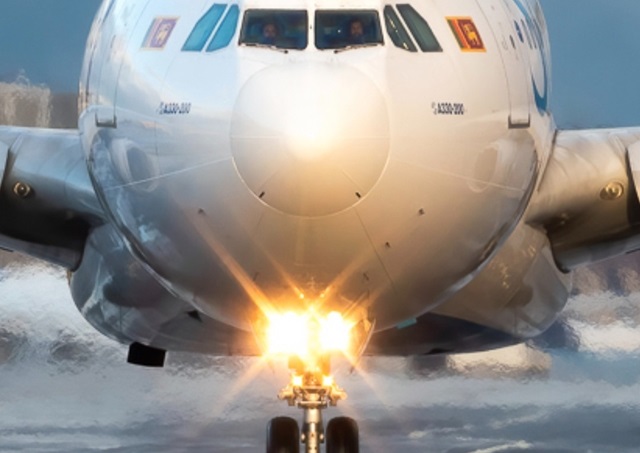
Attempts to change ownership and management have continued repeatedly over the past 25 years. In 1998, Dubai-based Emirates purchased a stake in the airline and signed a ten-year management agreement. The carrier was renamed SriLankan Airlines, and six new A330-200 Airbus aircraft and another A340-300 Airbus aircraft were acquired.
The airline was hit by another major setback in July 2001, when an attack on Bandaranaike International Airport destroyed four aircraft and damaged two others. The management team decided against purchasing replacements and significantly reduced the size of the airline.
In 2010, the Sri Lankan government bought back Emirates’ 43.6 per cent stake. According to the source material, Emirates had operated the airline profitably for eight years from 1999, after which the company reported continuing losses, inefficient service and corruption-related problems.
Aircraft procurement became controversial again in 2013, when SriLankan ordered ten Airbus aircraft and agreed to lease additional aircraft. The supplying company later admitted before a British court that it had paid commissions to the airline’s chief executive. British media reported commissions of $16 million relating to the aircraft. After a change of government, the Yahapalana government cancelled the aircraft order, with $400 million reportedly paid in compensation for the cancellation.
The accumulated financial consequences are substantial. Between 2010 and 2025 alone, SriLankan Airlines recorded a total loss of approximately Sri Lankan rupees 631.5 billion, equivalent to more than $1.7 billion. The company also carries around $600 million in debt, including unpaid aircraft leasing costs. Of this burden, the government allocated Rs20 billion through the 2025 budget.
The airline’s difficulties have repeatedly revived the question of privatisation. Governments led by Ranil-Maithripala, Gotabaya and Anura Dissanayake have attempted to privatise the carrier, but no recognised company has agreed to invest under the conditions offered in Sri Lanka. Committees led by J. C. Weliamuna and H. M. Gamini Wijesinghe examined the company internally and submitted their reports to presidents. The current government appointed Dr Hans Wijesuriya and instructed him to restructure SriLankan in accordance with the committees’ recommendations.
The commercial picture is complicated by the fact that not every part of the national carrier is presented as unviable. SriLankan Catering and airport ground-handling operations are described as successful monopoly divisions. Aircraft maintenance centres and airport security services are also identified as profitable businesses. The central difficulty, according to the source material, is the capital required to operate the airline itself. Borrowing to meet day-to-day requirements and aircraft-related costs, together with the associated interest, creates a substantial financial burden.
Sri Lanka now faces a choice about whether the existing structure can continue. Recent attempts at change have not succeeded, while new aircraft have again been leased and a significant number of flights have reportedly been cancelled for different reasons. At the same time, SriLankan has surrendered operations on several major routes to competing airlines.
The debate over the national carrier therefore returns to the same unresolved question: how can Sri Lanka retain an airline that carries national significance without continuing an operating model that places substantial costs on the public? The source material argues that maintaining the old structure carries serious consequences. With government revenue already committed to debt and loss-making enterprises, the future of SriLankan Airlines has become an issue that reaches far beyond aviation itself.