Southeast Asian businesses are looking to China’s newly opened Pinglu Canal to reduce transport bottlenecks and provide direct access to markets deep inside the country, but officials and analysts warn that the new trade route could also intensify an existing imbalance in China-Asean commerce.
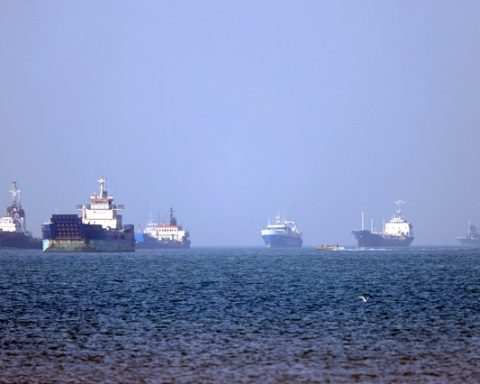
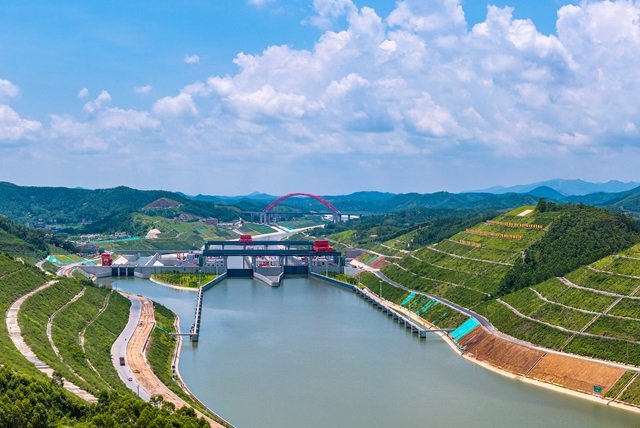
The 134.2km canal in southern China’s Guangxi Zhuang autonomous region connects inland rivers and shipping routes in southwestern China with the Gulf of Tonkin, known in China as the Beibu Gulf. The project began construction in August 2022 at a planned investment of 72.7 billion yuan (US$10.8 billion) and can accommodate vessels of up to 5,000 tonnes. It is expected to save more than 5 billion yuan in transport costs annually.
Vietnamese coffee chain Trung Nguyen Legend is among the companies hoping to benefit. The company buys coffee beans during the harvest season from plantations in Vietnam and supplies its growing network of Chinese outlets, but existing road-and-sea transport routes can be circuitous and subject to delays.
“Large seagoing barges carrying coffee beans from Vietnam will be able to sail along the new canal straight up to Nanning and other inland Chinese hubs,” said Huang Weiqiang, the company’s regional co-manager in Nanning. “No need to change to smaller vessels … potentially, this can bring more sales for us in China.”
The canal was closely watched by the 11 members of the Association of Southeast Asian Nations, which see potential for lower transport costs and improved access to China’s inland markets. Exporters and trade officials from Vietnam, Thailand and Singapore attending the China-Asean Expo in Nanning, which ended on September 21, said the benefits should extend to companies shipping goods in both directions.
“The canal should facilitate two-way trade, especially when Beijing has vowed umpteen times to expand imports,” said an official from the Thailand Board of Investment’s Guangzhou office. She cited durian, rice and electronic components as Thai products that could potentially move through the canal into deeper Chinese markets.
The concern is that the same infrastructure could make it easier for Chinese goods to enter Southeast Asia. Asean imported US$546 billion worth of goods from China during the first eight months of this year, an increase of 25.8 per cent from a year earlier, while its exports to China totalled US$316.7 billion, according to China Customs data.
By allowing cargo to bypass transits through major centres such as Guangzhou or Shanghai, the canal could reduce distances, costs and congestion. The Thai official said that could also increase her country’s trade deficit because Chinese companies operating in Thailand would have a faster route for importing machinery and components from China. “There is a need for rebalancing the trade asymmetry,” she said.
Analysts described the canal as a potentially important change in Southeast Asia’s economic links with China’s inland regions. Alice Chan, managing director of the Singapore-based APAC Innovation and Collaboration Centre, called Pinglu “a double-edged sword” and said Asean should study its implications while making full use of the infrastructure.
Phar Kim Beng, professor of Asean Studies at the International Islamic University Malaysia, said the canal should become a two-way trade route rather than reinforce China’s industrial dominance. “The greater opportunity lies in making Asean products penetrate deeper into western China’s markets,” he wrote in a report published this month.
New direct freight connections are already being considered, including routes between Nanning and Can Tho in Vietnam’s Mekong Delta. Trung Nguyen executives said the company would consider using such routes, while the 14-year-old China-Malaysia Qinzhou Industrial Park, located where the canal reaches the sea, has increased industrial cooperation efforts to attract more foreign manufacturers.