Israel’s upcoming election is being closely watched across the Middle East, where neighbouring governments and regional powers expect the result to affect security, diplomacy and the future of the Israeli-Palestinian conflict.
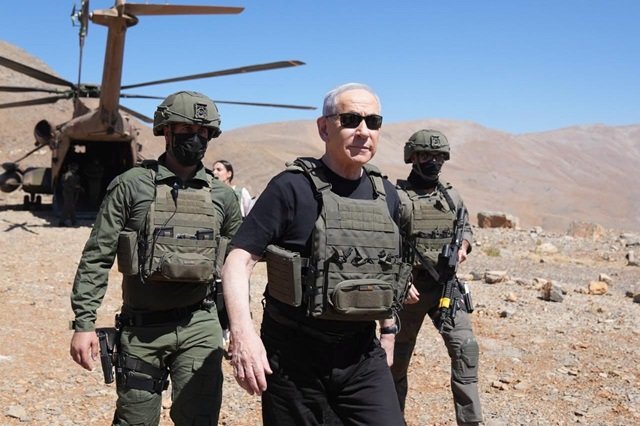
Prime Minister Benjamin Netanyahu, launching his Likud party’s campaign this month, repeated his claim that he “has changed the face of the Middle East” and pledged to continue doing so. He has defended the continued presence of Israeli troops in neighbouring Lebanon and Syria, while ministers in his government have promoted plans that critics say would displace Palestinians from the West Bank and Gaza and create further pressure on Jordan and Egypt.
Opinion polls indicate that the October 27 election is likely to be close. Netanyahu’s bloc of far-right and ultra-Orthodox allies is competing against a bloc led by centrist Gadi Eisenkot, making the result a matter of close attention across countries that have security, diplomatic or economic interests tied to Israel.
In Jordan, concern centres on Israeli settlement expansion and statements by Israeli officials advocating the removal of Palestinians across the Jordan River. Oraib Rantawi, founder of Amman’s Al-Quds Center for Political Studies, described such proposals as “an existential threat” to the Hashemite kingdom. King Abdullah II told the United Nations that “the Israeli government’s expansionist appetite is now a regional threat”.
Rantawi said Jordan and Israel were on “a collision course” as Israeli right-wing politicians sought to shift responsibility for dealing with the Palestinian population to Amman. Jordan signed a peace treaty with Israel in 1994, and Rantawi said it was maintaining “a minimum level of political engagement” that was unlikely to change regardless of the election result.
Egypt has also faced tensions with Israel over the war in Gaza and proposals described by Israeli ministers as “voluntary emigration”. Cairo has maintained extensive security co-operation with Israel but says it has repeatedly resisted efforts to move more than 2 million Palestinians into Egyptian territory.
Former ambassador El-Sayed Shalaby said the best-case scenario would be “a government that is less ideologically driven and more focused on security”, potentially reducing tensions around Gaza without changing Israel’s fundamental position. Foreign Minister Badr Abdelatty said Egypt “will deal with any government that is coming”, while accusing Netanyahu of obstructing the Trump ceasefire plan, which Egypt brokered.
The Gulf states are also weighing the implications for relations with Israel. Saudi Arabia has resisted US efforts to advance normalisation since the Gaza war began, insisting on a pathway towards a Palestinian state. Neil Quilliam of Chatham House said Saudi policymakers were likely to regard normalisation as “a long-term possibility”, but would not accept the political and reputational costs of doing so with a right-wing Israeli government.
The United Arab Emirates, which has maintained strong ties with Israel despite criticism of its Gaza offensive, is also described as uncomfortable with policies that create regional instability. Andreas Krieg of King’s College London said the UAE wanted “predictability, strategic discipline and de-escalation”.
In Lebanon, Israeli attacks and the invasion of the south have killed more than 4,300 people and displaced 329,000 since March, while Beirut pursues talks with Israel focused on Hezbollah’s disarmament. Parliament Speaker Nabih Berri accused Israel of turning southern Lebanon into “a ballot box soaked in blood” ahead of the election.
Lebanese President Joseph Aoun called the Israeli election an internal matter but said the central issue for future Israeli governments was whether they wanted “stability, security and no wars on their border”.
Syria is similarly watching for possible changes. Since Bashar al-Assad was ousted in December 2024, Israel has carried out hundreds of strikes in Syria, deployed troops into a United Nations-patrolled buffer zone and conducted regular incursions. A Syrian diplomatic source said Damascus was watching for a government “less inclined toward escalation and more willing to listen to Washington”.