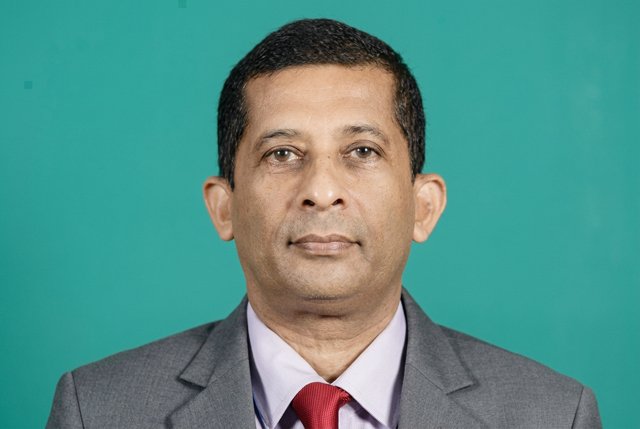
by Durga Velayudham
The United Nations communication on Suresh Sallay should force Sri Lanka’s Dissanayake’s regime to confront a question repeatedly avoided. Who is accountable when an investigation becomes a political narrative before it becomes an evidentiary case? Four UN Special Procedures mandates have raised serious concerns about Sallay’s detention, alleged torture, degrading treatment, restricted legal access and deteriorating health. It is an international warning that the State’s conduct must itself be investigated.
Sallay was arrested on 25 February 2026 in connection with the Easter Sunday investigation. A Ministry of Defence detention order under the Prevention of Terrorism Act followed, and President Anura Kumara Dissanayake, acting as Defence Minister, subsequently issued further detention orders. That is a documented exercise of executive power. What cannot responsibly be said is that Dissanayake personally ordered Sallay’s detention without evidence unless documentary proof establishes such a direction. What can be said is that the UN communication demands an explanation of the factual and legal basis for keeping him under PTA detention, including allegations that the case record lacked substantiating evidence and that exculpatory material was not properly considered.
The treatment alleged in custody makes the issue far more serious. The UN communication records allegations that Sallay was stripped naked in front of officers and other detainees, handcuffed and subjected to humiliating treatment while being pressured to confess. It describes a tiny cell, rats, continuous illumination, severe sleep deprivation and restricted family contact. Most importantly, the UN experts said they were “deeply concerned” by allegations of torture and cruel, inhuman and degrading treatment and said court-ordered medical examinations “appear to corroborate” those allegations.
Then came the collapse in his health. Sallay began a hunger strike, was admitted to hospital and later required cardiac treatment. A medical panel subsequently told court that his heart had become enlarged and that a device had been fitted. He remains in hospital care, with his detention continuing. The State detained him. It therefore carries heightened responsibility for his life and bodily integrity. The UN invoked that principle under Article 6 of the ICCPR.
And this is where the political question begins. Why has a man accused in one of Sri Lanka’s most investigations been subjected to such extraordinary pressure before the public has seen a complete, tested evidentiary case? The Easter Sunday attacks demand accountability, but not suspicion in place of evidence.
For years, the public has been fed competing theories about masterminds, hidden actors and political beneficiaries. Former Attorney General Dappula de Livera publicly declared in 2021 that there was a “Grand Conspiracy” behind the attacks, saying intelligence information concerning times, targets, places and methods constituted evidence of such a conspiracy. Yet when the Terrorism Investigation Division later sought to question him about those claims, he did not appear on three occasions, and the Court of Appeal issued an interim order preventing his arrest or the recording of his statement. If a former Attorney General makes an extraordinary public allegation about a national-security crime, its evidentiary foundation should be capable of examination in a proper legal process openly before the public and courts. A conspiracy theory cannot become public truth merely because it came from a former Attorney General.
The same discipline must apply to political narratives. Cardinal Malcolm Ranjith has repeatedly raised allegations of political involvement, political gain and interference in the Easter investigation. In 2022 he described the attacks as an example of political manipulation and said authorities may have allowed them to happen for political gain. These claims have helped shape the national conversation. But political influence is not proof of criminal conspiracy.
The Cardinal and his immediate circle must answer a different question as well. If the Church demands transparency from the State, transparency must also be reciprocal. There is documented evidence that Pope Francis sent €100,000 (Rs. 37.2 million) to diocesan funds for distribution among affected families, while companies and organisations also made contributions to funds associated with the Cardinal. That makes financial transparency a legitimate public question. It does not justify inventing an unsupported total or alleging misuse. The appropriate demand is simple: publish audited accounts, identify money received, explain distributions and show what remains.
The Church’s limited public emphasis on allegations concerning Sallay also deserves scrutiny. A religious institution that has rightly demanded justice for Easter victims cannot be selective about human dignity. The alleged stripping, humiliation, medical deterioration and risk of further ill-treatment described to the UN should trouble anyone claiming to speak for the victims. Justice cannot depend on whether the accused is popular, powerful, soldier, intelligence officer or former intelligence chief.
Nor can the answer be propaganda. Sri Lanka has seen a powerful ecosystem of political messaging, partisan media, activists and conspiracy theorists that has repeatedly transformed uncertainty into certainty and suspects into symbols. Some narratives have presented Sallay as a mastermind; others have presented him as a scapegoat. Neither label substitutes for evidence. Where allegations are made, the public deserves documents, testimony, forensic material and judicial findings.
The UN communication cuts through that propaganda machinery. It does not declare Sallay innocent or resolve the Easter conspiracy question. It asks the State to answer eight concrete questions about detention, torture, legal access, medical care, evidence, investigative independence and protection from further harm, including safeguards against returning him to CID custody while complaints against officers remain under consideration.
The most uncomfortable fact is that the United Nations, not the political machinery surrounding this case, placed the immediate protection of Sallay’s life and bodily integrity at the centre of its response. Sri Lanka’s institutions must do the same.
The Easter victims deserve truth. Sallay, as an accused person, deserves due process. The State must understand that the PTA does not suspend the ICCPR, the Convention Against Torture or Sri Lanka’s obligations under international law. Detention does not erase dignity. Accusation does not erase rights. And it does not create a licence for vengeance.
If the evidence against Sallay is strong, test it in court. If it is weak, explain why he remains detained. If evidence was ignored, investigate it. If torture occurred, prosecute those responsible. If the conspiracy claims made by powerful figures have evidence behind them, produce it. If they do not, stop allowing them to function as political facts. That is not a defence of Suresh Sallay. It is a defence of the principle that Sri Lanka cannot demand accountability for the dead while abandoning accountability towards the living.