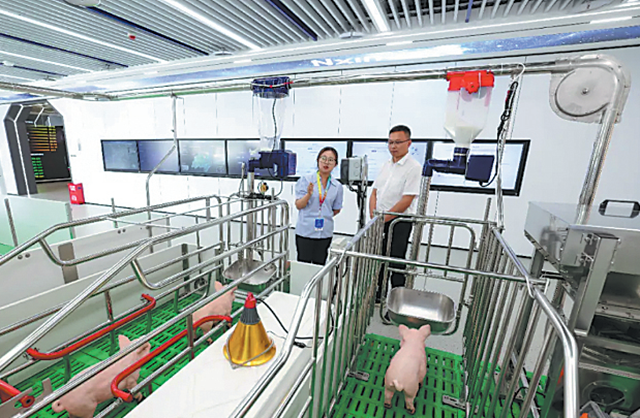
At a pig farm in Yancheng, Jiangsu province, a four-wheeled robot equipped with cameras and sensors patrols the aisles between rows of pig stalls, collecting real-time information on animal behaviour, water intake, feed consumption, temperature and humidity, as well as physical signs associated with disease.
The data is uploaded to a large-model platform, where algorithms analyse the information before sending the results back to front-end devices. The system can then trigger precision feeding, alerts about abnormalities and environmental adjustments. The demonstration is part of the deployment of robotics and artificial intelligence tools at pig farms in China aimed at improving the efficiency of livestock management.
Chen Libing, director of public relations at Nongxin Digital Intelligence Technology Co in Yancheng, said the robot had reduced feed waste by 8 to 10 per cent and cut human labour requirements by about 30 per cent. Overall disease incidence had fallen by 30 per cent, while pigs raised for market reached slaughter weight an average of five to seven days earlier, he said.
The system is designed to identify changes that may be difficult for workers to detect during routine inspections. “For instance, when AI detects a sustained three-day drop in feed intake among pigs in a pen, it automatically triggers rechecks of body temperature and cross-references the results with drinking water records,” Chen said. The system then compares the information with historical disease models and can issue early warnings of suspected respiratory infections, allowing workers to intervene before illness spreads.
The robot can patrol farms automatically around the clock and adapt to different farm environments. Wang Ke, the company’s vice-president, described the change in working methods by saying: “Raising pigs used to rely on farmers’ experience; now it relies on data.” The platform combines artificial intelligence, algorithms and internet-of-things devices into a connected network.
The monitoring extends beyond feeding and disease indicators. Cameras and sensors record factors including the amount animals eat, the time they spend lying down, cough frequency and changes in their skin. Environmental measurements include carbon dioxide and ammonia concentrations. The system can also detect unauthorised personnel or small animals entering restricted areas and monitor compliance with disinfection procedures.
Chen said these measurements create individual livestock health profiles and turn processes such as disease warning, ventilation adjustment and feeding decisions into quantifiable and traceable operations rather than relying entirely on workers’ experience.
The company’s AI box connects cameras and sensors, records information and uploads it to the cloud. The technology has been deployed at about 1,200 farms across China, covering pigs, ducks, chickens and fish. Its robots have been used at 67 farms in eight provinces. Depending on the number of animals and devices installed, the system costs between 280,000 yuan ($42,000) and more than 1 million yuan.
The company expects farm workers to increasingly collaborate with intelligent systems rather than perform routine inspections themselves. Chen said manual inspections of pens three times a day had previously taken four hours in total, whereas workers could now focus on verifying 10 high-priority alerts generated by AI. Algorithms can also produce hormone-fluctuation curves to help schedule breeding instead of relying solely on experience to identify sow estrus.
But the company does not envisage completely removing people from pig farms. “We do not pursue ‘unmanned pig farms’,” Chen said, noting that sensors can drift under high-temperature and high-humidity conditions and that the AI still has a misjudgement rate of about 0.7 per cent. Critical decisions, including medication, moving pigs between pens and culling, remain subject to confirmation by veterinarians working with the system’s recommendations.