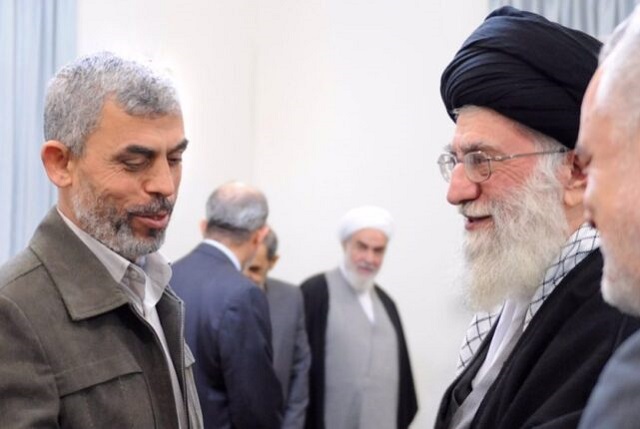
Three years after Hamas’s October 7, 2023, terrorist attacks killed approximately 1,200 Israelis and brought hundreds of hostages to Gaza, the consequences have extended far beyond the battlefield. Israel’s military campaigns have weakened Hamas and other Iran-backed armed groups, but the ensuing war has also damaged Israel’s international standing, intensified political divisions and spread conflict across the Middle East. An analysis published by the Soufan Center argues that these developments have advanced some of the objectives of Yahya Sinwar, the Hamas leader who orchestrated the attacks, even as other elements of his strategy have failed and the prospects for Palestinian statehood have deteriorated.
The consequences have renewed a longstanding debate in terrorism studies over whether political violence can achieve its perpetrators’ strategic objectives. Terrorist attacks can provoke military responses that inflict severe damage on the organisations responsible, but they can also draw targeted governments into prolonged conflicts, erode international support and deepen domestic divisions. The Soufan Center compares the trajectory following October 7 with the aftermath of the September 11, 2001, attacks by al-Qaeda, arguing that the wider political consequences of both episodes extended well beyond the immediate objectives of their perpetrators.
Osama bin Laden sought to drive US military forces out of the Middle East and undermine international perceptions of American power. The September 11 attacks instead prompted a US invasion of Afghanistan that toppled the Taliban government, al-Qaeda’s benefactor, and scattered militants across the Afghanistan-Pakistan border. Subsequent US decisions to invade Iraq contributed to military overextension, controversy with international partners and strategic setbacks in Afghanistan. The prolonged wars eroded the international goodwill Washington had enjoyed immediately after September 11, while weakening domestic support and national cohesion.
Sinwar’s objectives were different. Rather than attempting to expel an occupying army, he sought to inflict maximum damage on Israel and obstruct efforts to normalise relations between Israel and Arab states, particularly agreements that might proceed without the establishment of a Palestinian state. The October 7 attacks killed approximately 1,200 Israelis, involved acts of terrorism and resulted in hundreds of hostages being taken to Gaza. Israel responded with a military campaign that devastated the territory, killed tens of thousands of Palestinians, many of them civilians, destroyed much of Gaza’s infrastructure and imposed a blockade that contributed to a widespread humanitarian disaster.
The fighting subsequently spread beyond Gaza to Lebanon, Iraq, Yemen and Iran, drawing additional regional actors into the conflict. Israel’s military operations weakened Hamas, Lebanese Hezbollah and other members of Iran’s so-called Axis of Resistance. Yet the scale of destruction in Gaza and the broader regional consequences intensified international criticism of Israel. Allegations of genocide, war crimes and crimes against humanity emerged from the conflict, although the characterisation of Israel’s conduct remains disputed. The International Criminal Court issued arrest warrants for Israeli Prime Minister Benjamin Netanyahu and former Defence Minister Yoav Gallant, prompting the United States to impose sanctions against the court.
Public opinion polling cited by the Soufan Center indicates that Israel’s international reputation has deteriorated substantially. A Pew Research Center survey published in June found that a median of two-thirds of adults across 36 countries held an unfavourable view of Israel, compared with one-quarter who viewed the country favourably. Negative attitudes were particularly pronounced in Muslim-majority countries, including Malaysia, Indonesia, Pakistan and Türkiye, as well as in the West Bank and East Jerusalem. In Italy, the Netherlands and Spain, around half of adults or more expressed a very unfavourable view of Israel.
The shift has also affected American public opinion, despite the country’s longstanding political and military support for Israel. A separate Pew Research Center survey published in July found that American attitudes towards both Israeli people and the Israeli government had become more negative in recent years. Younger Democrats were particularly critical of Israel, while opposition was also emerging among younger Republicans. The survey found that the youngest Democrats were slightly more likely to view Hamas favourably than the Israeli government, a finding with potential implications for American domestic politics. The American Israel Public Affairs Committee, or AIPAC, has also faced increased scrutiny over its role in financing political candidates and election campaigns.
The political consequences have extended to Israel itself. Netanyahu’s longstanding claim to political legitimacy as a leader responsible for protecting Israeli citizens has been weakened by the failure to prevent the October 7 attacks and by the consequences of the subsequent war. Reports that the United Arab Emirates and Egypt had warned Israeli officials about the possibility of a Hamas attack before October 7 have further complicated the political debate over the government’s handling of security. With Israeli elections scheduled for later in October, Netanyahu and his Likud party face uncertainty over whether they can secure a majority bloc in the Knesset.
The conflict has also coincided with a worldwide increase in antisemitism, according to the Soufan Center. Some incidents have emerged from domestic political and social tensions, while others have involved alleged external direction. The analysis identifies Iranian use of so-called disposable agents, organised through a shadowy front group known as Harakat Ashab al-Yamin Islamiya, or HAYI, as a developing concern in Europe. The war in Gaza has also been cited as a grievance by individuals accused of terrorist attacks in Western countries. Authorities have disrupted Hamas-related plots in Europe, while Hamas supporters in the United States have faced arrests involving material support and terrorism financing charges.
Sinwar understood that terrorism could inflict psychological damage, undermine public confidence in government protection and deepen divisions within targeted societies. Having spent years in an Israeli prison, learned Hebrew and studied Israeli domestic and foreign policy, he was familiar with the country’s internal pressures and its relationship with Washington. The resulting deterioration in Israel’s international standing and the strain on US-Israeli relations represent outcomes consistent with some of his objectives, although they have not brought Palestinian statehood closer.
His strategy also involved serious miscalculations. Iran and its regional partners provided Hamas with training, equipment and strategic guidance, but Tehran appeared initially unprepared to support the organisation fully after the attacks. Three years later, the Axis of Resistance has been substantially weakened. Sinwar also overestimated the effectiveness of holding hostages as leverage to force a rapid end to the fighting and initiate negotiations. The situation for Palestinians in the West Bank has deteriorated, while the devastation of Gaza has compounded the costs of the conflict. The Soufan Center concludes that, although the October 7 attacks achieved some destructive political effects, they may also have undermined the very objective of Palestinian statehood that Sinwar sought to advance.