An alleged gang rape at Cornell University in New York has renewed scrutiny of male student fraternities in the United States, after messages reportedly exchanged in a fraternity group chat suggested that members discussed the assault while failing to intervene. The case, involving seven men accused of drugging and sexually assaulting a female student in October 2024, has prompted renewed demands to abolish fraternities and revived a wider debate over their role in campus sexual violence. Research examined by the German newspaper Die Zeit suggests that these organisations can amplify risky behaviour and reinforce group norms, although researchers disagree over whether fraternities themselves should be held primarily responsible.
According to a civil complaint and investigations by US media cited in the Die Zeit report, members of Cornell’s Chi Phi fraternity exchanged messages on Snapchat during the alleged assault. One participant reportedly wrote that there was “free pussy” in the fraternity house, while another suggested that men could simply come over and expose themselves. Later that night, a participant asked: “Shop still open?” Another replied in the affirmative. The group chat had 57 members. None of the men reportedly intervened to help the student, identified in legal proceedings as Jane Doe. The allegations described in the complaint do not, by themselves, establish criminal responsibility for every individual involved.
The case has focused attention on fraternities, which occupy a much more prominent position in American university life than traditional male student associations do in Germany. The North American Interfraternity Conference represents 58 fraternities, while fraternities and their female counterparts, sororities, are estimated to have approximately 750,000 current members and nine million alumni. Of the 45 US presidents, 18 have belonged to a fraternity. Membership can provide social connections and professional opportunities long after graduation, while initiation rituals and tightly organised social networks help define the organisations’ internal cultures.
Prospective members, known as pledges, may be required to complete humiliating, excessive or physically dangerous tasks to demonstrate loyalty. Some rituals have ended in deaths, including the case of a student at Baruch College. Once accepted, members become part of a social environment frequently associated in popular culture with heavy drinking, elaborate parties and sexualised attitudes towards women. Researchers say these stereotypes do not tell the whole story, but some elements of fraternity culture can contribute to conditions in which sexual misconduct becomes more likely.
Elizabeth Armstrong, a sociologist at the University of Michigan who studies sexual assault around college parties, describes fraternities as “harmful organisations”. She argues that they can exclude people on the basis of background and social class while reinforcing rigid gender roles and an emphasis on alcohol consumption. Recruitment, known as rush, typically takes place at the beginning of the academic year. According to Armstrong, fraternities select prospective members partly on their attractiveness and sociability, with an emphasis on maintaining the organisation’s reputation through lavish parties, plentiful alcohol and the presence of attractive women.
Armstrong says the pressure to conform within these groups can be intense. Members who challenge misconduct risk being regarded as betraying the fraternity, a dynamic she believes helps explain why nobody in the Cornell group chat reportedly intervened. In her view, the organisation’s collective identity can discourage members from confronting behaviour that threatens its reputation or their standing within the group.
Research suggests that fraternity membership can both attract men already inclined towards risky behaviour and increase the likelihood of misconduct. A study conducted at a large university in the southwestern United States followed 772 young men from the summer before they entered university until their second year. Published in 2001, the research found that men who drank frequently while still at school and viewed casual sex favourably were more likely to join fraternities. Among participants who had not previously displayed such behaviour, those who joined a fraternity were more than twice as likely to become sexually aggressive as those who did not join.
The findings suggest that fraternity culture may reinforce existing tendencies rather than simply create them. However, Mary Koss, a psychologist at the University of Arizona and a pioneer in research on sexual violence, cautions against treating fraternities and their members as uniformly abusive. “Most fraternities do not encourage rape,” she says. “But they do encourage having as much fun as possible in this environment and at this stage of life.” She notes that fraternities can provide community, emotional support and a family-like structure for students who leave home at 17 or 18. Their members also contribute to campus life through charitable fundraising and can achieve above-average academic results.
Koss argues that the risks associated with fraternities reflect wider problems in society, particularly the roles of alcohol, drugs and social expectations in shaping sexual behaviour. Other contributing factors include childhood experiences, attitudes towards sexuality and the environment in which people learn to interpret consent. She also criticises inadequate sex education in the United States, saying that some families and schools provide little or no formal instruction. “We leave our students no choice but to learn from pornography,” she says.
Research into sexual aggression on American campuses stretches back decades. In 1957, sociologists Clifford Kirkpatrick and Eugene Kanin of Indiana University examined male sexual aggression in a university setting, identifying secrecy and social stigma as factors that could discourage women from reporting abuse. Their work suggested that fear of social exclusion could silence victims and allow perpetrators to continue offending. A 1985 report by the Association of American Colleges documented a practice known among students as “pulling train”, in which men allegedly lined up to rape the same woman in succession. The report said such incidents frequently occurred at fraternity parties, including at Ivy League institutions.
Koss’s national surveys provide further evidence of the scale of the problem. Her 1985 study found that one in four female students had experienced rape or attempted rape, using questions about specific acts, including penetration against a person’s will through force, threats or the administration of alcohol or drugs. Critics argued that her definition was too broad. In a repeat survey in 2015, one in three female students reported rape or attempted rape. The results are not directly comparable because the questions differed, particularly in how they assessed whether a woman was too intoxicated or incapacitated to resist. Nevertheless, the research concluded that the prevalence had not declined over the intervening three decades.
Alcohol featured in approximately half of the reported cases in the 1985 research and around three-quarters in 2015, although the change partly reflected the revised survey questions. In nine out of ten cases in which men admitted to committing rape, alcohol was involved. Koss also found that many men who acknowledged holding women down to have sex against their will did not regard their actions as rape.
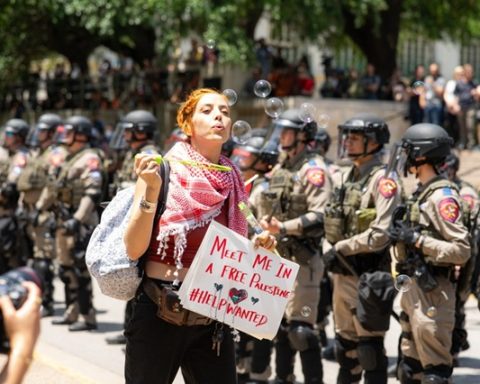
The Cornell allegations have now prompted thousands of students to protest on campus, chanting “Ban the frats!” Their demands echo a successful campaign at Swarthmore College in Pennsylvania in 2019. Two student newspapers published internal fraternity documents and meeting minutes describing heavy drinking, sexual misconduct and degrading language, as well as intimate videos and photographs of women apparently recorded without their consent. The revelations triggered protests against the college’s two fraternities, both of which subsequently disbanded. Less than two weeks later, the college president announced that fraternities and sororities would no longer be permitted on campus.