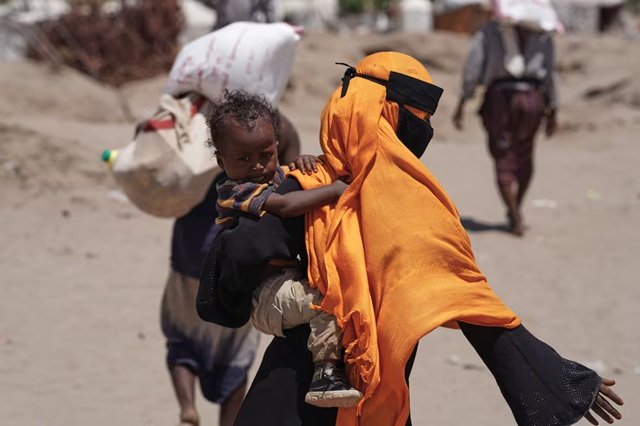
Yemen’s renewed conflict has displaced at least 200,000 people, half of them children, as intensified fighting and restrictions on humanitarian operations worsen a crisis in which millions already depend on assistance to survive, according to figures and accounts cited by Spanish newspaper El País.
The conflict between Houthi rebels and Yemen’s internationally recognised government has reignited after a fragile truce that had largely halted fighting since 2022. The renewed violence threatens a population of about 40 million, including 22 million people who already needed humanitarian assistance before the latest escalation.
Haifa, a Yemeni mother of seven children aged between one and 11, fled her home on the Red Sea coast after hearing gunfire. She and her family now live in a tent at the Al Firdous displacement camp near Aden, enduring extreme heat and relying on humanitarian assistance for food, according to Akhil Iyer, a UNICEF representative in Yemen, who spoke to El País.
“Without time to think, just to run and do it quickly, in order to save my children’s lives,” Iyer recounted of Haifa’s flight.
The displacement has followed Houthi advances in western Yemen, including the capture of Mocha and the group’s September declaration that it controlled the Bab el-Mandeb Strait, the southern gateway to the Red Sea. Yemeni government forces subsequently said they had retaken the territory with Saudi air support.
The impact on children is particularly severe. More than two million children under five were suffering from acute malnutrition before the fighting resumed, according to Iyer. About 500,000 of them had the most severe form, which can cause lasting damage or death. UNICEF has confirmed at least 28 children killed in the renewed fighting, although the agency believes the actual toll is higher because information from areas controlled by the Houthis remains limited.
The insurgents control roughly one-third of Yemen, where more than 70 per cent of the population lives. United Nations agencies have been forced to suspend operations in those areas after Houthi forces detained members of their staff who have not been released. Around 100 Yemeni humanitarian workers are being held by the group, including 73 United Nations employees.
Medical facilities near the front lines are also struggling to cope. The International Committee of the Red Cross said in a statement on Wednesday that health centres near fighting along the Red Sea coast, in the besieged city of Taiz and in Maarib, home to Yemen’s principal oil and gas fields, were receiving unprecedented numbers of people wounded by gunfire. Some centres had treated as many as 700 wounded people in a single week.
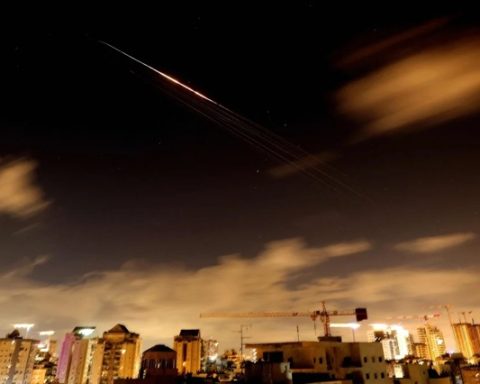
The civil war began in 2014 after the Houthis seized the capital, Sanaa. The fragile truce broke on July 13, when government forces bombed Sanaa airport’s runway to prevent an Iranian aircraft carrying a Houthi delegation from landing, triggering a rebel offensive.
Leyla Hamad Zahonero, a researcher at the Centre for Contemporary Arab Studies who lived in Yemen for several years, told El País that all sides had committed serious human rights violations, but that the population particularly feared Houthi repression. She said more than 3,700 Yemenis had fled by boat from Houthi-controlled Al Hodeida to Djibouti in recent weeks.
Human rights organisations have also reported abductions and enforced disappearances targeting journalists, aid workers and civil society members. Amnesty International and Human Rights Watch have said that, since August 18, the Houthis have prosecuted at least eight humanitarian and human rights workers on espionage-related charges punishable by death.
Recruitment, including of children, remains another concern. A Yemeni government official, Ali Hazazi, told Al Jazeera that at least 62 cases of Houthi recruitment of minors had been recorded in the second quarter of 2026, before the truce collapsed. He said the documented cases represented only a small proportion of the actual total.
The renewed displacement is also increasing the risk of child marriage. UNICEF’s Iyer said families facing extreme hardship sometimes married off daughters to reduce household expenses and receive a dowry, a practice humanitarian organisations describe as a survival mechanism. According to the United Nations, nearly one-third of Yemeni girls marry before the age of 18, with the proportion higher among displaced families.