The timing of Bhutan’s King’s reported confidential meeting in Dhaka, coinciding with the prospect of US Secretary of State Marco Rubio’s visit to India, raises questions that Bangladesh cannot afford to dismiss.
In South Asian geopolitics, timing can be as consequential as declarations, silence as revealing as speeches, and diplomatic discretion as significant as the most elaborate public communiqué.
Yet one principle must govern any serious inquiry: suspicion is not evidence, coincidence is not conspiracy, and diplomatic secrecy is not, in itself, proof of wrongdoing.
The real question is whether these parallel diplomatic developments reflect routine engagement or a more consequential regional recalibration—and whether Bangladesh’s national interests are being adequately protected.
The Geography of a Meeting, the Politics of a Moment
On 16 October 2026, Bhutan’s King Jigme Khesar Namgyel Wangchuck made another brief stop at Dhaka’s Hazrat Shahjalal International Airport.
According to contemporary reporting, he met Bangladesh’s Local Government Minister Abdul Moin Khan, State Minister for Foreign Affairs Shama Obaed Islam, and Bhutan’s ambassador in the VVIP lounge. This followed his earlier stopover on 26 August 2026, when he met Bangladesh’s President.
The second encounter deserves scrutiny—not because a royal visit is inherently suspicious, but because it occurred against a shifting regional backdrop. US Secretary of State Marco Rubio’s October 2026 visit to India, including planned discussions on energy cooperation, trade, investment, defence and regional affairs, adds strategic significance to the timing.
But is there a connection between these developments? That remains an open question. No publicly verified evidence establishes that the Bhutanese monarch’s stopover was arranged to facilitate a secret US–India initiative or that he carried a message on behalf of another government. Responsible commentary must distinguish verifiable events from geopolitical conjecture.
Nevertheless, the questions are legitimate.
Why has the Bhutanese king made repeated stopovers in Dhaka? What substantive matters were discussed behind the doors of the VVIP lounge? Were the conversations confined to bilateral relations, or did they touch upon wider regional concerns? And what, if anything, do these encounters reveal about Bangladesh’s diplomatic relationships with its immediate neighbours?
These questions merit answers grounded in facts.
Bhutan Is Small. Its Strategic Position Is Not.
Bhutan occupies a distinctive position in South Asia, nestled between India and China. Its geography, connectivity, economic relationships and diplomatic calculations give it a significance beyond its population or territorial size.
Bangladesh, meanwhile, occupies a pivotal position near the Bay of Bengal, with considerable potential in regional trade, energy connectivity and transport corridors.
The two countries have concrete reasons to deepen their relationship.
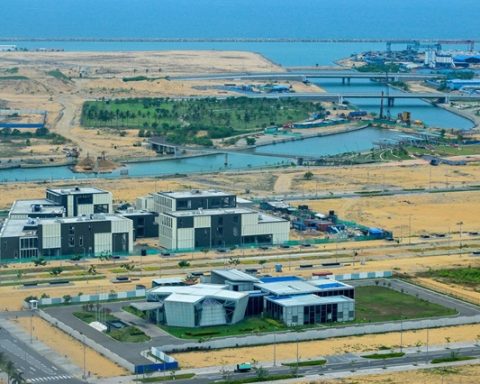
Bangladesh’s Foreign Ministry reported that bilateral consultations in Dhaka on 18 August 2026 covered trade, investment, connectivity, energy-related opportunities, regional cooperation and Bhutan’s proposed Gelephu Mindfulness City initiative.
These are substantial matters in their own right. Bhutanese hydropower could contribute to Bangladesh’s energy diversification; expanded trade and connectivity could benefit both economies. Regional cooperation through BIMSTEC could also open opportunities for shared development.
Yet such cooperation must not be confused with evidence of a covert geopolitical design.
The more consequential question is whether Bangladesh possesses a coherent diplomatic strategy capable of converting its geographical advantages into lasting national benefits.
Rubio, India and Bangladesh’s Strategic Autonomy
Rubio’s engagement with India arrives amid friction over trade negotiations, tariffs and India’s purchases of Russian energy. Washington and New Delhi have important shared interests, but their relationship is neither uncomplicated nor immune to competing national priorities.
For Bangladesh, the implications are potentially significant.
Any realignment involving the United States, India and neighbouring South Asian countries could affect regional connectivity, energy security, investment and strategic competition. Bangladesh must therefore understand the emerging diplomatic landscape without surrendering its independent judgement to any external power.
Neither Washington’s preferences nor New Delhi’s strategic calculations should automatically become Dhaka’s national policy. Equally, suspicion of foreign influence must not become an excuse for diplomatic isolation.
A sovereign nation does not choose its friends by intimidation, nor does it defend its interests through blind allegiance. It negotiates from principle, evaluates evidence and insists upon reciprocity.
If Bhutan’s repeated engagements with Bangladesh reflect an effort to strengthen regional dialogue, Dhaka should welcome that opportunity. If wider strategic considerations were discussed, the government should explain their implications through appropriate diplomatic channels.
The public deserves neither manufactured conspiracies nor evasive assurances. It deserves credible information about decisions affecting the country’s future.
The Questions Dhaka Must Answer
The central issue is not whether a monarch may meet government representatives discreetly. Diplomacy frequently requires confidentiality. The issue is whether confidentiality serves legitimate national interests and whether the government remains accountable for its decisions.
Dhaka should clarify the substantive outcomes of its recent engagements with Bhutan, identify practical opportunities for bilateral cooperation and explain how these fit within Bangladesh’s broader regional strategy, while respecting legitimate diplomatic confidentiality.
It should also demonstrate that no agreement affecting national sovereignty, strategic infrastructure or long-term economic interests will be concluded without rigorous scrutiny of its public consequences.
Bangladesh must not become a passive theatre in which larger powers negotiate their ambitions while its own leaders merely observe.
The country’s geographical position is an asset, not an invitation to subordination. Its diplomatic relationships must be instruments of prosperity, security and independence—not vehicles for undisclosed commitments.
The coincidence of Rubio’s India visit and the Bhutanese king’s Dhaka stopover may ultimately prove entirely ordinary. It may also illuminate diplomatic developments deserving closer attention. The available evidence does not yet settle that question.
But one demand is beyond dispute: Bangladesh’s national interest must never be concealed behind the curtain of diplomatic ambiguity.
The question, therefore, is not simply why Bhutan’s king met officials in Dhaka before Rubio’s India engagements.
It is whether Bangladesh is shaping the region’s emerging diplomatic order—or allowing that order to shape Bangladesh.
That is the question its citizens deserve to have answered.