Ukraine is approaching the fifth anniversary of Russia’s full-scale invasion with little movement along the front line, intensifying attacks on civilian infrastructure and growing uncertainty over the reliability of its most important international partner. After a damaging week of Russian strikes and diplomatic setbacks, President Volodymyr Zelensky is seeking to revive negotiations with the United States while warning that Vladimir Putin wants Ukraine’s “destruction”, not merely its “surrender”.
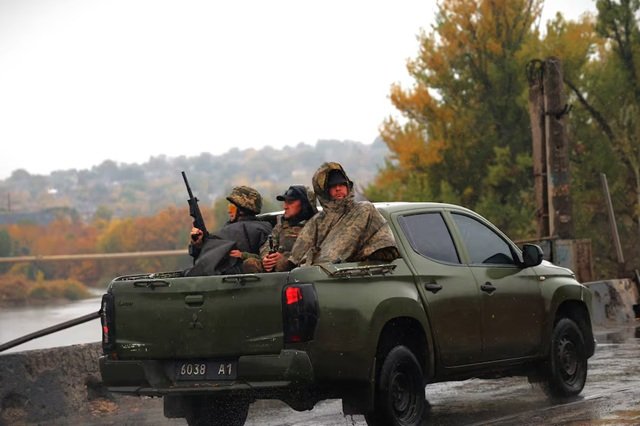
In Kramatorsk, a Ukrainian stronghold in the eastern Donetsk region, rain complicates the use of drones but creates opportunities for Russian infantry to advance on the ground. Footage monitored by Ukrainian troops at a military command centre on Thursday showed small clashes rather than significant changes to the front line. The broader conflict remains locked in a war of attrition, with Russian forces continuing to press forward despite the slow pace of their advances.
Kyiv has suffered setbacks both militarily and diplomatically. Russian attacks have struck around 20 Ukrainian regions, while reports that Washington could suspend intelligence cooperation with Ukraine have heightened concerns about the future of American support. Zelensky has also described a partial disruption to Starlink, the satellite communications service operated by Elon Musk’s company, as a “planned operation”. Its terminals are essential to the Ukrainian military, making any interruption a significant operational concern.
The Ukrainian president has increasingly expressed frustration with Donald Trump, whose relationship with Zelensky has again deteriorated as the American administration moves closer to Moscow’s position. Trump and Putin have signed an agreement to release hundreds of thousands of barrels of diesel regardless of the embargoes imposed on Russia, according to the source account. Meanwhile, Zelensky has complained that Ukraine was not warned about several ballistic missile attacks this week, as it normally would have expected.
Despite his anger, Zelensky has little room to confront Washington openly. In written responses to journalists on Saturday, he said he expected another meeting with American negotiators the following week in an effort to revive an energy ceasefire. The proposed arrangement had already become contentious after Trump announced an energy truce the previous weekend, only for Moscow to reject it. Kyiv subsequently resumed attacks on Russian oil refineries, further aggravating tensions with the US president.
“We Ukrainians have dignity,” Zelensky said in Brussels on Friday. In an implicit criticism of Trump, he praised European countries as “true leaders who have stood with Ukraine from the beginning of the war”. European support, however, has not been sufficient to provide Kyiv with all the weapons and funding it needs to halt the Russian offensive, particularly the ballistic missiles and jet-powered drones used against Ukrainian targets.
For civilians, the consequences are increasingly severe. Daily life in major cities such as Kyiv and Kharkiv remains disrupted by repeated attacks that local air defences cannot consistently prevent. Interruptions to essential supplies have become routine, while Russian strikes increasingly target the systems delivering water, electricity and gas to homes ahead of another winter. Previous diplomatic announcements about protecting energy infrastructure have failed to produce a lasting arrangement.
The effects extend well beyond the cities. In southern Ukraine’s Kherson region, roads and streets are increasingly covered by tunnels made from fishing nets intended to reduce the threat posed by Russian drones. Yet the protection is limited. Some stretches of road bear impact marks almost every 50 metres, occasionally beside vehicles reduced to wreckage, demonstrating how difficult it remains to stop the attacks.
In Sahaidachne, a village in the south, 42-year-old Natalia leads a group of six women harvesting potatoes. She spent seven months under Russian occupation in Zmiivka, near the Dnipro River, before Ukrainian forces expelled the occupying troops in November 2022. She then moved to Sahaidachne, where she now lives with her husband. Although a drone recently landed beside their house, she says the family cannot afford to move again.
Natalia believes Russia must return all occupied Ukrainian territory to Kyiv. She holds an official certificate recognising her as an internally displaced person but says she has not received the government assistance to which she is entitled after losing her home. She showed a photograph of the destroyed property on her mobile phone.
Not everyone displaced or affected by the war shares her position. In Nyva Trudova, a small village in the Dnipropetrovsk region, Oleksi, a 60-year-old employee of an agricultural and livestock company, expressed hostility towards Zelensky, whom he described as corrupt. He believes Ukraine cannot recover the approximately 20% of its territory occupied by Russia and argues that Kyiv should sign a peace agreement allowing Moscow to retain the land. Otherwise, he fears, Russian forces will continue to advance.
The differing views reflect the exhaustion of a population approaching five years of war, with no clear end to the fighting. Ukraine’s allies, particularly within the European Union, have also struggled to impose sanctions capable of preventing Russia from sustaining its military campaign. Zelensky has continued diplomatic visits, including trips to London and Brussels, while Kyiv remains short of the resources needed to counter the Russian offensive. The Kremlin’s expanding hybrid warfare activities are adding to concerns across Europe.
On the battlefield, technological developments have transformed the conflict. In Kramatorsk, Roman, a 42-year-old deputy battalion commander who enlisted after Russia began occupying parts of Ukraine in 2014, monitors drone footage from an underground command centre. He describes Russian soldiers using specialised clothing during night operations to conceal their heat signatures from aerial surveillance. As artillery sounds outside and air-raid alarms continue, he shows footage of a Ukrainian drone dropping a bomb on a Russian soldier attempting to advance, followed by surveillance images confirming the soldier’s death.
Such incidents represent only a fraction of the fighting. Drones now range from small devices carrying about a kilogram of explosives over short distances to faster, longer-range systems that are increasingly difficult to intercept. Russian advances in drone technology, combined with ballistic missiles and aerial bombs, have allowed Moscow to threaten targets across Ukraine and maintain pressure along an extended front. Ukraine, despite having fewer resources and less funding, has developed its own drone industry and can strike targets more than 2,000 kilometres inside Russian territory.
Roman remains concerned about the number of Russian troops seeking to capture Kramatorsk, which is the largest city under Ukrainian control in the Donetsk region, around 70% of which Russia occupies. The city is becoming increasingly damaged and depopulated, and Ukrainian forces fear it could eventually fall, as Bakhmut and other nearby settlements have done.
For Natalia, the war remains inseparable from the loss of her home and the uncertainty surrounding her future. She says her dog barely reacts to Ukrainian drones but hides when Russian ones approach, a distinction that offers her some reassurance. Showing the photograph of her destroyed house, she asks: “Why do we deserve this war?”