Pope Leo XIV left Rome’s Gemelli Hospital on Saturday, four days after undergoing surgery to remove a malignant lung tumour, returning to the Vatican three days earlier than initially expected. The pontiff appeared in good condition, walked out of the hospital unaided and greeted members of the public gathered outside before departing for the Vatican, where he arrived at 3.43pm, 12 minutes after leaving the medical complex.
The Holy See announced the discharge on Saturday morning after doctors assessed the pope’s condition, reviewed blood tests and examined a chest X-ray. In a statement, the Vatican said: “Following the doctors’ assessment this morning, the Pope will be discharged today from Gemelli Hospital, where he was admitted for surgery on his right lung. He will leave the hospital in the early afternoon and return to the Vatican. Tomorrow he will pray the Angelus from the window of the papal apartments.”
The medical team separately confirmed that the pontiff was fit to leave hospital. “Following the blood tests, the chest X-ray carried out this morning and the assessment of the patient’s clinical condition, it has been considered that the Holy Father is in an ideal condition to be discharged,” the team said. Vatican sources indicated that no special medical monitoring arrangements would be established at the pope’s apartment.
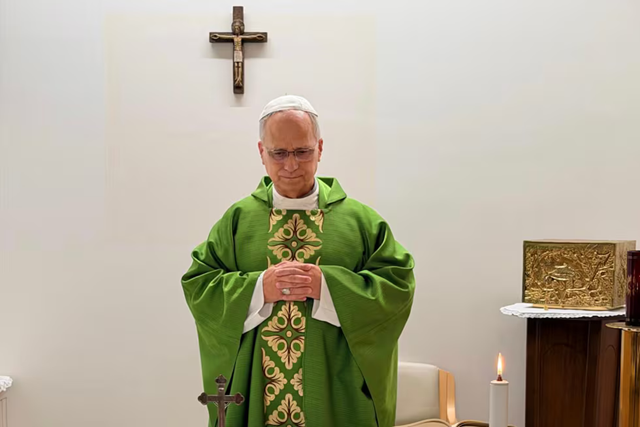
Leo XIV’s early discharge marks a positive development after the Vatican initially indicated that his hospital stay would last at least a week. His schedule had been suspended until Tuesday, 20 October, but the improved recovery has allowed him to return to the Vatican sooner than anticipated. On Friday, the first images of the pope celebrating Mass in a room prepared inside the hospital were released, alongside reports that he had received several work-related visitors.
The surgery took place on Tuesday after doctors detected a nodule in one of his lungs. The Vatican confirmed that evening that the growth was malignant. The tissue was identified as an adenocarcinoma, and surgeons removed it completely by excising an entire lobe of the lung. Although his immediate postoperative recovery has progressed sufficiently to permit discharge, the longer-term medical outlook remains uncertain.
The next significant indication of his condition is expected to come from histological examinations of the removed tissue. The results are anticipated approximately 10 to 14 days after the operation, between 23 and 27 October. They will help establish whether the cancer has been completely eliminated and whether additional treatment, including possible courses of chemotherapy, will be required. Any such treatment could affect the pope’s physical condition and the pace of his daily activities.
Those results will also influence decisions about his international commitments, particularly a planned visit to Uruguay, Argentina and Peru from 6 to 17 November. The trip remains scheduled, but its intensity presents a substantial physical challenge during the recovery period. The programme includes 14 flights, two of them by helicopter, and 36 speeches. It also includes a visit to Cuzco, which lies at an altitude of 3,300 metres and could present additional respiratory difficulties.
The Vatican’s decision to proceed with the operation as early as possible was partly intended to give the pope the recommended three weeks of recovery before travelling by air. Whether that period will be sufficient depends on his progress over the coming days and the medical findings expected later this month. If the tour is to be cancelled, the decision would need to be announced with enough notice, rather than only a few days before the scheduled departure.
Stefano Margaritora, the surgeon who operated on the pontiff, has offered an encouraging assessment of his prospects for travelling. In an interview with Vatican News, he said there were no medical reasons at present to prevent the pope from flying. “After this type of surgery, I believe complete physical recovery requires a couple of weeks. So, considering that almost a week has already passed, I believe the Pope could fully recover in about ten days,” Margaritora said.
The surgeon’s assessment provides a basis for cautious optimism about the November journey, but it does not settle the question of whether the pope will be able to complete the entire programme. The results of the tissue examinations, together with his physical recovery, will be central to that decision. Until then, the trip remains planned, with no cancellation announced by the Vatican.
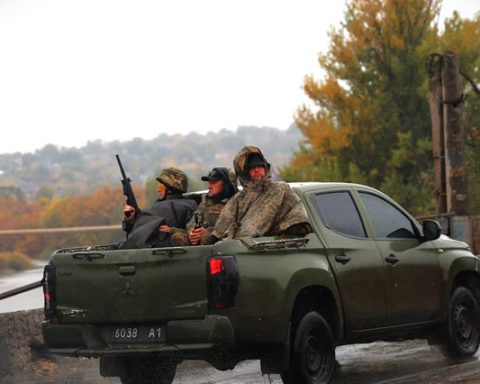
During his convalescence, Leo XIV has also continued to engage with international affairs. On Friday, he spoke by telephone with Russian President Vladimir Putin, expressing what the Vatican described as his “deep concern over the serious humanitarian situation in the city of Oleshky, in the Kherson region”. The pope called for a truce in the area to allow food and medical assistance to reach residents, as well as for the “voluntary and safe evacuation of the civilian population”.
The conversation marked a significant diplomatic contact. Leo XIV had not spoken with Putin since receiving a call from the Russian leader weeks after his election in June 2025. Under Pope Francis, communication with Putin had been interrupted since 2021.
As he left Gemelli Hospital on Saturday afternoon, Leo XIV also spoke briefly with a Ukrainian family accompanied by Father Taras Kotsur of Vatican Radio’s Ukrainian section. The family included Varvara, a 12-year-old girl living as a refugee in Turin with her parents. She had suffered a serious illness and met the pope in St Peter’s Square in December. According to Vatican News, she told him that the embrace he gave her then had provided “the strength to overcome the illness”, which she has since recovered from.