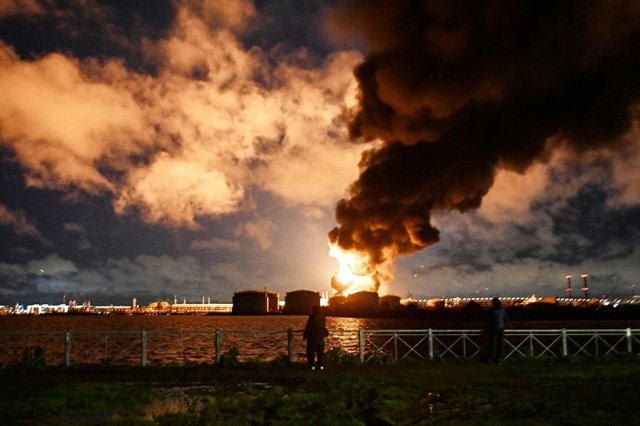
Ukrainian drone strikes set an oil export terminal ablaze in St Petersburg on Sunday as Kyiv launched one of its largest aerial bombardments of Russia to date, with Moscow reporting that its forces had destroyed 1,015 Ukrainian drones across multiple regions.
One person was killed and five others wounded in the attacks, which caused fires at the Petersburg Oil Terminal and the Ruchi oil depot, St Petersburg Governor Alexander Beglov said. A logistics centre belonging to Russian retailer Ozon and a data centre operated by technology company VK were also targeted, both companies confirmed.
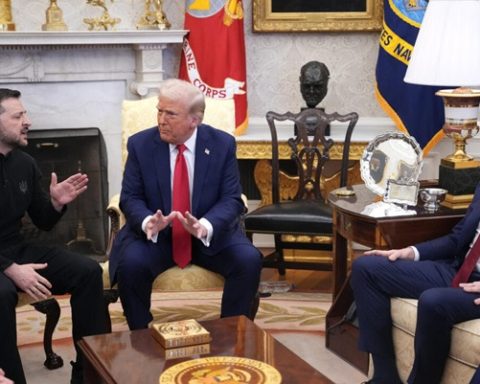
Russia’s Defence Ministry said its forces had intercepted or destroyed the drones over 15 Russian regions, the annexed Ukrainian peninsula of Crimea and the Black Sea. The reported scale of the bombardment came amid growing tensions between Ukraine and the United States over Kyiv’s attacks on Russian oil infrastructure, which US President Donald Trump has criticised.
Kremlin spokesperson Dmitry Peskov told the Russian state news agency Tass that Ukraine was “resisting” Moscow’s invasion but could not “change the current course of events”.
The latest attacks coincided with further Russian strikes on Ukraine. A woman was killed and at least two other people were wounded, including a six-year-old girl, after Russia launched two attacks on the southern Ukrainian city of Zaporizhzhia, local officials said.
Mykhailo Semikin, head of the Zaporizhzhia Regional Military Administration, said the attacks damaged two apartment buildings, 18 cars and an educational institution.
The exchange of strikes has intensified a dispute over an energy ceasefire announced by Trump on 11 October. The US president said Russia and Ukraine had agreed to halt attacks on energy infrastructure during the four-and-a-half-year war, but provided no details of the arrangement. Kyiv subsequently reported Russian attacks on energy facilities, while Ukraine confirmed on Thursday that it had resumed strikes on Russian oil infrastructure following a three-day pause.
Ukrainian President Volodymyr Zelenskyy accused Moscow of continuing to target his country’s energy infrastructure despite Trump’s demand on Sunday that both sides stop such attacks. Although Kyiv initially said it was observing the proposed ceasefire, Zelenskyy said Russia had repeatedly struck Ukrainian energy facilities.
In a post on X on Sunday, Zelenskyy said Russia had attacked Ukraine’s energy, oil and gas sectors 76 times in the week since Trump announced the ceasefire. He added that energy facilities in four Ukrainian regions had been attacked during the previous night, leaving tens of thousands of families without electricity.
Zelenskyy accused Russia of seeking to cause a blackout and argued that Moscow was not responding to diplomatic efforts or sanctions relief with reciprocal measures.
“America should see that Russia is not taking any reciprocal steps in response to sanctions relief or agreements. On the contrary, they take every signal of an opportunity to make money as proof that their bet on war is paying off and they can keep fighting,” he wrote.
He also rejected the suggestion that Ukraine’s defensive actions were responsible for the continuation of the war, saying Russia’s invasion was the cause. “It is Russia that must face pressure for peace to have a chance. Thank you to everyone who understands this and helps,” he said.
Trump’s position on further pressure against Moscow remained uncertain. Speaking at a fundraising dinner at his Florida estate on Saturday, he said he had not yet decided on additional sanctions against Russia, despite signing an executive order on Friday night waiving planned restrictions on national-interest grounds.
“We’ll figure it out, and you’ll figure it out. But it’s a very good decision, and it’s going to be a decision that’s good for the country, and I think good for the world,” Trump said.