On October 11, 2026, Counter Terrorism Department (CTD) and Federal Investigation Agency (FIA) personnel arrested a Baloch Republican Guards (BRG) cadre, Fazal Haq Khan, during a joint intelligence-based operation (IBO) in Karachi, the provincial capital of Sindh. A hand grenade was recovered from his possession.
On October 5, 2026, bomb attacks by BRG cadres damaged a railway track at two locations in the Limji area of Sibi District in Balochistan. The BRG claimed responsibility for the incidents.
On October 4, 2026, BRG cadres destroyed two electricity transmission towers at Katpar Sharif in the Sibi District of Balochistan.
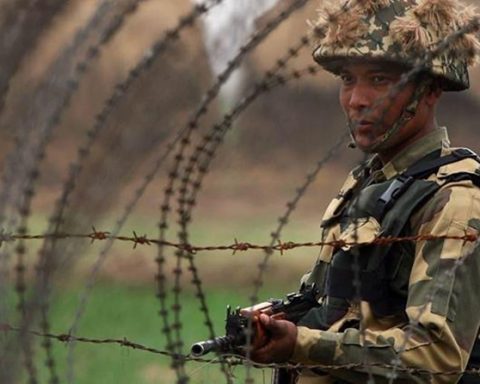
On September 30, 2026, five SFs personnel were killed, and a quadcopter was shot down when BRG ambushed an SF convoy in the Dhadar and Sanni Road areas of Chitri in the Kachhi District of Balochistan. BRG spokesperson Dostain Baloch claimed responsibility, saying two vehicles were hit, five personnel were killed, several were wounded, and a surveillance quadcopter over the convoy was shot down.
On September 28, 2026, a bomb blast on a railway track caused disruptions to the movement of trains in the Gulab Larho area under the Mangoli Police Station (PS) in the Naseerabad District of Balochistan. BRG claimed responsibility of the blast.
On September 27, 2026, BRG cadres set up a roadblock and snap checkpoints on the main highway between Sibi town and Bakhtiar Abad in the Sibi District of Balochistan. BRG claimed responsibility, adding that no SF personnel or Government officials were present in the area at the time, and that no vehicles carrying Balochistan’s mineral resources bound for Punjab passed through during the search.
According to partial data compiled by the South Asia Terrorism Portal (SATP), at least six BRG-linked incidents have already been recorded in 2026, so far (data till October 18, 2026), in which at least 23 SFs personnel have been killed. During the corresponding period of 2025, three such incidents were recorded, resulting in five SF fatalities. The whole of 2025 recorded four such incidents in which seven SF personnel were killed.
On July 2, 2026, BRG issued a detailed statement claiming 73 operations between January and June 2026 in Nasirabad (18), Kachhi (18), Sibi (25), Dera Bugti (four), Quetta (one), Sohbatpur (two) and Sindh (five). These included 24 attacks on SFs, Police and state-backed operatives, which, it claimed, killed 39 personnel and wounded several more. BRG also claimed three attacks on trains, the destruction of railway tracks on seven occasions, three seizures of police stations with personnel taken hostage and official vehicles, weapons and military equipment confiscated, the release of arrested police personnel identified as Baloch, 11 highway blockades involving vehicle searches, five trailer trucks set on fire, and the destruction of four communication towers, 20 electricity transmission towers, seven gas pipelines and two bridges in 15 separate attacks.
Earlier, in its annual report for 2025, for the period January to December 2025, released on January 2, 2026, BRG claimed it carried out 88 attacks in Balochistan, Sindh and Punjab, and that its fighters targeted railway tracks used by SFs, checkpoints, police posts, gas pipelines and communication towers. The attacks included 13 on train services, including 10 on trains and three on railway tracks, the destruction of 12 vehicles, 12 gas pipelines, five towers, and the killing of 22 personnel and injuries to another 35.
Since its formation in January 2013, at least 39 people, including 38 SF personnel and one civilian, have been killed (data till October 18, 2026) in BRG-linked incidents, according to the SATP, with the first such incident recorded on May 3, 2021. On May 3, 2026, two Army personnel were killed, and another was injured in a grenade attack at Mazdoor Chowk in Dera Murad Jamali town in the Nasirabad District of Balochistan. Dostain Baloch, the ‘spokesperson’ for BRG, claimed responsibility for the attack in a media statement.
Balochistan’s long history of enforced disappearances and extrajudicial killings by State agencies has significantly contributed to the persistence of the insurgency, deepening local grievances and perpetuating cycles of violence. In response, Baloch insurgent groups have frequently carried out retaliatory attacks against SFs, Government installations and other State-linked targets. Civilians accused of cooperating with the State, including members of pro-government militias commonly referred to as “death squads,” have also been repeatedly targeted. Prominent insurgent organisations operating in the province include the Balochistan Liberation Front (BLF), Baloch Liberation Army (BLA), Balochistan Liberation Tigers (BLT), BRG, Baloch Republican Army (BRA), Baloch Nationalist Army (BNA) and United Baloch Army (UBA). Among these, BLA has emerged as the most active and lethal insurgent outfit in recent years, followed by and BRG as the second and third, respectively, in terms of operational activity and influence.
BRG was formed in 2012 by Mir Bakhtiar Khan Domki (former Member of the Balochistan Assembly) following the assassination of his wife, daughter, and their driver. In January 2012, Zamur Bugti, who was also the sister of Baloch Republican Party (BRP) leader Brahamdagh Bugti, was shot dead along with her young daughter, Janah, and their driver, Barkat Domki, while travelling in the Gizri area in Karachi, the capital city of Sindh. Later that year, in December, unidentified assailants attacked Bakhtiar Domki’s convoy in the Bibi Nani area of Kachhi district, though he survived.
Over the past sixteen years, BRG has steadily expanded the scope of its operations. Its activities have spread across Quetta, Dalbandin, Mastung, Dhadar, Sibi, Naseer Abad, Dera Murad Jamali, and Dera Bugti, as well as into parts of Sindh and Punjab bordering Balochistan. The group’s attacks have included the destruction of gas pipelines, electricity pylons, and communication towers, as well as bombings, armed assaults on security forces, and road blockades.
Although no major attacks (incidents involving three or more fatalities) by BRG were reported between its first recorded incident on May 3, 2021, and the end of 2025, the group orchestrated at least three major attacks in 2026, indicating a notable escalation in its operational activity. These incidents included:
On September 30, 2026, five SF personnel were killed and a quadcopter was shot down when BRG ambushed an SF convoy in the Dhadar and Sanni Road areas of Chitri in Kachhi District of Balochistan (above).
On September 4, 2026, BRG launched a coordinated attack on Bagh city in Kachhi District, killing five SF personnel and injuring several more. In a statement, BRG ‘spokesperson’ Dostain Baloch claimed that militants surrounded an SF camp, attacked the City Police Station and shot down two quadcopters. The group further claimed to have captured and set fire to the Sadar Police Station, NADRA office, Assistant Commissioner’s office, a National Bank branch and other government buildings, and seized weapons and equipment.
On July 29, 2026, at least 10 SF personnel were killed in two separate attacks on military convoys in Kachhi District. In a statement issued by BRG ‘spokesperson’ Dostain Baloch, the group said clashes between its cadres and SFs continued from morning until evening, and claimed that ten SF personnel were killed on the spot and several were seriously injured.
BRG partnered with other insurgent groups to intensify its attacks against State security agencies. On November 10, 2018, Baloch Raaji Ajoi Sangar (BRAS) formally announced a coalition of three Baloch insurgent groups, Baloch Liberation Army-Jeeyand (BLA-J), a splinter faction of BLA headed by Afghanistan-based Bashirzeb Baloch; the BLF; and the BRG. The alliance began on October 30, 2017, when the BLA-J, then headed by Bashirzeb Baloch’s predecessor, Aslam Baloch, joined with BLF. BRG joined the alliance on April 20, 2018, and Aslam Baloch is credited with realizing the alliance. The BRA joined BRAS in June 2019. On January 11, 2022, BRA and United Baloch Army (UBA) merged to form the BNA, which joined BRAS. Later, in 2023, BNA split into factions associated with Sarfaraz Bangulzai and Anwar Chakar. Sarfaraz’s faction left BRAS and later surrendered, while the Anwar faction continued to claim BRAS affiliation. On July 25, 2020, the Sindhudesh Revolutionary Army (SRA) joined BRAS and became its first non-Baloch constituent group.
BRAS described its main objective as the “unification and consolidation of the national strength” to end what it called the “Pakistani occupation of Balochistan,” and declared it was formed to carry out coordinated attacks against the Pakistani military, Chinese interests in Balochistan and China-Pakistan Economic Corridor (CPEC) sites.
Reflecting its growing influence and operational reach, the Government formally proscribed BRAS on July 26, 2019. Pakistan’s National Counter Terrorism Authority (NACTA) included BRAS in its Proscribed Organisations list, published under Ministry of Interior notifications issued pursuant to Section 11B(1), read with Schedule I of the Anti-Terrorism Act, 1997.
Despite the ban on the coalition, BRG has continued to demonstrate operational resilience, attacking railway infrastructure, communication towers, and gas pipelines across Balochistan, Punjab, and Sindh. These attacks indicate the group’s continued efforts to challenge State authority and articulate popular Baloch grievances. The group’s escalating activities highlight the persistence of a major security threat and the states enduring failure to address the underlying grievances which fuel the wider Baloch insurgency.