Truth is the daughter of time: not of authority ~ Francis Bacon
Introduction
The question whether Sri Lanka’s present government is practicing what may be described as working-class liberalism is not merely an inquiry into the political complexion of a government elected on a promise of change. It is, at its deepest level, an inquiry into the relationship between democratic legitimacy and economic power, between the formal equality of citizens before the law and the substantive inequalities that determine their capacity to exercise that equality, and between the promise of political emancipation and the material conditions necessary to sustain it. A government may be elected by working people, speak in their name, and profess an unwavering commitment to social justice without necessarily establishing the economic and institutional conditions in which working people become the effective authors of their own destinies.
The distinction is fundamental. Democracy, understood merely as the periodic aggregation of votes, may confer authority to govern; it does not, by itself, establish that the government has discharged its obligations to those whose votes conferred that authority. The more difficult question is whether political power is being translated into institutions that distribute opportunities fairly, restrain the arbitrary exercise of economic power, protect individual liberty, and allow citizens to participate meaningfully in decisions affecting their lives. It is against this more exacting standard that Sri Lanka’s contemporary political experiment must be examined.
The expression working-class liberalism offers a useful conceptual framework for undertaking that examination, provided that it is not treated as a settled constitutional doctrine or as a convenient political label. Its significance lies in the possibility of reconciling two objectives that have frequently been presented as antagonistic: the liberal commitment to individual freedom, pluralism, the rule of law and constitutional restraint, and the social commitment to economic security, dignity at work, equality of opportunity and protection against the arbitrary power of concentrated wealth. The central proposition is that neither political liberty without material security nor material redistribution without political liberty constitutes a complete democratic achievement.
The Intellectual Foundations
Nobel laureate Daron Acemoglu in his 2026 book What Happened to Liberal Democracy? Remaking a Politics of Shared Prosperity identifies its central concern as the erosion of liberal democracy as a consequence of its failure to maintain a credible compact with the wider population. Acemoglu argues that liberal democracy achieved much of its historical legitimacy by combining political participation with broadly distributed economic advancement, but that the relationship has weakened as economic restructuring, technological change and the growing separation of political elites from ordinary citizens have undermined the promise of shared prosperity. His proposed response is a renewed working-class liberalism that combines self-government, the rule of law, community participation, decent employment and material security.
The proposition is important because it departs from the assumption that liberalism and working-class interests must necessarily be antagonistic. Liberalism, in its constitutional and political sense, protects the individual against arbitrary power. It provides the institutional means through which citizens may express disagreement, associate freely, organize collectively and challenge the decisions of government. Working-class liberalism adds a further consideration: these freedoms must be meaningful in the lives of people whose economic circumstances may otherwise deprive them of the practical capacity to exercise them.
A worker who possesses a theoretical right to speak but fears dismissal for criticizing an employer does not enjoy the same effective freedom as a person whose livelihood is secure. A citizen who is formally entitled to participate in public life but must devote every waking hour to subsistence possesses a constitutional right without necessarily possessing the material capacity to exercise it. Likewise, a family whose access to education, healthcare and adequate nutrition depends upon precarious employment may be equal before the law while remaining profoundly unequal in the opportunities available to it.
This is not an argument for replacing liberal democracy with state socialism, nor does it imply that governments should prescribe a uniform conception of the good life. Acemoglu’s approach is more institutionally demanding. It seeks a democratic settlement in which prosperity is sufficiently shared to sustain political inclusion, economic institutions are responsive to ordinary people, and social reform proceeds through participation rather than through the imposition of supposedly enlightened solutions from above. In his account, working-class liberalism has communal roots, values employment and public services, and resists the notion that a narrow political or professional elite should monopolize the definition of social progress.
The emphasis upon community is especially significant. Liberal democracy cannot be sustained merely by protecting isolated individuals against the state. It also depends upon the associations through which individuals acquire the confidence and capacity to participate in public affairs: trade unions, local institutions, professional associations, community organisations and other forms of collective life. Such institutions do not simply aggregate private interests. They provide an education in democratic conduct, teaching citizens how to deliberate, negotiate, compromise and hold authority accountable.
The argument has affinities with John Rawls’s conception of fair equality of opportunity, Amartya Sen’s capability approach, Karl Polanyi’s critique of the disembedding of markets from social relations, and T. H. Marshall’s account of social citizenship. These are not identical theories, and none should be reduced to Acemoglu’s formulation. Nevertheless, each supplies a dimension of the same inquiry: whether political and economic institutions permit people to enjoy freedom as a lived reality rather than as an abstract entitlement.
Rawls, in particular, distinguishes formal equality from the fair distribution of the conditions necessary to make opportunity meaningful. Sen directs attention away from income alone towards the substantive capabilities that people possess to live lives they have reason to value. Polanyi warns against treating labour as though it were merely another commodity, detached from the human relationships and social institutions within which work occurs. Marshall, meanwhile, demonstrates why civil and political citizenship may remain incomplete without a social dimension.
These intellectual traditions provide a useful framework for examining Sri Lanka. They also establish an important qualification: working-class liberalism cannot be measured solely by the size of public expenditure, the number of welfare programmes or the ideological identity of the governing party. It must be judged by the distribution of power, the quality of institutions, the security of livelihoods, the fairness of taxation, the protection of civil liberties and the extent to which ordinary citizens participate in shaping public policy.
A government can be left-wing in origin but economically conservative in operation. Equally, a government may adopt fiscal discipline, encourage private investment and maintain international financial commitments without necessarily abandoning working-class liberalism. The decisive question is whether such policies are embedded in a democratic programme of shared prosperity, or whether the costs of adjustment are systematically transferred to those least capable of bearing them.
Sri Lanka’s Democratic Mandate and The Burden of Expectation
The National People’s Power government, led by President Anura Kumara Dissanayake, came to power in the aftermath of Sri Lanka’s economic collapse and the popular uprising of 2022. The political significance of that transformation cannot be understood simply as the electoral defeat of established political parties. It represented a profound rejection of a political culture associated, in the public imagination, with corruption, privilege, mismanagement and the insulation of governing elites from the consequences of their decisions.
The election of 2024 therefore carried an unusually demanding moral mandate. Citizens were not merely seeking a different administration. They were seeking a different relationship between government and governed. The promise of a new political culture suggested that public office would cease to be treated as a private source of advantage and become an instrument of public responsibility. The demand for accountability was inseparable from the demand for economic relief because the crisis had exposed how political misconduct and economic vulnerability could reinforce each other.
This is where Acemoglu’s thesis becomes particularly relevant. When citizens lose confidence in established institutions, democratic renewal depends upon whether political change produces a discernible improvement in their capacity to live securely and participate meaningfully in public life. Anti-corruption investigations, more transparent administration and a reduction in political privilege may be indispensable. They are not, however, substitutes for a material compact between the state and its citizens.
The government’s record must therefore be assessed along two connected dimensions. The first concerns the reconstruction of political institutions: accountability, administrative integrity, judicial independence, public participation and the protection of fundamental rights. The second concerns the distribution of economic burdens and benefits: taxation, wages, employment, welfare, public services, investment and the treatment of those whose livelihoods remain vulnerable.
The available evidence presents a mixed picture. Sri Lanka has achieved important macroeconomic stabilization, strengthened public revenue and made progress in debt restructuring. The World Bank’s October 2026 assessment reports that real gross domestic product has returned to pre-crisis levels, with growth of 4.7 per cent in the first half of 2026. Yet the same assessment emphasizes that recovery remains uneven, poverty is still elevated relative to pre-crisis conditions, and labor-market indicators continue to lag.
These developments must be read together. Economic stabilization is not an illusion simply because its benefits are unevenly distributed. Nor does the restoration of growth establish that the social compact has been repaired. The distinction is between the restoration of the state’s capacity to meet its financial obligations and the restoration of the citizen’s capacity to live with dignity.
Sri Lanka’s crisis demonstrated the consequences of allowing macroeconomic vulnerability to accumulate until the costs were transmitted through shortages, inflation, currency depreciation and the erosion of household purchasing power. The recovery must accordingly be judged not only by whether the state can borrow, repay and accumulate reserves, but by whether households can afford food, education, transport, healthcare and housing without sacrificing their future security.
The government inherited severe constraints. It would be analytically unfair to attribute the entire burden of those constraints to an administration that did not create the underlying debt crisis. Equally, it would be politically inadequate to treat inherited circumstances as an indefinite exemption from accountability. The purpose of an electoral mandate is not to abolish economic constraints by declaration; it is to establish the priorities through which those constraints will be managed.
The IMF Programme: Necessity, Choice and Distributive Justice
The most consequential test of the government’s working-class credentials lies in its relationship with the International Monetary Fund and the economic programme inherited from the previous administration.
Sri Lanka’s external debt crisis left the government with limited fiscal space, urgent financing needs and a pressing requirement to restore creditor confidence. The IMF-supported programme has sought to stabilize public finances, strengthen revenue collection, restructure debt and restore macroeconomic credibility. The government has continued to implement the programme, notwithstanding the NPP’s earlier criticism of austerity and its promises of a more equitable economic settlement.
There is a powerful argument in favor of this continuity. A state that cannot service its obligations, obtain essential imports or maintain confidence in its currency may find that its nominal sovereignty is accompanied by a severe practical incapacity to govern. Fiscal discipline can therefore be a precondition for the restoration of democratic choice rather than an abandonment of it. Inflation, currency instability and recurrent financial crises are themselves profoundly regressive: they can destroy the purchasing power of workers, pensioners and low-income households while those with substantial assets may possess greater means of protection.
Yet the recognition of necessity does not extinguish the question of distributive justice. The IMF programme is not a natural law. It is an economic framework containing targets, assumptions, conditionalities and policy choices, implemented through domestic political institutions. The government retains responsibilities in the manner in which its objectives are pursued, the composition of taxation, the protection of vulnerable groups and the allocation of public expenditure within the available constraints.
The IMF’s March 2026 country report, including the government’s own letter of intent, confirms a commitment to revenue-based fiscal consolidation, cost-recovery energy pricing, debt sustainability and social safety nets. It also records temporary support for vulnerable groups in response to economic shocks, while making clear that relief measures are constrained by fiscal targets.
The issue, therefore, is not whether Sri Lanka should choose between economic stability and social protection as though the two were mutually exclusive. It is whether the state can construct a more equitable relationship between them.
The World Bank’s September 2025 public finance review provides a pertinent warning. It found that Sri Lanka’s fiscal adjustment, amounting to nearly eight per cent of GDP over three years, had helped restore stability, but had also placed pressure on households through higher indirect taxes and reductions in real public-sector wages. The Bank called for a more balanced approach, including fairer revenue mobilization and better-quality public expenditure.
This is the precise point at which Acemoglu’s analysis acquires practical force. If the fiscal architecture is experienced by ordinary citizens principally as higher consumption taxes, expensive utilities, reduced purchasing power and constrained public services, while the benefits of economic recovery accrue disproportionately to those already better positioned to benefit from capital ownership, the political promise of shared prosperity is weakened.
The problem is not taxation itself. A functioning democratic state requires revenue to finance public goods, infrastructure, social protection and the institutions of justice. Nor is every increase in an indirect tax necessarily unjust in every circumstance. The question is the overall incidence of the tax system: who pays, who benefits, which forms of wealth remain undertaxed, and whether the sacrifices demanded of citizens correspond to their capacity to bear them.
The International Crisis Group’s April 2026 report identifies a particularly important difficulty: although state revenue increased substantially, approximately three-quarters of the increase from the 2020 level to 2025 came from indirect taxation, especially value-added tax, which tends to impose a proportionately heavier burden on lower-income households. The report also questions whether the NPP government has given sufficient priority to a more equitable distribution of the tax burden.
If this assessment is substantially correct, the government faces a contradiction between the distributive principles that helped secure its mandate and the practical operation of its fiscal policy. That contradiction does not prove that the government has abandoned working-class liberalism. It demonstrates that the achievement of such a programme cannot be presumed from electoral identity or political rhetoric.
A working-class liberal approach would seek to broaden the tax base in ways that distinguish more carefully between subsistence consumption and discretionary wealth, between ordinary earnings and exceptional economic rents, and between productive investment and forms of economic advantage sustained by political privilege. It would pursue compliance and transparency while ensuring that the tax system does not undermine the very consumption, education and enterprise upon which long-term productivity depends.
It would also treat social protection as part of the economic architecture, rather than as a temporary concession to hardship. Well-designed transfers, nutrition programmes, accessible healthcare and adequate educational provision are not merely costs to be minimised. They are investments in human capability and social stability. The relevant test is whether the fiscal system expands the future productive capacity of citizens or merely extracts present revenue to satisfy immediate financial requirements.
Labor, Employment and The Dignity of Economic Citizenship
Working-class liberalism must be examined not only at the point where the state collects revenue, but also where economic power is exercised in the workplace. The relationship between employer and employee is not invariably a relationship between equals. The employer may control access to employment, determine working conditions and influence the worker’s economic security. Where alternatives are scarce, the formal freedom to leave employment may provide little practical protection against exploitation.
The protection of labor rights is consequently a democratic question as well as an economic one. Trade unions, collective bargaining, occupational safety, fair remuneration and effective mechanisms for resolving industrial disputes provide workers with institutional means of influencing the conditions under which they work. They also distribute decision-making power beyond the boardroom and the ministries of government.
Acemoglu’s argument places particular emphasis upon the importance of workers’ participation in the institutions of economic life. His wider scholarship, including Why Nations Fail, written with James A. Robinson, examines how inclusive institutions enable broader participation in economic and political activity, whereas extractive institutions concentrate power and opportunity. His work with Simon Johnson in Power and Progress similarly challenges the assumption that technological advancement automatically distributes its benefits equitably.
The lesson for Sri Lanka is that economic development cannot be measured exclusively by aggregate production, investment inflows or the expansion of particular industries. It must also be measured by the quality of employment generated, the security of workers’ livelihoods, their capacity to negotiate the terms of employment and their share in the productivity gains that they help create.
The government’s position is complicated by the need to attract investment, increase exports and improve competitiveness. Labor-market reforms can remove unnecessary restrictions, improve access to employment and facilitate the creation of productive enterprises. But the expression labor-market flexibility requires careful scrutiny. Flexibility may mean removing barriers that unfairly exclude workers, including women and young people, from employment. It may also mean weakening protections that prevent employers from transferring commercial risks to workers.
The distinction depends upon the institutional safeguards accompanying reform. If flexibility expands employment opportunities while preserving reasonable standards of remuneration, occupational safety, social security and collective representation, it may be compatible with working-class liberalism. If it makes workers more disposable while leaving employers’ economic power substantially unchecked, it moves in the opposite direction.
The IMF’s 2026 programme documentation identifies labour market flexibility, business regulation and private-sector development among the areas for further reform. It also records a government commitment to reviewing labour legislation, social security, occupational safety, industrial relations and trade-union arrangements.
These commitments should be evaluated on their eventual substance rather than characterized in advance as either progressive or regressive.
A government committed to working-class liberalism would approach such reforms through genuine consultation with workers, employers and their representative institutions. It would publish the evidence supporting proposed changes, assess their distributional effects and provide mechanisms for redress. The objective would not be to preserve every existing regulation regardless of its consequences, but to ensure that modernization does not become a euphemism for transferring bargaining power from labor to capital.
The position of women deserves particular attention. Access to affordable childcare, reliable public transport, safe workplaces and opportunities for education and advancement can determine whether formal equality translates into meaningful economic participation. The IMF’s programme itself recognizes the importance of education, female labor-force participation and affordable care facilities.
A working-class liberal settlement would treat these measures as central elements of economic citizenship, rather than as peripheral social expenditure.
The same principle applies to rural producers, small farmers, fishermen, informal-sector workers and people with disabilities. A development strategy that concentrates its benefits in urban centers or among established commercial interests may produce growth while leaving substantial sections of society without a credible route to economic security. The democratic obligation is not to guarantee identical economic outcomes, but to ensure that the institutional structure does not systematically deny particular groups a fair opportunity to participate in prosperity.
Public Services, Social Citizenship and The Limits of The Market
A further question concerns the government’s understanding of the relationship between the state and the market. Working-class liberalism does not require the state to own every productive asset, nor does it imply that private enterprise is inherently inconsistent with social justice. It does, however, reject the assumption that market outcomes are automatically legitimate simply because they arise through transactions formally entered into by consenting parties.
Markets operate within legal frameworks that define property rights, contractual obligations, competition, corporate accountability and access to essential services. The state is therefore not an external intruder into an otherwise self-sufficient market. It is one of the institutions through which the market is constituted and governed.
This observation has particular force in Sri Lanka, where the economic crisis exposed weaknesses in public administration, the allocation of resources and the relationship between political influence and economic advantage. The appropriate response is neither indiscriminate privatization nor the uncritical defense of every state-owned enterprise. It is to establish which institutional arrangements best serve public welfare, economic efficiency and democratic accountability.
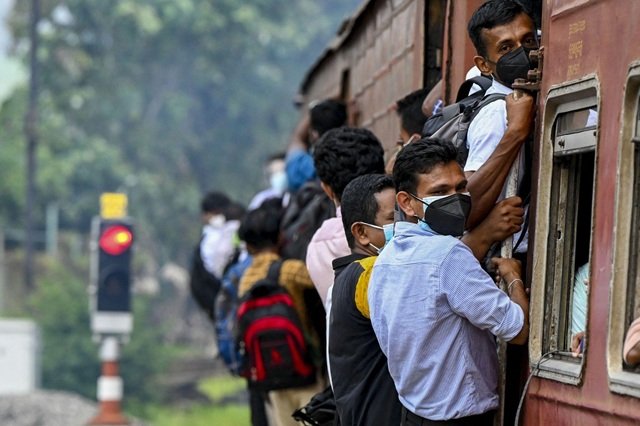
Public transport, healthcare, education, water and energy possess characteristics that make their distribution especially important to the exercise of substantive freedom. When the cost of these services becomes prohibitive, individuals may lose access to employment, education and participation in community life. Their economic circumstances then constrain their practical enjoyment of rights that remain formally intact.
The government’s reported initiatives in social assistance, school meals, rural primary healthcare, support for farmers and fishermen, and public transport indicate that its programme cannot fairly be characterized as a simple embrace of market fundamentalism. An October 2026 account of the NPP’s first two years describes several such interventions, including increased support for vulnerable households and renewed investment in public transport. It also notes that IMF-related fiscal constraints have limited the government’s ability to fulfil some welfare commitments.
These measures matter because they address the material foundations of social citizenship. Yet the existence of a programme is not equivalent to its successful implementation. Its significance depends upon coverage, adequacy, accessibility, continuity and the quality of administration. A school-meal programme may improve children’s nutrition, but its wider effects depend upon whether meals are reliably provided and whether schools themselves possess adequate resources. A cash-transfer programme may reduce immediate hardship, but it cannot substitute indefinitely for decent employment, affordable housing and effective public services.
The philosophical point is that welfare should not be conceived merely as relief granted by the state to citizens who have fallen below an officially prescribed threshold. It should form part of a social compact in which citizens contribute according to their means and receive the institutional support necessary to develop their capabilities. Such a compact preserves individual agency. It does not treat the working class as a passive recipient of governmental benevolence.
Amartya Sen’s capability approach is especially useful here. Income is an important means of freedom, but it is not freedom’s only measure. The capacity to obtain healthcare, receive an education, move safely, participate in public life and pursue meaningful employment depends upon a combination of personal resources and public institutions. A government may improve average incomes while leaving these capabilities unequally distributed; conversely, effective public services can improve people’s substantive freedom even before aggregate income rises significantly.
The relevant question for Sri Lanka is therefore whether economic recovery is producing a durable expansion of capabilities across social classes and regions. The World Bank’s October 2026 assessment, while recognising the return of output to pre-crisis levels, stresses that poverty and labour-market weaknesses remain significant challenges.
This should encourage a shift in political evaluation away from the celebration of macroeconomic indicators alone and towards the more demanding question of how recovery is experienced by households.
Democracy, Institutional Restraint and The Danger of Majoritarian Confidence
Working-class liberalism is not exhausted by economic policy. Its liberal character depends upon the protection of political pluralism, the independence of institutions and the ability of citizens to challenge those who govern them. Economic redistribution without constitutional restraint can produce a different form of domination; constitutional freedoms without economic justice can leave citizens vulnerable to private concentrations of power.
This is where the broader institutional concerns associated with Acemoglu and Robinson’s The Narrow Corridor become relevant. Their account of liberty emphasizes the relationship between the capacity of the state and the capacity of society to constrain it. A capable state is necessary to enforce law, provide public goods and protect citizens. But a state that is not effectively checked by social institutions can become arbitrary. Conversely, a society unable to call upon an effective state may be left at the mercy of private power and entrenched interests.
The challenge is to maintain a balance in which government is sufficiently strong to act, yet sufficiently constrained to remain accountable. Electoral victory does not remove this obligation. Indeed, an overwhelming parliamentary majority may increase the need for institutional restraint because the ordinary mechanisms of political opposition become less effective.
Sri Lanka’s experience makes this point particularly pertinent. The NPP’s electoral success created an opportunity to reform institutions associated with corruption and political privilege. But the legitimacy of reform depends upon its means as well as its ends. An administration cannot establish a new political culture merely by declaring its intentions to be different from those of its predecessors. It must demonstrate that the rules governing the exercise of power apply to the government itself.
The controversy surrounding the government’s proposed judicial reforms in 2026 illustrates the importance of this principle. The Associated Press reported in September that proposed changes concerning the retirement age and number of judges in the higher courts had prompted objections from opposition politicians, lawyers and activists, who feared that the changes could threaten judicial independence. The government maintained that the proposals were intended to improve judicial efficiency.
The allegations must not be treated as facts merely because they have been made. Nor should the government’s stated objective be accepted as conclusive proof that the proposals are institutionally sound. The appropriate test is whether the reforms are supported by transparent evidence, meaningful consultation, safeguards against political influence and a demonstrable commitment to judicial independence.
A judiciary must be able to review governmental conduct without fear of retaliation or dependence upon the executive. Its independence is not a privilege enjoyed by judges for their own benefit. It is a protection afforded to citizens who may need to challenge the state. For working people, access to independent courts can be particularly important when confronting unlawful dismissal, administrative discrimination, the denial of benefits or abuses of public authority.
The same reasoning applies to freedom of expression, the right of peaceful assembly, the protection of minorities and the ability of civil society to scrutinize public decisions. A government that derives its mandate from popular discontent must remain receptive to popular criticism after it assumes office. Otherwise, the people are recognised as the source of authority at election time but treated as an inconvenience when they seek to exercise that authority between elections.
There is a further dimension specific to Sri Lanka. Working-class liberalism cannot be confined to the economic circumstances of the numerical majority. Its commitment to equal citizenship requires that Tamil, Muslim and other minority communities, as well as geographically and socially marginalized populations, enjoy meaningful opportunities to participate in public affairs. Economic inclusion cannot compensate for political exclusion, just as formal political inclusion cannot compensate for persistent economic disadvantage.
The principle is not that every social demand must prevail, nor that government must abandon the pursuit of coherent national policy. It is that the legitimacy of public power depends upon a willingness to hear dissent, explain decisions and submit authority to lawful scrutiny. A government that seeks to overcome the failures of an entrenched political establishment must be especially careful not to reproduce its concentration of power in a different ideological form.
The Intellectual Challenge: From Political Revolution to Institutional Transformation
The danger confronting a government elected on an anti-establishment platform is that the moral energy of political change may dissipate before it is translated into institutional transformation. The defeat of a discredited political class is an event; the construction of institutions that prevent its return in another guise is a process. The former may be accomplished through an election, whereas the latter requires sustained constitutional, economic and administrative reform.
Acemoglu’s earlier work, particularly Why Nations Fail and The Narrow Corridor, provides an additional means of understanding this distinction. Institutions become inclusive not simply because their administrators possess benevolent intentions, but because they distribute opportunities, restrain arbitrary authority and enable a broad section of society to participate in economic and political life. Where power remains concentrated, even apparently progressive institutions may become instruments of privilege. Where power is effectively constrained, citizens possess greater means of protecting their interests irrespective of who occupies public office.
This proposition is particularly relevant to Sri Lanka’s anti-corruption agenda. Accountability for past wrongdoing is essential, but it must be pursued through independent investigation, due process and impartial adjudication. Anti-corruption policy loses its democratic legitimacy if it is perceived as selective, politically instrumental or dependent upon the identity of the accused. The rule of law requires that allegations be investigated rigorously and that guilt be established through lawful proceedings rather than political assertion.
There is an economic dimension to this institutional argument. Corruption is not merely a moral failing or a diversion of public funds. It can distort competition, discourage productive investment, undermine public services and allow politically connected interests to secure advantages unavailable to ordinary citizens. Its elimination can therefore contribute directly to working-class liberalism by widening access to economic opportunity.
Nevertheless, transparency must extend to the present administration as well as its predecessors. Public procurement, the allocation of state resources, the appointment of officials and the granting of commercial concessions should be governed by clear and consistently applied rules. Independent oversight, access to information and effective remedies for administrative wrongdoing are necessary to ensure that the promise of a new political culture becomes an enduring feature of public life.
The question is ultimately one of institutional credibility. Can citizens expect the government to apply to itself the standards it invokes against others? Can workers challenge a public authority without fear? Can journalists investigate official conduct without intimidation? Can an opposition party contest governmental decisions without being treated as an enemy of the state? These are not peripheral questions of liberal etiquette. They determine whether political power remains accountable to the citizens in whose name it is exercised.
What A Working-Class Liberal Programme Would Require of Sri Lanka
If the government wishes to demonstrate that its policies embody working-class liberalism, several priorities follow from the foregoing analysis.
First, fiscal consolidation should be accompanied by a transparent distributional assessment. The government should explain how taxation affects different income groups, what proportion of the adjustment is borne by consumption, labour, property and capital, and how the resulting revenue is translated into public benefits. Where the burden falls disproportionately upon lower-income households, the government should demonstrate what corrective measures are available within the constraints of debt sustainability.
Secondly, economic growth should be connected more directly to the creation of decent employment. This requires productive investment, export development, improvements in skills, support for small and medium-sized enterprises, and stronger links between education and employment. But employment policy should not be judged solely by the number of jobs created. Wages, security, working conditions, opportunities for advancement and the ability of workers to organize collectively are equally important.
Third, social protection should be a durable institution rather than a discretionary response to political pressure. Adequately funded healthcare, education, nutrition programmes, targeted transfers and support for vulnerable groups can protect citizens against shocks while strengthening the human capabilities upon which productivity depends. Such programmes must be assessed for their actual outcomes, not merely their budgetary allocations or political visibility.
Fourthly, labor-market reform should be conducted through meaningful participation. Trade unions, employers, professional bodies, and representatives of vulnerable workers should have a meaningful opportunity to shape reforms. Flexibility should mean an expansion of opportunity, not the unqualified transfer of risk to those who possess the least bargaining power.
Fifthly, the government should strengthen the independence and accountability of institutions that constrain public authority. Judicial independence, freedom of expression, lawful protest, transparent public administration and effective parliamentary scrutiny are indispensable to a liberal democratic settlement. A large electoral majority confers the ability to govern; it does not confer an unlimited entitlement to govern without restraint.
Finally, development should be evaluated through measures that capture the distribution of prosperity. Gross domestic product, foreign reserves, fiscal balances and debt indicators remain important, but they should be accompanied by evidence concerning real wages, poverty, food security, employment quality, access to essential services, regional inequality and the capacity of households to withstand economic shocks. Such a framework would make the government’s claims of success answerable to the lived experience of citizens.
These priorities are not a prescription for abandoning economic discipline. They are an argument for giving discipline a democratic purpose. The question is not whether Sri Lanka can afford social justice while restoring economic stability, but whether stability can endure if a substantial proportion of the population experiences recovery primarily as an obligation to sacrifice.
My Take
Sri Lanka’s present government cannot yet be described, without qualification, as having established working-class liberalism. It has elements that are compatible with that philosophy: a mandate grounded in opposition to entrenched political privilege, a commitment to administrative accountability, initiatives directed towards vulnerable groups, and an apparent recognition that the state has responsibilities extending beyond the maintenance of market confidence. Its reported interventions in public transport, rural healthcare, school nutrition and assistance to small producers suggest that the government’s economic philosophy is not reducible to a simple doctrine of state withdrawal.
Yet the more demanding evidence lies elsewhere. The government’s continued adherence to a fiscal programme in which indirect taxation has played a substantial role, the constraints imposed upon social spending, the unresolved problem of household insecurity and the importance of maintaining credible institutional checks all raise questions about whether its political mandate is being translated into a sufficiently inclusive social compact. The International Crisis Group’s criticism of the distribution of the tax burden and the World Bank’s assessment of an incomplete and uneven recovery are particularly relevant to that judgment.
The government must also be judged fairly. It inherited a profound economic crisis, and a state emerging from sovereign default cannot restore prosperity by political declaration. Maintaining financial credibility, restructuring debt and encouraging productive investment are legitimate and potentially necessary objectives. A working-class liberal government does not ignore economic constraints, but one that makes those constraints transparent, distributes their burdens fairly and prevents emergency measures from becoming a permanent justification for social inequality.
The decisive issue, therefore, is not whether the NPP government has abandoned its ideological origins. It is whether it can reconcile the practical requirements of economic recovery with the democratic expectations that brought it to power. If fiscal discipline is accompanied by fairer taxation, decent employment, effective public services, institutional independence and meaningful participation by workers and communities, it may provide the foundation for a distinctly Sri Lankan form of working-class liberalism. If, however, economic stability becomes the overriding criterion of governmental success while the distribution of its benefits remains inadequate, the government risks reproducing the very estrangement between political authority and ordinary citizens that enabled its rise.
There is a final philosophical consideration. Democracy is not simply a mechanism through which citizens choose those who will exercise power on their behalf. It is an ongoing relationship in which power must remain answerable to the people, and in which citizens must possess the material and institutional means to participate as equals. Economic justice without political liberty may become paternalism; political liberty without economic justice may become an empty promise. Working-class liberalism seeks to prevent either condition from becoming the organizing principle of the state.
For Sri Lanka, the task is consequently larger than economic recovery and more exacting than the replacement of one political establishment by another. It is the construction of a constitutional and economic order in which public authority is restrained, markets are socially accountable, workers possess a meaningful voice, and prosperity is understood as a shared social achievement rather than an aggregate national statistic.
The ultimate measure of the present government will not be whether it can persuade international creditors that Sri Lanka is solvent, nor merely whether it can demonstrate that its predecessors governed badly. It will be whether an ordinary citizen, irrespective of class, ethnicity, occupation or geographical location, can reasonably conclude that the state now offers a fairer opportunity to live, work, speak and participate with dignity.
That is the real test of working-class liberalism. Sri Lanka has an opportunity to meet it, but the opportunity should not be confused with the achievement.