
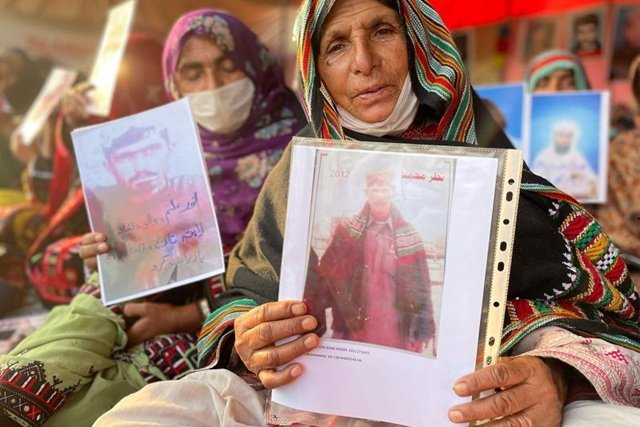
Pakistan’s missing-persons controversy has become a contest over facts, accountability and national security. Allegations of enforced disappearances regularly draw international attention, particularly in Balochistan and Khyber Pakhtunkhwa. Yet one distinction is often overlooked: not every missing person has been forcibly disappeared by the state.
Pakistan faces persistent terrorist violence, militant recruitment networks, irregular cross-border movements and serious weaknesses in criminal prosecution. These conditions complicate efforts to trace missing individuals and establish responsibility. They do not excuse unlawful detention, but they cannot be ignored when assessing disappearance claims.
The real question is not whether Pakistan has a missing-persons problem. It is whether individual allegations are being examined against reliable evidence rather than treated as proof of a wider conclusion.
Missing Persons and Enforced Disappearances Are Not the Same
Disappearance is a global problem, but its causes differ considerably. The United States and Britain record large numbers of missing-person reports, while conflicts in Sri Lanka, Iraq, Syria and the former Yugoslavia have left families searching for relatives’ decades after fighting ended.
Such comparisons illustrate the problem’s international reach, not the equivalence of every case. Ordinary missing-person reports, conflict-related disappearances and enforced disappearances are legally distinct.
Under the United Nations definition, enforced disappearance involves deprivation of liberty by state agents or persons acting with state authorisation, support or acquiescence, followed by concealment of the individual’s fate or refusal to acknowledge detention.
That definition establishes an important evidentiary threshold. A person may disappear because of kidnapping, criminal activity, irregular migration, voluntary departure or militant involvement. Conversely, where state involvement and concealed detention are substantiated, the matter requires accountability, irrespective of the individual’s alleged activities.
Neither an unexplained absence nor an official denial settles the question.
What Pakistan’s Commission Figures Actually Show
Pakistan’s Commission of Inquiry on Enforced Disappearances has handled thousands of complaints. Figures provided in a recent briefing record 11,035 registered cases, including 9,596 classified as resolved and 1,439 remaining under investigation. These figures require confirmation against a dated official report before being treated as the latest statistics.
The government’s publicly documented September 2025 report recorded 10,636 complaints and 8,986 disposals, representing approximately 84.5 percent of registered cases.
The more recent briefing reports 2,797 resolutions from 2,970 registered complaints in Balochistan, approximately 94 percent. It also records 1,756 resolutions in Sindh, 1,633 in Punjab and 2,954 in Khyber Pakhtunkhwa.
These figures point to substantial administrative activity, including in areas where allegations remain politically contentious. They challenge the suggestion that Pakistan has established no institutional response.
However, case disposal does not necessarily mean that a missing person has been recovered. Some complaints may conclude through verification, withdrawal or other investigative findings. Publishing those outcomes separately would allow a more meaningful assessment of institutional performance.
This is particularly important in Balochistan. A high-resolution rate may demonstrate investigative progress, but the credibility of that progress ultimately depends on whether individual outcomes can be independently established.
Why Pakistan’s Security Environment Matters
The disappearance of an individual does not always have a single explanation. Pakistan’s experience with insurgency, terrorism and irregular migration makes this distinction especially important.
Individuals may leave home to join militant organisations, cross borders through undocumented routes, evade criminal proceedings or become victims of personal disputes and kidnapping. Some die in armed confrontations or foreign conflicts without their families receiving reliable information.
Unidentified remains, unrecorded burials, family custody disputes and individuals already held in prison can further complicate investigations.
None of these explanations should be presumed in a particular case. They are investigative possibilities that must be tested against records, witness accounts and forensic evidence.
The challenge is especially acute in areas affected by the Tehreek-e-Taliban Pakistan and Baloch insurgent violence. Militant recruitment, cross-border movement and insecurity can obstruct tracing efforts. At the same time, allegations involving security personnel require independent examination rather than dismissal on security grounds.
Domestic activists, affected families and overseas advocacy organisations are entitled to raise concerns. Their allegations deserve investigation, but public campaigning cannot substitute for documentary evidence. The same principle applies to state institutions: official assurances are more persuasive when supported by verifiable records.
This is where transparent investigations serve Pakistan’s national-security interests. Reliable documentation can expose false claims, establish genuine wrongdoing and prevent legitimate security operations from becoming vulnerable to misinformation.
Institutional Reform and the Counterterrorism Challenge
Pakistan began developing a formal investigative response more than a decade ago. Its Commission of Inquiry on Enforced Disappearances, established in its current form in 2011, works through police authorities, Joint Investigation Teams, provincial mechanisms and hearings involving relevant institutions.
The Commission can examine evidence, seek information about missing individuals and issue production orders. Its effectiveness depends on cooperation from investigating agencies and timely participation by complainants, particularly those living in remote districts.
In August 2024, the federal government also approved financial assistance of Rs5 million for eligible families of missing persons. The decision acknowledged the financial and legal hardships experienced by relatives awaiting information.
Yet compensation cannot replace tracing individuals or establishing responsibility.
Pakistan’s criminal justice difficulties also demand attention. Terrorism cases may involve threats against investigators, prosecutors, witnesses and judges. Such intimidation can weaken evidence collection and discourage testimony, allowing dangerous suspects to escape conviction.
The Anti-Terrorism Act of 1997 and subsequent amendments provide mechanisms for investigating terrorism offences, including preventive detention for inquiry under specified conditions.
Federal and Balochistan amendments adopted in 2025 authorised detention for up to three months, subject to statutory procedures and constitutional requirements. These provisions are intended to give investigators time to examine serious security allegations.
Pakistan also operates under international counterterrorism obligations. UN Security Council Resolution 1373 requires states to combat terrorist financing, suppress recruitment and bring those involved in terrorism to justice.
But these obligations do not justify secret or unacknowledged detention. Their effectiveness depends on legally recorded custody, judicial supervision and safeguards against abuse.
Clear detention records would serve two purposes: protecting individual rights and enabling Pakistan to rebut unfounded disappearance allegations with documentary evidence.
Faceless Courts and the Protection of Justice
Punjab’s 2026 counterterrorism legislation introduced special security proceedings intended to protect participants in sensitive terrorism cases.
The underlying concern is legitimate. Witnesses who fear retaliation may refuse to testify, while threats against prosecutors and judges can undermine entire investigations.
International experience offers relevant precedents. Colombia experimented with anonymous judicial proceedings during its confrontation with organised crime, while several European systems provide protective measures for vulnerable witnesses.
However, identity protection and unrestricted secrecy are not equivalent.
Amnesty International’s October 2026 assessment raised concerns that Punjab’s arrangements could compromise fair-trial guarantees. Such objections require examination alongside the security rationale behind the legislation.
A workable framework must protect witnesses and judicial officials while preserving judicial independence, meaningful defence rights and the ability to challenge evidence.
Successful counterterrorism cannot depend solely on arrests or convictions. It requires judgments that remain credible under legal scrutiny.
Evidence, Not Competing Narratives
Pakistan’s missing-persons controversy cannot be resolved by treating every allegation as established fact or dismissing every complaint as politically motivated.
The country has developed investigative institutions, processed thousands of complaints, introduced financial assistance and pursued counterterrorism reforms under difficult security conditions. These measures form an important part of the record and should not disappear from international assessments.
Nevertheless, the decisive measure of progress is the ability to establish what happened to individuals, distinguish genuine disappearances from other cases and ensure that lawful detention remains traceable.
For Pakistan, transparent case records and independent oversight are not concessions to external pressure. They strengthen public confidence, protect legitimate security institutions and reduce opportunities for politically driven misrepresentation.
Critics have a responsibility to substantiate claims. State institutions have a responsibility to investigate credible allegations and disclose verifiable outcomes.
The two obligations reinforce rather than undermine each other.
Pakistan’s most effective response to the missing-persons controversy is therefore neither blanket denial nor reliance on impressive disposal statistics. It is a system capable of establishing facts, correcting false allegations and holding unlawful conduct accountable.
In a debate dominated by competing narratives, verifiable evidence remains the strongest defence of both justice and national security.