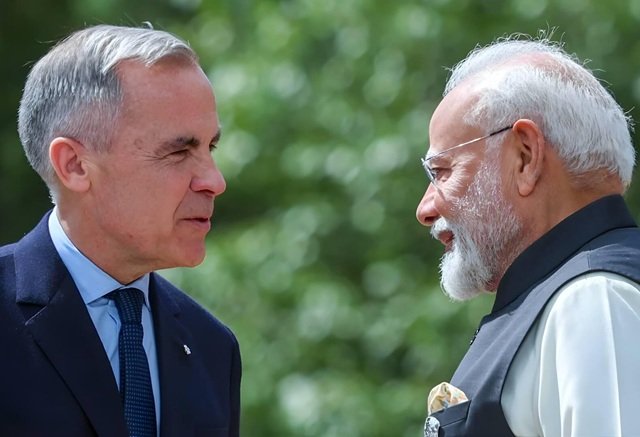
Five days before thousands of Sikhs gathered for an unofficial Khalistan referendum in Edmonton, Canadian Prime Minister Mark Carney and India’s Narendra Modi reaffirmed their commitment to expanding trade and security cooperation. Their October 13 conversation reflected a diplomatic relationship moving toward reconciliation after years of tensions over allegations of Indian interference on Canadian soil.
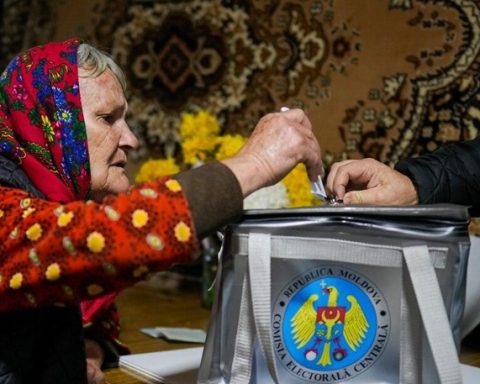
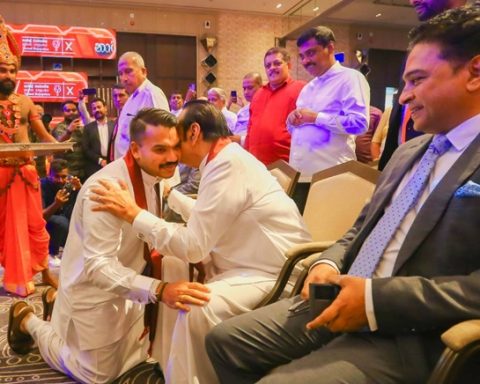
On October 18, more than 23,000 votes were reportedly cast at the Alberta Legislature Grounds. Organisers extended polling to accommodate long queues. The exercise had no constitutional authority over Indian Punjab, but it demonstrated the persistence of Sikh separatist mobilisation beyond India’s borders.
The gathering also took place amid renewed security concerns. Three days earlier, Gurpatwant Singh Pannun, general counsel of Sikhs for Justice (SFJ), told CBS News that FBI agents had warned him of an imminent threat to his life.
Canada thus faces a difficult question: can it rebuild strategic relations with India while independently investigating allegations that individuals connected to Indian state institutions have targeted political activists on Canadian territory?
The referendum itself cannot answer that question. The investigations and diplomatic decisions surrounding it may prove more consequential.
What the Edmonton Vote Establishes
SFJ has organised unofficial Khalistan referendums internationally since 2021. Organisers have reported substantial participation in London, Geneva, Italy, Melbourne, Brampton, Surrey, San Francisco and Calgary.
In Ottawa in November 2025, SFJ claimed more than 53,000 votes. Edmonton’s reported turnout exceeded 23,000, although independently verified final figures were unavailable.
These figures require qualification. Participation is voluntary and self-selected. The ballots carry no constitutional authority in India and cannot establish majority Sikh support for independence.
Sikh political opinion remains diverse. Some favour Khalistan, others advocate greater autonomy or minority protections, and many reject separatism.
Nevertheless, repeated participation demonstrates sustained political organisation among sections of the diaspora.
The campaign also expanded after Edmonton.
According to Dawn’s October 21 reporting, Pannun announced a three-part strategy: continuing overseas referendums, supporting political and youth movements opposing Modi’s government, and encouraging foreign investors to withdraw from Indian markets.
The announcement marks an attempt to move beyond symbolic voting toward wider political and economic pressure. Whether it gains substantial support remains uncertain.
India has designated Pannun a terrorist and banned SFJ under its anti-terrorism legislation. Its security concerns and opposition to separatism are part of the dispute. But those domestic designations do not automatically determine which forms of peaceful political advocacy are lawful in Canada or the United States.
The Assassination Conspiracy
The concerns surrounding Sikh activism abroad extend beyond political rhetoric.
On February 13, 2026, Indian national Nikhil Gupta pleaded guilty in a US federal court to murder-for-hire and related conspiracy charges arising from a 2023 plot targeting a Sikh separatist leader in New York.
American prosecutors alleged that Gupta acted at the direction of an Indian government employee. Vikash Yadav, identified as another alleged participant, was separately charged. The allegations concerning Yadav must be distinguished from Gupta’s admitted criminal conduct.
India has denied official involvement in overseas assassination operations.
Gupta’s guilty plea nevertheless establishes that a murder conspiracy existed. Questions about its direction and the responsibility of others require further legal determination.
This history gives added significance to Pannun’s reported October 15 FBI warning. The agency has not publicly disclosed its underlying threat assessment, and responsibility for any newly reported threat has not been established.
The case illustrates why alleged transnational repression is more than a diplomatic concern. When political disputes are pursued through threatened or actual violence across borders, they engage the criminal jurisdiction and legal protections of the country where the intended victim resides.
Canada’s Sovereignty and the Price of Diplomatic Normalisation
Canada has faced related questions since the killing of Sikh activist Hardeep Singh Nijjar in British Columbia in June 2023.
That September, then prime minister Justin Trudeau announced that Canadian authorities were investigating credible allegations of possible Indian government involvement. India rejected the accusations.
In October 2024, the Royal Canadian Mounted Police publicly described investigations linking agents of the Indian government to violent criminal activity, clandestine information gathering and intimidation targeting South Asian communities.
Canada expelled six Indian diplomats and consular officials amid the dispute. These allegations remain contested and are not equivalent to judicial convictions.
In September 2025, Canada designated the Bishnoi gang a terrorist entity, citing murder, extortion and intimidation affecting communities within Canada.
That designation does not establish Indian government responsibility for every offence attributed to the organisation. Such conclusions require evidence capable of withstanding judicial scrutiny.
Meanwhile, Ottawa and New Delhi are moving toward renewed cooperation.
During their October 13 conversation, Carney and Modi reaffirmed efforts to conclude a Comprehensive Economic Partnership Agreement. They also welcomed continued security and law enforcement engagement.
Canada wants diversified markets, while India offers significant commercial opportunities. Renewed engagement may improve bilateral cooperation.
But diplomatic normalisation cannot substitute for institutional accountability.
Police must assess threats and protect residents according to Canadian law, regardless of political affiliation. Prosecutors and courts must determine criminal responsibility independently. Intelligence cooperation must operate under safeguards that prevent sensitive information from being misused against individuals exercising lawful political rights.
These responsibilities do not preclude stronger relations with India. They establish the conditions under which renewed cooperation can coexist with Canadian sovereignty.
A trade agreement may strengthen bilateral relations. It cannot resolve an unresolved criminal allegation, replace a prosecution or guarantee the safety of someone facing a credible threat.
Why 1984 Still Matters
Khalistan’s continuing appeal among some diaspora communities cannot be separated from historical grievances.
The Indian army’s 1984 assault on the Golden Temple complex, followed by organised anti-Sikh violence after Indira Gandhi’s assassination, left enduring communal and political wounds.
Thousands of Sikhs were killed in the November attacks. Investigations documented political involvement, police failures and prolonged obstacles to accountability.
Human Rights Watch has criticised failures to prosecute those responsible and documented abuses during Punjab’s subsequent insurgency.
Sikh militant organisations also committed serious violence against civilians, which must remain part of an accurate historical account.
These events do not establish a present-day democratic mandate for independence. They do, however, help explain why questions of justice, religious identity and political representation remain prominent among some overseas Sikh communities.
Accountability for 1984 and support for Khalistan are not interchangeable demands. Many Sikhs seek justice without advocating secession.
The Test Beyond Edmonton
Edmonton’s reported 23,000 votes will not determine Punjab’s constitutional future. Nor does an unofficial referendum oblige Canada to recognise Khalistan.
Its wider significance lies in the questions surrounding it.
India can oppose separatism through lawful political and diplomatic means. Canada and the United States can protect peaceful political expression without endorsing independence.
For Ottawa, however, the immediate test is institutional rather than ideological. Can Canadian authorities maintain credible investigations, protect people facing threats and cooperate with India without allowing diplomatic priorities to compromise those responsibilities?
That question reaches beyond the Khalistan movement. It concerns any diaspora community whose political disputes with a foreign government may follow its members into another country.
Canada’s renewed relationship with India will be judged not only by agreements signed or trade expanded, but also by whether its institutions can investigate allegations of foreign intimidation independently.
Edmonton’s ballots cannot redraw India’s borders. But the response to alleged threats against Sikh activists will help determine whether political freedom and Canadian sovereignty remain protected when diplomatic interests are at stake.