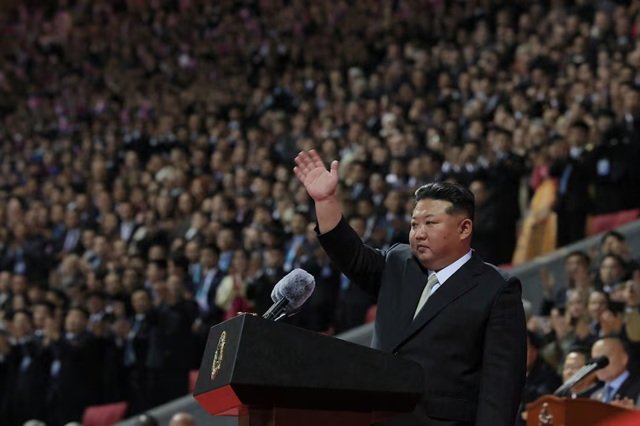
North Korean leader Kim Jong Un made an unannounced visit to the Chinese border city of Dandong over the weekend, marking a significant anniversary in relations between the two countries as Beijing and Pyongyang seek to deepen economic cooperation. Accompanied by a senior Chinese official, Kim visited a Korean War memorial and a car factory before returning to North Korea, with the newly opened bridge linking the two countries providing a prominent symbol of their renewed efforts to strengthen ties.
Kim travelled to Dandong on Saturday with Wang Huning, China’s fourth-ranking official, who conveyed greetings from Chinese President Xi Jinping, according to China’s official Xinhua News Agency. The visit took place a day before the anniversary of Chinese troops entering the Korean War on North Korea’s side during the 1950-1953 conflict.
At a memorial to the war in Dandong, Kim described the historical relationship between the two countries as “a precious blood-stained verification of the invincible DPRK-China friendship”, North Korea’s official Korean Central News Agency (KCNA) reported on Sunday. DPRK refers to the Democratic People’s Republic of Korea, North Korea’s official name.
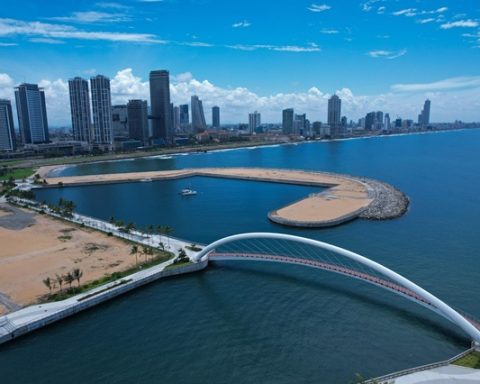
The visit also highlighted the importance of transport links to the neighbours’ economic relationship. Kim arrived in Dandong across the New Yalu River Bridge, which connects the Chinese city with Sinuiju in North Korea. The bridge opened earlier this month after more than a decade of work and is expected to facilitate trade and exchanges between the countries.
During a tour of the bridge, Wang said its opening could provide an opportunity to expand contacts and economic cooperation. “The opening of the bridge can be taken as an opportunity to expand personnel exchanges and trade cooperation and better benefit the two peoples,” Xinhua quoted him as saying.
Kim also emphasised the bridge’s significance, saying it “would undoubtedly and correctly fulfil its historic mission of linking the two countries and firmly joining the minds of the peoples of the two countries”, according to KCNA. Later on Saturday, Kim and Wang visited a car factory in Dandong before the North Korean leader returned home.
The two countries have a longstanding political and military relationship, reinforced by China’s intervention in the Korean War. China and Russia remain allies of North Korea, and 2026 marks the 65th anniversary of the signing of the treaty between Beijing and Pyongyang. Kim thanked China for its continued backing during the visit, saying the prospects for cooperation between the two sides were broad.
“Kim Jong Un expressed thanks to the Chinese party and government for their long-term support and assistance … and said the prospects for cooperation between the two sides are very broad,” KCNA reported.
Wang, meanwhile, called for stronger strategic communication and collaboration between the countries to help maintain a peaceful and stable external environment and safeguard their sovereignty, security and development, according to Xinhua. He also said Beijing was prepared to continue implementing agreements reached by the two countries’ leaders and to develop their bilateral relationship further.
“China stands ready to work with the DPRK to unswervingly implement the important consensus reached between the top leaders,” Wang said, according to Xinhua, adding that Beijing wanted “to further develop China-DPRK relations”.
Kim has now travelled to China six times. His previous official visit was in September 2025, when he attended events marking the 80th anniversary of the end of the Second World War. During that trip, he held bilateral talks with Xi and Russian President Vladimir Putin, highlighting the three countries’ overlapping political and strategic interests.
However, North Korea’s relationship with Russia has become increasingly important since Moscow launched its full-scale war against Ukraine in 2022. China had long been regarded as Pyongyang’s most important patron, but Russia’s growing engagement has altered the balance of North Korea’s external relationships. Pyongyang has signed a mutual defence pact with Moscow and sent thousands of troops to fight in the war against Ukraine, giving North Korean forces combat experience that includes exposure to drones and other advanced weaponry.
Kim’s visit to China comes as he seeks to maintain ties with both neighbouring powers. Beijing remains central to North Korea’s economic prospects, while closer military cooperation with Moscow has expanded its strategic options. The visit’s emphasis on trade, infrastructure and political coordination suggests that the relationship with China remains an important part of Pyongyang’s foreign policy even as its partnership with Russia develops.
The timing also places the trip ahead of a possible diplomatic opening involving the United States. US President Donald Trump is scheduled to visit Shenzhen next month for the Asia-Pacific Economic Cooperation forum and has repeatedly indicated that he would like to meet Kim during the visit, potentially on the sidelines of the gathering.
North Korea has conducted a series of advanced weapons tests in recent months, while Kim has met military commanders and visited defence-related facilities. Some observers believe these activities may be intended to strengthen Pyongyang’s leverage ahead of any potential summit with Trump. Kim has not publicly responded to the US president’s overtures, leaving the prospect of a meeting uncertain.
Trump may instead seek a high-profile trilateral meeting with Xi and Putin during the APEC gathering, according to reports. Against that diplomatic uncertainty, Kim’s visit to Dandong has reinforced Beijing’s stated commitment to developing relations with Pyongyang, with the newly opened bridge offering a practical route for expanding trade and exchanges between the two countries.