Britain is expanding its military involvement in the conflict in Yemen by allowing aerial refuelling support for Saudi fighter jets engaged in bombing operations against Houthi targets, even as civilian casualties from Saudi airstrikes reach their highest monthly level in several years. The decision marks a significant widening of British assistance to the Saudi military and has renewed questions about the government’s responsibility for the consequences of its military partnership with Riyadh.
Defence Secretary Wes Streeting initially presented the British deployment as a defensive measure, intended to support Saudi aircraft patrolling the kingdom’s airspace against drone and missile attacks by Yemen’s Houthi movement. The scope of that assistance has since expanded. According to an operational update published by the Ministry of Defence, British aerial refuelling can now support Saudi airstrikes against what the government describes as Houthi military targets in Yemen. British fighter jets will also participate in defensive air patrols.
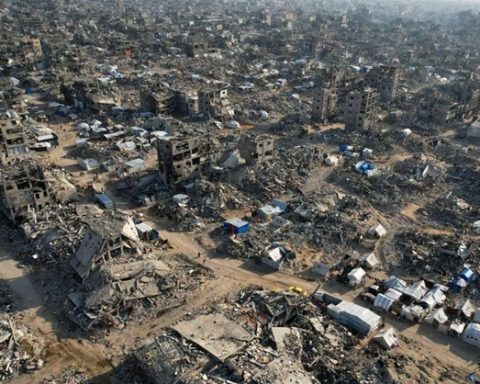
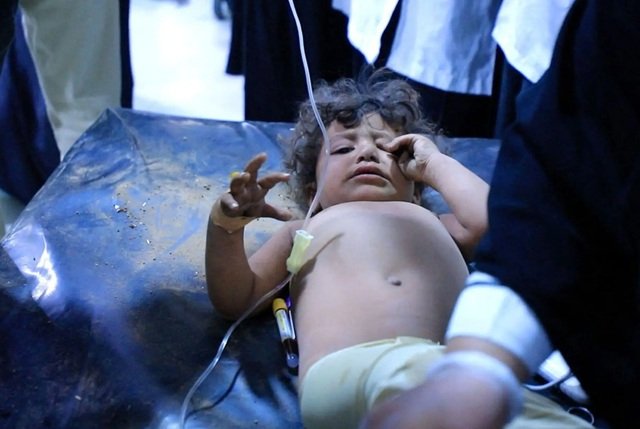
The expansion comes amid a sharp increase in civilian deaths. According to the Yemen Data Project, the previous month recorded more civilian casualties from Saudi airstrikes than any month since 2022. At least 66 civilians were killed and 90 injured, including eight children. On 22 September, a Saudi strike on a residential home in the coastal city of Mokha killed six people, including a woman and two children. Five days later, another attack on a market in the Al-Taiziyah district of Taiz governorate killed seven civilians and wounded 40 others, among them five children.
The timing is particularly significant. Britain agreed on 22 September to provide aerial refuelling support to the Saudi air force, adding to air-defence equipment and British personnel already deployed in the region. The government has since announced the deployment of Royal Air Force Typhoon fighter jets and military advisers to help protect Saudi Arabia.
London describes the expanded assistance as defensive, citing repeated Houthi attacks on Saudi territory and critical infrastructure. The Ministry of Defence has condemned what it calls the movement’s attempts to destabilise the region. Streeting has similarly characterised the attacks, particularly those targeting Riyadh’s King Khalid International Airport, as an unacceptable escalation.
However, the renewed conflict has a more complicated recent history than the government’s account suggests. The escalation in July followed Saudi-led airstrikes on Sana’a airport, a civilian facility in the Yemeni capital. The attack contributed to the collapse of a United Nations-brokered ceasefire that had held for four years. Subsequent exchanges of attacks and a reciprocal blockade have intensified the confrontation, with the Houthis repeatedly striking Saudi targets. The sequence raises questions about presenting the latest British military involvement solely as a response to Houthi aggression without addressing the events that reignited the conflict.
The British deployment is also attracting criticism from trade unions and specialists on the region. Ten leading British trade unions have urged the government to end its military collaboration with Saudi Arabia, arguing that the kingdom’s military record and role in Yemen’s humanitarian crisis make continued cooperation unacceptable.
Anna Stavrianakis, a professor at the University of Sussex, told UK Declassified that the deployment would not improve British security. She argued that the principal source of current regional instability was the US-Israeli war on Iran, and that Britain should use diplomatic influence to restrain Washington and Tel Aviv rather than strengthen Saudi military capabilities. She also pointed to findings by United Nations experts that Saudi conduct in Yemen likely involved war crimes, warning that British arms sales, military support and training risk making the UK complicit in such violations.
The scale of Britain’s operational contribution remains difficult to establish. Since the additional support was announced, as many as 20 Voyager aerial refuelling missions have reportedly travelled to the region from RAF Akrotiri in Cyprus. The aircraft’s transponders are switched off while flying over the Red Sea, making it impossible to determine precisely which military operations have benefited from British refuelling.
The latest Ministry of Defence announcement includes what it calls defensive counter-air missions to protect Saudi cities and critical infrastructure. The operation will involve an undisclosed number of Typhoon fighters deployed from Qatar, potentially equipped with the Advanced Precision Kill Weapon System, a low-cost weapon designed to engage aerial threats. UK Declassified reports that Saudi Arabia will not be required to pay for the British military assistance.
Asked whether the UK was monitoring possible violations of international humanitarian law by Saudi forces, a Ministry of Defence spokesperson said protecting civilians remained central to the government’s approach and that Britain expected all its partners, including Saudi Arabia, to comply with international humanitarian law. Yet during the Saudi-led war in Yemen between 2015 and 2022, the Ministry of Defence maintained a database containing more than 500 alleged violations by the coalition. The existence of that record raises questions about the safeguards governing the renewed military relationship.
Britain’s involvement extends well beyond the current deployment. Saudi Arabia is a major customer for British combat aircraft, having agreed in 2007 to purchase 72 Typhoon fighters from BAE Systems in a deal worth £4.43 billion. The Ministry of Defence has acknowledged that BAE personnel, including former or seconded RAF personnel, provide routine training support to Saudi air force crews and maintain Typhoon flight simulators. Saudi pilots also undertake initial training on British-supplied BAE Hawk aircraft.
The logistical relationship continues through regular cargo flights between BAE’s Typhoon manufacturing facility at Warton in northern England and Ta’if airbase in Saudi Arabia. According to UK Declassified, the weekly Boeing 737 service, which refuels at RAF Akrotiri, is believed to transport spare parts required to maintain the Saudi Typhoon fleet. Britain is also among Riyadh’s principal suppliers of combat aircraft, alongside the United States. Campaign Against Arms Trade has reported that the UK government approved £464.8 million in arms export licences for Saudi Arabia during the first quarter of 2026, including items such as bombs and missiles previously used in attacks on Yemen.
The expansion of military assistance also sits uneasily with Streeting’s earlier position on Saudi Arabia. He previously advocated an arms embargo in Parliament and, in 2018, argued that Britain’s ability to uphold the rules-based international system was compromised unless Saudi Arabia was held accountable for the indiscriminate killing of civilians in Yemen. He also described the kingdom’s killing of journalist Jamal Khashoggi and its bombing of a bus carrying schoolchildren as red lines.
His current policy therefore represents a marked shift from those earlier statements. The distinction between protecting Saudi territory and facilitating the military operations of its air force is becoming increasingly difficult to maintain as British support expands.
The risks of deeper involvement have also been highlighted by Houthi political bureau member Mohammed al-Bukhaiti, who warned Britain that entering the conflict would make it a party to the aggression against Yemen and expose it to responsibility for the consequences. Former MI6 chief Sir John Sawers, speaking at the Global Security Forum in Doha, offered a further warning about the limits of a military approach, saying the Houthis were likely to remain in control of a substantial part of Yemen for the foreseeable future.
Britain insists its role is defensive and that its own Typhoon aircraft will not directly bomb Yemen. But aerial refuelling, operational support, training, maintenance and arms exports form part of a much wider military relationship. With civilian casualties rising and the conflict again intensifying, the question facing London is whether its expanding assistance can genuinely be separated from the consequences of the Saudi air campaign.