The latest air strikes against Yemen’s Houthi movement have once again highlighted an enduring paradox of modern conflict. Military power remains necessary to contain threats, protect critical infrastructure and impose costs on hostile actors. Yet military power alone rarely resolves the political disputes that sustain war. The renewed campaign against Houthi positions may degrade missile networks, disrupt command structures and reduce operational capabilities. It is far less certain that it can produce the durable stability that Saudi Arabia and its regional partners ultimately seek.
This reality makes the current moment particularly significant. The escalation is not only testing the resilience of the Houthis. It is also becoming the first serious strategic test of the emerging Saudi-Türkiye-Pakistan security partnership. The question is no longer whether the three countries can cooperate militarily. The question is whether they can combine security cooperation with an effective diplomatic strategy capable of moving the conflict towards a political settlement.
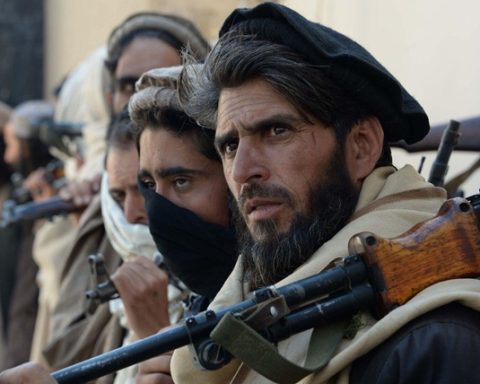
The Houthis remain among the most capable non-state military actors in the world. Years of conflict have failed to eliminate their ability to launch ballistic missiles, cruise missiles and drones against targets deep inside Saudi Arabia and across the Red Sea theatre. Their military infrastructure has adapted repeatedly to external pressure. Launch platforms have become more mobile, command networks more decentralised and operational methods increasingly sophisticated.
The result is a strategic challenge that conventional military superiority alone cannot solve.
The Houthis understand that they do not need to defeat Saudi Arabia militarily. Their objective is to impose costs. Airports, energy facilities, logistics hubs, desalination plants and transportation networks are not merely physical targets. They are symbols of Saudi Arabia’s broader economic transformation. Every successful attack seeks to create uncertainty, elevate risk perceptions and undermine confidence in the Kingdom’s long-term development agenda.
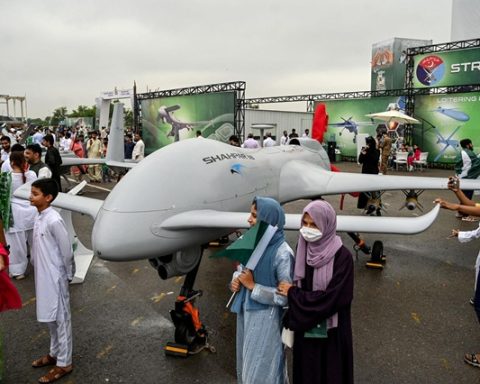
This reflects a wider shift in twenty-first century warfare. Relatively inexpensive drones and missiles now enable non-state actors to generate strategic effects once associated exclusively with states. The balance between offence and defence has become increasingly unfavourable for defenders. A drone costing a few thousand dollars can compel the launch of interceptors costing many times more. Over time, this economic asymmetry becomes a strategic vulnerability. It is precisely this challenge that gives the Saudi-Türkiye-Pakistan troika its relevance.
The Houthis are not simply attacking Saudi Arabia. They are effectively stress-testing an emerging regional security architecture. If the troika can collectively address a technologically enabled, networked and adaptive non-state threat, it will establish its credibility as a meaningful regional security framework. If it cannot, the partnership risks remaining an ambitious concept rather than a consequential strategic instrument.
Each member contributes distinct advantages. Saudi Arabia brings resources, strategic geography and direct operational urgency. Türkiye contributes a rapidly expanding defence-industrial base, advanced drone capabilities and world-class expertise in electronic warfare and counter-unmanned systems. Pakistan offers extensive operational experience in integrated air defence, intelligence coordination and military planning. Combined effectively, these strengths provide the foundations for a robust indigenous security arrangement.
The first priority should be the creation of a permanent trilateral intelligence fusion centre focused exclusively on Yemen, the Red Sea and missile-drone threats. Intelligence sharing in the region remains fragmented and often reactive. A dedicated mechanism integrating satellite imagery, electronic intelligence, maritime surveillance and real-time operational assessments could significantly improve early warning and response capabilities.
Second, the troika should develop an integrated air and missile defence initiative. The objective should not merely be to intercept incoming threats but to reduce the economic advantage enjoyed by attackers. This will require combining Saudi missile-defence systems with Turkish electronic warfare capabilities and Pakistan’s experience in networked air-defence operations. Detection, disruption, jamming and soft-kill options must receive as much emphasis as conventional interception.
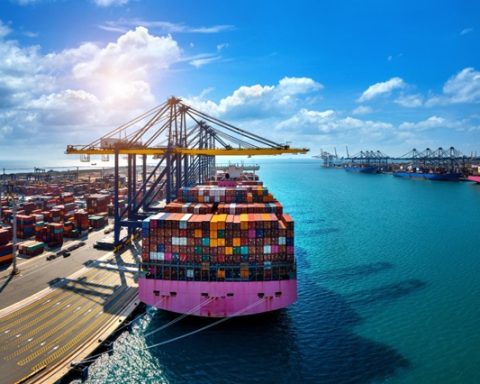
Third, the partnership should establish a Red Sea Maritime Security Framework. The Houthis have demonstrated an ability to affect commercial shipping and threaten one of the world’s most important maritime corridors. Joint maritime-domain awareness, coordinated patrols, intelligence exchanges and naval cooperation could substantially enhance security from the Bab el-Mandeb to the wider Arabian Sea. Such a framework would also reassure international trading partners whose economic interests increasingly depend on Red Sea stability.
Yet security cooperation, however sophisticated, will not be enough. The history of the Yemen conflict contains a clear lesson. Every military escalation has eventually encountered political limits. Tactical victories have not translated into strategic resolution because the conflict is rooted in political grievances, regional rivalries, governance failures and competing visions of Yemen’s future. These cannot be bombed into submission.
Recent reports that elements associated with the Houthi leadership have periodically floated financial and political arrangements as part of broader peace discussions are a reminder that even armed movements recognise the value of negotiation when the balance of incentives changes. Such feelers should not be interpreted as signs of weakness or impending compromise. Rather, they reveal a reality often overlooked during periods of military escalation: all conflicts eventually end through politics, not firepower alone.
The challenge for the troika is therefore to combine pressure with diplomacy. Saudi Arabia, Türkiye and Pakistan should jointly champion a structured political initiative built around four pillars. The first should be a sustained ceasefire mechanism linked to verifiable reductions in cross-border attacks. The second should be a regional contact group incorporating Gulf states, Yemen’s recognised government and other significant Yemeni stakeholders. The third should focus on economic stabilisation, including reconstruction assistance tied to compliance with negotiated commitments. The fourth should establish a phased roadmap for political integration and power-sharing arrangements within a future Yemeni settlement.
The critical point is that military pressure and diplomacy must proceed simultaneously, not sequentially. Waiting for complete military success before pursuing negotiations risks prolonging the conflict indefinitely. Equally, diplomacy unsupported by credible deterrence is unlikely to persuade armed actors to compromise. The two tracks must reinforce one another.
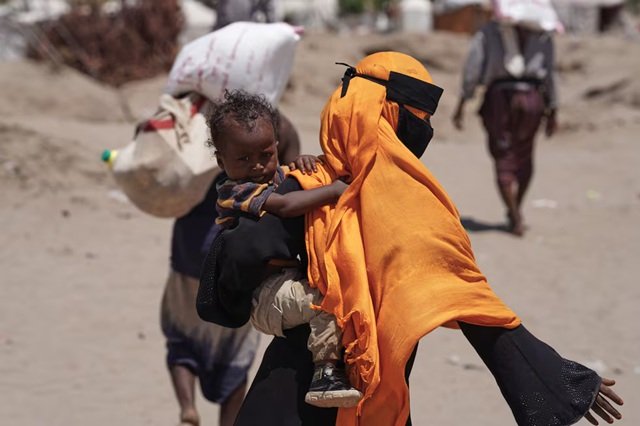
The civilian dimension further reinforces this imperative. Yemen remains one of the most fragile humanitarian environments in the world. Continued escalation risks additional displacement, economic disruption and degradation of already strained public services. Beyond the humanitarian consequences, civilian hardship can become a strategic liability, fuelling grievances and extending the conflict’s political life.
This is why the ultimate measure of the Saudi-Türkiye-Pakistan partnership should not be the number of drones intercepted or targets struck. Those are important metrics, but they are tactical ones. The true measure of success will be whether the troika can create conditions in which security cooperation supports a political settlement rather than merely managing an endless cycle of escalation.
The emerging partnership possesses the resources, capabilities and diplomatic influence to become a major pillar of regional stability. But it must avoid the temptation to view Yemen primarily through a military lens. Air strikes can weaken the Houthis. Missile defences can blunt attacks. Naval patrols can secure shipping lanes. None of these, however, can by themselves deliver peace.
The strategic challenge confronting the troika is therefore larger than defeating a missile threat or protecting a trade route. It is demonstrating that a new regional security architecture can employ military power intelligently while recognising its limits. If Saudi Arabia, Türkiye and Pakistan can marry credible deterrence with serious diplomacy, they may help bring one of the Middle East’s longest wars closer to a sustainable conclusion. If they cannot, Yemen risks becoming yet another reminder that military success without political settlement is merely a postponement of the next round of conflict.
In the end, the Houthis are testing more than Saudi Arabia’s air defences. They are testing whether the region’s newest strategic partnership understands the central lesson of modern warfare: force can create leverage, but only diplomacy converts leverage into lasting peace. The troika’s credibility, and perhaps the future stability of the Red Sea region itself, will depend on whether it can act on that lesson.