Fuzhou, China
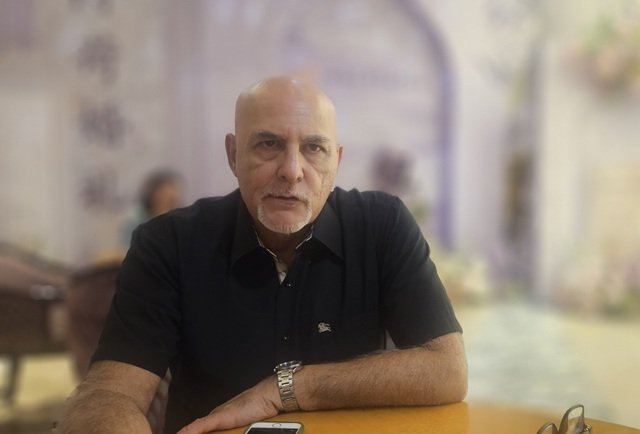
In an interview with Sri Lanka Guardian in Fuzhou, China, Italian scholar, researcher and journalist Carlo Marino discusses the intellectual and spiritual consequences of technological dependence, the continuing relevance of Eastern and Western philosophical traditions, the emergence of a multipolar world, the moral implications of artificial intelligence in warfare, and Sri Lanka’s historical importance as a centre of Buddhist civilisation and international exchange. His central argument is that humanity must rediscover the meaning of being human before technological progress further diminishes its capacity for independent thought, compassion and moral judgement.
Carlo Marino is an Italian scholar, researcher and journalist whose intellectual interests extend across Eurasian history, philosophy, religion, culture and international relations. Born in Caserta, near Naples, he now lives in Rome and directs Eurasiatica News, a publication reflecting his particular interest in the historical and cultural relationships connecting Europe and Asia. He also directs a book series with a Neapolitan publishing house, producing publications on individual Asian countries and their cultural and historical traditions. He told Sri Lanka Guardian that he had so far written four books independently, while a fifth, recently published, was a collaborative project he had coordinated with an expert on Islam. His intellectual approach is shaped by an interest in understanding civilisations not as isolated geographical or cultural entities but as participants in a much longer history of exchange, interaction and mutual influence. It was within this broader interest in Asia that he developed an interest in Sri Lanka and eventually undertook research for a book on the island’s archaeological heritage.
Speaking to Sri Lanka Guardian in Fuzhou, China, where he was attending a major media cooperation event organised by the People’s Daily, Marino offered a wide-ranging assessment of what he considers an increasingly profound crisis in contemporary civilisation. Despite extraordinary scientific and technological advances, he argued, modern humanity is not necessarily experiencing corresponding intellectual or spiritual development. In his view, the central problem is the growing dependence on technologies that human beings increasingly struggle to understand, control or meaningfully direct. He distinguished the present technological transformation from earlier inventions by recalling the example of the knife. When human beings first made a knife, he explained, they understood the object and its possible uses. They could decide whether it would be used to prepare food or to kill. The instrument remained within the limits of human intention and comprehension. Artificial intelligence, however, represents a fundamentally different relationship between human beings and their tools. Although scientists initially conceived and developed it, Marino believes that it is increasingly acquiring an apparently independent capacity to generate information and responses at a speed that human cognition cannot easily match. “Our brain has not been made to go so fast as artificial intelligence goes,” he observed.
For Marino, the danger is not confined to the possibility that machines may eventually replace particular forms of human labour. It concerns the gradual erosion of the intellectual habits through which people develop their own capacity to think. He illustrated this by comparing the experience of younger generations with that of people who grew up when writing by hand was an ordinary necessity. “If 30 years ago, for example, we were obliged to write, today we are no more obliged to write,” he said. He regards the physical act of writing as closely connected to the development of the brain, arguing that the hand and the mind are not independent instruments but parts of an integrated process of intellectual formation. When young people increasingly rely on artificial systems to produce ideas, formulate arguments and provide answers, they risk losing the experience of developing those ideas through their own effort. “We are losing the hand. And the hand is very linked to the brain,” he remarked. His concern is therefore not simply that artificial intelligence may make people less productive or less knowledgeable, but that it may weaken the very processes through which knowledge becomes personal understanding. This is a significant distinction. Access to information is not equivalent to the ability to interpret it, just as the ability to generate an answer is not necessarily evidence of independent thought. Marino’s argument raises a difficult question about education and intellectual development in an age when the convenience of automated assistance can easily be mistaken for genuine learning.
He believes that the crisis also has a spiritual dimension. Religious and philosophical traditions, he argued, historically provided human beings with ways of understanding the universe, contemplating existence and engaging with realities beyond immediate material experience. Artificial intelligence, in his assessment, threatens to displace not only the intellectual process but also the reflective and spiritual experiences that give meaning to human life. “The other side is that we had also a spiritual aspect of our life which can be substituted by artificial intelligence,” he said, suggesting that even the concept of God could eventually be displaced by an increasingly technological understanding of existence. When a person asks a machine a question and immediately receives an answer, the process may leave little room for contemplation, uncertainty, prayer or the inward search for meaning. “Artificial intelligence just erases. You ask, they give you an answer, it gives you an answer and it finishes so,” he explained. The problem, as he sees it, is that human beings may become accustomed to receiving answers without undertaking the intellectual or spiritual journey that makes questioning meaningful.
Marino’s response to this condition is a return to meditation, simplicity and a more conscious understanding of the relationship between life and death. He considers the modern digital environment particularly troubling because it encourages the illusion that human existence can be separated from its natural limitations. “Our internet world with artificial intelligence is cancelling also the concept of death,” he argued. For him, an understanding of mortality is indispensable to a meaningful conception of life. Existence and death should not be treated as unrelated opposites but as interconnected dimensions of a single reality. He referred to the Eastern philosophical conception of yin and yang, in which apparently opposing forces are understood through their relationship and mutual dependence. The relevance of such traditions, he suggested, lies in their ability to restore a sense of balance that modern technological and economic systems have increasingly neglected. His own understanding of meditation is not necessarily confined to a formal religious practice. “Meditation means you have to stop. To stop for a few moments from the flux of the time,” he explained. Human beings, he argued, are continually compelled to pursue money, possessions, pleasure and other desires, rarely allowing themselves the time to examine what they are doing or why. “You never stop. Your desires are inputs,” he said. To meditate is to reclaim a moment in which one can think about existence, address questions of faith and consider the nature of the universe. Without that capacity to pause, he suggested, people risk becoming participants in an endless process of consumption and activity without developing a meaningful relationship with themselves.
His argument for recovering contemplation is closely connected to his understanding of the great religious and philosophical traditions. Marino considers Buddhism, Taoism and Confucianism, alongside Christianity, essential to understanding the historical development of human civilisation. He regards Buddhism as one of Asia’s most influential intellectual and spiritual traditions, arguing that anyone seeking to understand Asian cultures must engage seriously with both Buddhism and Confucianism, particularly the former. In the same way, he believes that Christianity is indispensable to understanding Western civilisation. He pointed to the influence of religious traditions on artistic expression, observing that the history of Western art cannot be properly understood without recognising the influence of Christianity, just as the art and architecture of many Asian societies reflect the historical presence of Buddhism. His reference to Sri Lanka was particularly relevant in this context. The island’s temples, architecture and artistic traditions, he argued, demonstrate the enduring influence of Buddhism and form part of a cultural inheritance that deserves much wider international recognition. His approach is not to suggest that these traditions should be revived as rigid systems of belief, but that their accumulated reflections on consciousness, ethics, transcendence and human existence remain relevant to societies increasingly dominated by technological and material priorities.
Marino’s interest in the intellectual relationship between Asia and Europe also informs his rejection of an overly rigid division between Eastern and Western philosophy. He argued that centuries of interaction have made such distinctions inadequate when used to suggest that the two traditions developed in complete isolation. Ideas travelled through trade, religious movements and cultural contact, including the networks associated with the historic Silk Roads. As an illustration, he placed Plato in the Greek world, the Buddha in India and Confucius in China within the same broad historical period of the fifth century before Christ. Their philosophical approaches were not identical, but Marino believes that aspects of their thought reveal meaningful similarities. “Their thoughts have some similarities. And why? Because thoughts travel with merchants and with culture,” he said. The observation reflects a central element of his intellectual outlook. Civilisations are not sealed containers, and philosophical ideas do not necessarily respect the geographical boundaries later imposed by historians. Trade routes carried more than commodities. They also facilitated the movement of religious beliefs, ethical concepts, artistic practices and intellectual questions. His position invites a more interconnected reading of world history, although similarities between philosophical traditions must also be examined carefully rather than automatically treated as evidence of direct influence. The intellectual value of comparison lies in recognising both shared concerns and distinctive responses to the human condition.
His assessment of the contemporary international order was similarly cautious. Asked whether the world was witnessing the decline of Western geopolitical dominance and the emergence of a genuinely multipolar system, Marino argued that the appearance of new economic powers should not be confused with a fundamental redistribution of global authority. He identified the international position of the United States dollar and American military strength as the two principal foundations of continuing US power. “Until the US has these two keys, they can open all the doors in the world,” he said. In his assessment, the dollar remains central to international transactions, while American military capabilities provide a second source of influence. A genuine decline in US dominance would therefore require a weakening of these foundations, particularly the international role of its currency. The emergence of other economic actors may indicate a changing distribution of wealth and influence, but it does not automatically mean that the underlying architecture of global power has been transformed.
He also questioned whether the international institutions established after the Second World War adequately reflect the realities of the contemporary world. Although economic and geopolitical relationships have changed considerably, he argued, many of the institutions responsible for international finance and law remain organised around arrangements created in an earlier historical period. The United Nations Security Council, with its five permanent members and veto powers, was one of his principal examples. “If you don’t change these institutions, you cannot say that the world has changed,” he observed. His criticism points towards a larger contradiction in contemporary international relations. States may speak of multipolarity and a more representative international order, but the institutions through which global decisions are made continue to preserve an established distribution of authority. The question is therefore not only whether new powers are emerging, but whether the institutional structures of international governance can accommodate them. Marino’s position is that a meaningful transformation of the international system requires changes to the mechanisms through which power is exercised, rather than merely the appearance of additional economic and military competitors.
The most urgent moral consequences of technological development, in Marino’s view, are visible in modern warfare. He expressed particular concern about the use of artificial intelligence and data-driven systems in military operations, referring to the American technology company Palantir and its role in providing technological capabilities to military and government institutions. He argued that systems capable of analysing personal information, identifying individuals and locating potential targets could fundamentally alter the moral character of armed conflict. Supporters of such technology may contend that more efficient identification of military targets can reduce civilian casualties and make operations more precise. Marino’s concern, however, is that the increasing automation of military decisions risks removing the human judgement and compassion that have historically, at least in some circumstances, restrained violence. He described the difference through a direct human encounter between two opposing soldiers. When two people face each other, he argued, the recognition of another human being may create the possibility of hesitation or pity. “At a certain point I can have pity. And not kill you,” he said. Such moments of hesitation, he suggested, are part of the moral complexity of warfare. A machine-driven decision-making process, by contrast, risks reducing a human being to a collection of data points and a predetermined designation. “The machine will decide. You have to die and you die,” he warned.
His argument is not simply that technology makes warfare more destructive. It is that technological efficiency may weaken the moral restraints through which human beings recognise the consequences of violence. The laws and conventions governing armed conflict emerged from an understanding that even war must be subject to limits. Marino fears that systems which increasingly automate surveillance, identification and targeting could erode the human considerations underlying those limits. The distinction between identifying a target and recognising a human life is central to his concern. If military decisions are increasingly delegated to technological systems, the question of responsibility becomes more difficult. Who is accountable when an algorithm contributes to a decision that results in death? Can a system that processes information with exceptional speed adequately understand the moral significance of the decision it supports? Marino’s concern is that the pursuit of military efficiency may gradually displace the capacity for compassion and moral hesitation. His argument does not establish that all military applications of artificial intelligence inevitably produce such outcomes, but it draws attention to an ethical problem that cannot be resolved by measuring technological accuracy alone.
Despite his apprehensions, Marino did not present humanity’s situation as entirely without hope. He argued that the answer lies in recovering a humanistic vision that places human welfare, peace, the preservation of nature and the appreciation of beauty at the centre of social priorities. “Humanity has to discover human being. Above all, because we have lost the meaning of human being,” he said. By humanism, he meant more than an intellectual tradition or a historical movement. He was referring to a way of thinking that seeks to understand human dignity and responsibility while distinguishing between actions that contribute to life and those that lead to destruction. Contemporary society, he argued, has become increasingly confused about moral distinctions. The internet places useful knowledge, harmful material, constructive communication and destructive content within the same technological environment. The difficulty is no longer simply access to information, but the ability to judge what that information means and whether it should be accepted, rejected or acted upon. He called for a new way of thinking oriented towards peace rather than war, human well-being rather than human destruction, and the protection of nature rather than its exploitation. “To start again to appreciate what is beauty. To teach. To divide what is evil and what is bad,” he said. His emphasis on beauty is particularly revealing. For Marino, a meaningful human existence requires more than material security or technological convenience. It also depends on the ability to recognise value in the natural world, in art, in relationships and in the cultural achievements of humanity.
This humanistic perspective also shapes his understanding of Sri Lanka’s place in world history. Marino described the island as possessing an exceptionally rich artistic and archaeological inheritance that deserves greater international attention. “Sri Lanka is one of the heart of Buddhism in the world,” he said, emphasising the importance of the island’s Buddhist traditions and the archaeological remains associated with them. He specifically referred to the ancient cities and sites of Polonnaruwa and Sigiriya, arguing that their historical and artistic significance should be made better known to international audiences. For him, Sri Lanka’s importance cannot be reduced to the presence of impressive monuments. Its historical contribution is connected to the development and preservation of Buddhist traditions, the study of religious texts and the transmission of knowledge across Asia. He referred to sacred relics associated with the Buddha and the work of Sri Lankan scholars who studied and analysed Buddhist texts over successive generations. In his view, the island was also an important centre of civilisation because of its geographical position along maritime routes connecting different parts of Asia. Ships travelling towards East Asia passed through or near Sri Lanka, creating opportunities for commercial and cultural exchange. Goods, perfumes and incense were among the commodities associated with these networks. The island’s maritime position therefore formed part of a wider system through which people, ideas, religious traditions and material culture moved across the Indian Ocean.
His interest in Sri Lanka began through a personal connection in Rome. A friend working with the Sri Lankan Embassy introduced him to the country, and he was subsequently invited on several occasions by the Sri Lankan ambassador. These encounters, he recalled, took place approximately seven years before the interview and gradually developed into a commitment to research and write a book about the island. The resulting publication, Luoghi archeologici dello Sri Lanka, was intended primarily for Italian readers. Marino said that its introduction was written by a professor of archaeology at a Sri Lankan university, while photographs were supplied by an Italian friend who had travelled to the country. He described the project as an effort to introduce Sri Lanka’s cultural and archaeological heritage to an Italian readership. There is an important distinction in his account between writing about a country and having experienced it directly. Marino acknowledged that he had not yet visited Sri Lanka. His understanding of its heritage has therefore developed through research, discussions, published material and the photographs of someone who had travelled there. That admission is significant when assessing the nature and scope of his contribution. His book represents an attempt to make Sri Lankan heritage more accessible to Italian readers, rather than a record of his own archaeological fieldwork or personal exploration of the island. Nevertheless, the initiative itself reflects the value of introducing a country’s historical achievements to audiences who may have limited access to its scholarship and cultural traditions.
Marino also referred to historical connections between Sri Lanka and the Roman world, drawing attention to an episode he believes deserves greater recognition. He said that a Sri Lankan delegation travelled to Rome during the third century after Christ, seeking to establish a form of diplomatic relationship with the Roman Empire. According to Marino, the episode is recorded in Latin sources and provides evidence of contact between the island and one of the major powers of the ancient Mediterranean world. He could not recall the exact number of people who travelled in the delegation, describing it instead as a small group that sailed from Sri Lanka to Rome. The reference offers an intriguing perspective on the history of international relations long before the emergence of modern diplomatic institutions. It also suggests that Sri Lanka’s external relationships were not confined to its immediate South Asian neighbourhood. The island’s position within maritime networks enabled contact with distant political and commercial centres, including those associated with the Mediterranean. Marino’s reference to the third-century delegation is particularly relevant to his wider argument that world history should be understood through networks of exchange rather than through separate national narratives. The episode would benefit from further examination of the original Latin evidence and its historical interpretation, but its inclusion in the discussion demonstrates the kind of long-distance connections that deserve greater attention in studies of Sri Lanka’s past.
The conversation repeatedly returned to the relationship between knowledge, attention and the capacity for independent thought. When asked what advice he would offer a 15-year-old seeking to live a meaningful life, Marino did not recommend professional ambition, financial success or technological expertise. Instead, he offered a simple instruction. “To come back to read,” he said, urging young people to read books rather than depend exclusively on their telephones. But reading, in his view, must involve more than moving through words. Young people must think about what they read, question it and allow ideas to develop in their minds. He was particularly concerned about the declining capacity for sustained attention, claiming that the attention span of many young people today is limited to approximately 30 seconds before they feel compelled to return to their phones. His recommendation to read and write by hand was therefore connected to his earlier criticism of artificial intelligence. Both activities require concentration, patience and an active relationship between the mind and the material being considered. “If you are accustomed to read, to write by hand also, maybe you can get concentration. Rediscover yourself,” he advised. The emphasis on rediscovering oneself brings his argument back to its central theme. For Marino, the crisis of modern humanity is not merely the consequence of political instability, economic inequality or technological disruption. It is also a crisis of attention, self-knowledge and the ability to distinguish between information and understanding.
Marino’s reflections in Fuzhou reveal an intellectual position shaped by a deep concern about the direction of contemporary civilisation. His criticism of artificial intelligence is not simply a rejection of scientific progress, nor does his discussion of ancient philosophical traditions amount to an uncomplicated appeal for a return to the past. Rather, he is questioning the assumption that technological advancement necessarily represents human advancement. His concern is that a civilisation may become increasingly capable of producing information, processing data and exercising power while becoming less capable of reflection, compassion and moral judgement. The same contradiction appears in his assessment of international relations, where new economic powers coexist with old institutional structures, and in his discussion of warfare, where technological precision may come at the cost of human responsibility. His interest in Buddhism, Christianity, Confucianism and other philosophical traditions reflects a search for intellectual resources that can challenge this imbalance. Sri Lanka, with its Buddhist heritage, ancient scholarship, archaeological achievements and historical maritime connections, occupies an important place in that wider inquiry. Yet his final message was directed not towards governments, institutions or scholars, but towards the individual. In an age in which machines can produce answers almost instantly, he believes the ability to stop, read, write, think and rediscover oneself may be among the most important human capacities to preserve. His closing appeal was therefore both modest and profound. Humanity, he suggested, must learn again not merely how to use its tools, but how to remain human.