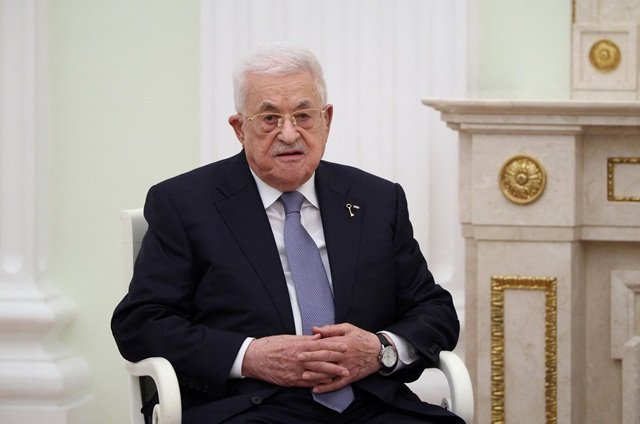
Palestinian President Mahmoud Abbas has postponed legislative elections scheduled for next month until 11 September 2027 and called for a presidential election on the same date, citing Israeli restrictions and security conditions across the Palestinian territories. The decision extends a period without national legislative or presidential elections that has lasted nearly two decades, as severe humanitarian conditions continue in Gaza.
Abbas’s decree cited “obstacles posed by Israeli measures” and the need to establish suitable political, security and on-the-ground conditions for “free, fair and inclusive elections”, according to the official Palestinian news agency WAFA. It identified Israeli military attacks, settlement expansion, settler violence, movement restrictions in the West Bank, including East Jerusalem, and the continued withholding of Palestinian tax revenues as obstacles to preparations for a vote.
The decree also cited what it described as exceptional security and humanitarian conditions in Gaza, the incomplete withdrawal of Israeli forces, limited progress in reconstruction and the failure to implement arrangements for deploying international stabilisation forces and police. Restrictions on access for election commission staff and international observers to Gaza and East Jerusalem had further complicated preparations, it said.
Israeli Foreign Minister Gideon Saar rejected Abbas’s explanation in a post on X, pointing to the fact that the last Palestinian election had been held two decades ago. He described the remarks as “yet another ridiculous lie designed to evade responsibility and accountability”.
Palestinians have not held legislative or presidential elections since 2005-2006. After those elections, Abbas’s rival, the Islamist group Hamas, seized control of Gaza, ousting his loyalists. Abbas has governed by decree since his presidential mandate expired in 2009.
The postponement followed consultations with Palestinian factions and political forces and was intended partly to allow a comprehensive national dialogue aimed at strengthening unity and addressing electoral challenges. Two Palestinian officials told Reuters that leaders of Abbas’s Fatah movement and Hamas had agreed at a meeting in Cairo on Wednesday to delay the elections.
The decision came weeks after Abbas reaffirmed the November timetable in an address to the United Nations General Assembly on 24 September, as he sought to advance internationally backed reforms. He had also committed in writing to French President Emmanuel Macron and Saudi Crown Prince Mohammed bin Salman to hold presidential and legislative elections as part of France’s recognition of a Palestinian state in September 2025.
The Palestinian Authority held municipal elections in April in the West Bank and Deir al-Balah in central Gaza, the only city in the enclave to participate. It was the first election held in Gaza since 2006. An August poll by the Palestinian Center for Policy and Survey Research showed declining support for both Fatah and Hamas, which many Palestinians blame for the continuing political divisions.
Meanwhile, the humanitarian crisis in Gaza continues to affect families struggling to obtain sufficient food. Niyaha al-Masri, a 35-year-old displaced woman living with her husband and eight children in a tent in Khan Younis, spends six hours or more each day queuing at a community kitchen. Her husband, wounded in both legs by an airstrike, cannot join others seeking food. The family’s daily meal consists of rice, lentils and a small amount of chicken, while their remaining flour must be rationed.
A United Nations-backed body declared famine in Gaza in August 2025, but the declaration was lifted in December after a ceasefire allowed sufficient supplies to enter over two months to ease conditions. Israel’s military body responsible for civilian affairs in the Palestinian territories, COGAT, said the humanitarian situation was stable. However, Shaun Hughes of the UN World Food Programme said the food security situation remained “extremely serious”.
The latest figures, from July, showed that 1.4 million of Gaza’s population of about 2.1 million were acutely food insecure, including 200,000 people just one step below famine, Hughes said. He warned that limited dietary diversity remained a major concern, particularly for children and pregnant and breastfeeding women who need protein, fresh produce and essential micronutrients.
A study published on Thursday by Médecins du Monde found that 93% of pregnant or breastfeeding women surveyed had symptoms of anaemia, which is closely linked to malnutrition, while only 17% had a sufficiently varied diet to meet their nutritional needs.
Masri said her children, aged between three and 14, dreamed of eating fruit, which the family could not afford. One of her sons had suffered malnutrition during the 2025 famine, although his condition was gradually improving. At the same time, the children collected scraps of nylon, cardboard and foam to reinforce their deteriorating tent, a situation their mother described as “shameful”.