


The Crisis
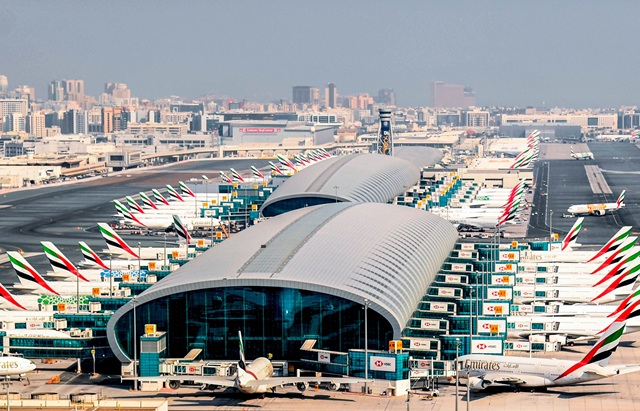
The recent escalation of hostilities between Iran, the United States, and Israel has precipitated a profound disruption across the global civil aviation landscape, demonstrating with sobering clarity the fragility of modern aeronautical operations when confronted by geopolitical volatility. As reported by Helen Massey Beresford in Air Transport Digest on 2 March 2026, the swift closure of airspace and operational suspension at key Middle Eastern hubs—arterial nodes for intercontinental connectivity between North America, Europe, and Asia—triggered an immediate and systemic dislocation of airline networks. Flightradar24 recorded over 3,400 cancellations on 1 March alone, reflecting the severity of airspace shutdowns compounded by electronic warfare, including GPS spoofing and jamming. The tangible consequences of the conflict were no longer confined to abstract diplomatic or military posturing; missile and drone activity extended to civilian airport facilities, resulting in casualties and physical damage, as exemplified by incidents at Kuwait, Dubai, and Bahrain. The closure of Dubai International Airport, together with Dubai World Central–Al Maktoum International, underscores the potential for a localized kinetic event to propagate operational paralysis in globally significant air transport nodes.
This operational crisis has prompted carriers and regulatory authorities to adopt a conservative posture, foregrounding safety and risk avoidance above commercial imperatives. Iranian airspace, for instance, has been formally closed until at least 3 March, with airlines such as Emirates, Etihad Airways, and Qatar Airways suspending operations pending security assurances. The operational contagion extended beyond the immediate conflict zone, affecting Indian and European services where routing alternatives were constrained, and compelling the European Union Aviation Safety Agency to issue a Conflict Zone Information Bulletin, characterizing the region as “high risk” and highlighting the heightened likelihood of military retaliation or interception. European carriers—including Lufthansa, Air France, and British Airways—followed with widespread cancellations, demonstrating that in the context of modern armed conflict, technological sophistication and network integration do not confer immunity; prudence, rather than commercial expediency, governs the freedom of the skies.
The concomitant effects on maritime commerce are equally instructive. As BBC Business News recently reported, Maersk, the world’s largest container shipping line, has elected to reroute vessels around the Cape of Good Hope rather than transit the Strait of Hormuz. This decision, while operationally costly in terms of fuel and time, reflects a broader juridical and economic recognition that navigational certainty has been compromised in a region experiencing overt hostilities. Moreover, the potential invocation of war-risk cancellation clauses by maritime insurers introduces a structural dimension to the crisis: absent coverage, transit through the strait becomes commercially untenable, compelling shipowners to weigh exposure against operational paralysis. The cumulative effect on global energy markets, freight rates, and supply chains is substantial, revealing the persistent vulnerability of global transport systems to geopolitical rupture despite the sophistication of commercial and regulatory frameworks.
War Risk Insurance
In aviation, the lessons of past conflicts underscore the intricate relationship between operational risk and insurance architecture. The Israeli raid on Beirut International Airport in December 1968, for example, precipitated a paradigm shift in aviation war-risk insurance. The incident exposed the susceptibility of civil aviation assets to politically motivated violence, prompting the London insurance market, principally through Lloyd’s of London, to standardize the AVN 48B exclusion clause. This instrument, now a global fixture in aviation hull and liability insurance, establishes a juridical and actuarial boundary around risks that defy quantification through conventional statistical methods. Unlike conventional aviation risks—mechanical failure, human error, meteorological contingencies—acts of war are episodic, geographically fluid, politically contingent, and capable of catastrophic impact within moments.
AVN 48B delineates a wide spectrum of excluded perils: war, invasion, hostilities whether declared or not, civil war, rebellion, revolution, insurrection, martial law, usurpation of power, and acts of nuclear detonation. The clause is deliberately expansive, capturing both classical forms of international conflict and the more amorphous threats arising from internal unrest or asymmetric warfare. Its legal significance is twofold: it renders irrelevant the formal characterization of events under international law and emphasizes the functional consequences of violence. Particularly noteworthy is the exclusion of “hostilities whether war is declared or not,” a recognition that modern conflicts frequently operate below thresholds of formal declaration, through proxy actors, clandestine military operations, or deniable engagements. The provision aligns insurance law with geopolitical reality rather than diplomatic formality, acknowledging that carriers may be exposed to existential risk irrespective of the presence of a formally declared war.
The clause further encompasses acts historically classified under criminal law, such as hijacking and sabotage, reflecting their politicization and strategic import in contemporary aviation. Once considered ordinary criminal risks, these acts have been reclassified as war-related perils, thereby excluding coverage under standard hull and liability policies. Importantly, the clause applies irrespective of whether the aircraft is within the policyholder’s control at the time of loss, severing the traditional causal nexus between operational conduct and insurability. This principle was tested acutely during the Iraqi invasion of Kuwait in 1991, when foreign-registered aircraft, deprived of operational control, suffered substantial damage. AVN 48B operated inexorably, demonstrating the contractual clarity and juridical authority with which war-risk exposures are segregated from conventional insurance coverage.
In response to the operational and commercial exigencies posed by AVN 48B, the insurance market developed the “write-back” clause. This contractual mechanism does not negate the exclusionary effect of AVN 48B; rather, it permits conditional reinstatement of coverage for specific perils—most notably war, hijacking, and sabotage—subject to additional premium, sub-limits, territorial restrictions, and cancellable notice. The write-back represents a negotiated compromise between actuarial prudence and commercial necessity, enabling airlines to obtain partial indemnification in environments where operational continuity demands exposure to politically unstable regions. Nonetheless, such coverage is inherently contingent: war-risk policies can be rescinded on short notice, typically seven days, introducing an enduring element of uncertainty. Airlines operating within or proximate to conflict zones must therefore integrate real-time risk assessment with insurance continuity, fleet deployment, and diplomatic consultation.
The implications extend equally to liability insurance. Passenger, cargo, and third-party claims arising from war-related incidents are excluded unless specifically reinstated through a write-back. In an era of expanded passenger rights and high quantum tort claims, the absence of liability cover presents significant commercial risk. Accordingly, insurance instruments such as AVN 48B illustrate how private law responds to the inherent instability of the public order: they neither generate instability nor diminish regulatory oversight; they codify, price, and allocate geopolitical risk within a contractual framework, ensuring that only those operators willing and financially able assume exposure can continue operations in hazardous zones.
Adjudication
The jurisprudential dimension of war-risk insurance further illuminates the obligations and limitations of carriers. The case of American Airlines v. Hope (1972) arose from retaliatory acts following the Israeli raid on Beirut airport in 1968, when aircraft of Lebanese International Airways were destroyed. The claims were brought not by the insolvent carrier, but by financiers holding security interests. Central questions addressed by the Court of Appeals for England and Wales concerned whether the policies extended to war-risk coverage, and whether the Arab–Israeli conflict incidents fell within such coverage. The court, through meticulous examination of cover notes, renewal slips, and underwriter participation, concluded that the damages constituted “warlike operations” that fell outside the AVN 48B exclusion, illustrating the nuanced interplay between contract drafting, operational facts, and the legal characterization of conflict-induced risk.
To situate this within a broader analytical and historical context, the early jurisprudence concerning aviation risk, as evidenced in Thompson v. New York Life Insurance Co. (2 Avi Cas 14,670) and Western Reserve Life Insurance Co. v. Meadows (261 S.W. 544; 4 Avi Cas 17,166), underscores the judiciary’s cautious approach to novel technological risk. Courts emphasized strict construction of exclusions against the insurer, grounded coverage determinations in contractual intent, and resisted speculative extrapolation from statistical hazard. Aviation, while technologically exceptional, was integrated into ordinary legal reasoning absent explicit exclusions. These principles provided the epistemic and teleological foundation for contemporary aviation insurance law, establishing predictability, fairness, and the primacy of explicit contract terms over conjectural interpretations.
In contemporary operational terms, these principles acquire renewed significance. Escalating missile, drone, and electronic threats in the Middle East require carriers to integrate rigorous risk assessment into route planning, insurance verification, and fleet management. The AVN 48B framework and associated write-back clauses function as both legal instruments and strategic signals: they demarcate extraordinary risk, compel actuarial transparency, and guide operational prudence. Airlines must navigate a dual obligation: to maintain connectivity and commercial viability, and simultaneously to adhere to the imperatives of passenger safety and lawful exposure management. Real-time coordination with civil aviation authorities, invocation of war-risk coverage, and proactive rerouting constitute operational manifestations of these legal obligations.
My Take
From a global perspective, the Middle East crisis, when juxtaposed with the Maersk rerouting, underscores the interdependence of international transport modalities. Aviation and maritime operations alike operate within a web of geopolitical contingency, regulatory oversight, and contractual risk allocation. The consequences are not merely operational but juridical: the closure of airspace or strategic straits triggers contractual obligations, activates insurance exclusions or write-backs, and imposes commercial choices constrained by law, market forces, and geopolitical reality. The fragility of infrastructure, the conditionality of coverage, and the unpredictability of conflict collectively illustrate that the resilience of global transport is not solely technological but fundamentally legal and contractual.
The current Middle Eastern conflict exemplifies the enduring intersection of law, politics, and operational risk in aviation. AVN 48B and the write-back clause constitute the dual architecture through which private law instruments translate geopolitical hazard into actionable, contractual terms. Historical jurisprudence provides the doctrinal framework for interpreting and operationalizing these instruments, reinforcing the centrality of clarity, predictability, and contractual fidelity. Carriers, regulators, and insurers are thus engaged in a continuous process of risk calibration: assessing threats, interpreting coverage, and adapting operational strategy to ensure that connectivity, commercial viability, and passenger safety remain aligned with legal and actuarial norms. The lessons are unambiguous: modern civil aviation, though technologically sophisticated, remains acutely vulnerable to political violence, and both law and insurance serve as essential stabilizing forces, converting the uncertainties of conflict into structured, manageable, and, to the extent possible, predictable operational outcomes.
In light of the foregoing, the imperative for airlines operating in or near conflict-affected airspace is clear. They must integrate the doctrinal principles elucidated in historic cases, operational guidance derived from contemporary conflict experience, and the contractual architecture of war-risk insurance into every facet of decision-making. Fleet deployment, route selection, lease arrangements, insurance verification, and coordination with both domestic and international civil aviation authorities must be harmonized to mitigate exposure to extraordinary and unforeseeable perils. Simultaneously, carriers must recognize the conditional and cancellable nature of war-risk coverage, preparing contingency strategies for abrupt suspension of insurance, airspace closures, or escalation of hostilities. Only through such integrated, legally informed, and operationally vigilant approaches can civil aviation fulfill its dual mandate: sustaining global connectivity while preserving safety and legal compliance amidst the vicissitudes of geopolitical instability.











