In March 2008, Colombian jets crossed into Ecuadorian airspace and destroyed a Fuerzas Armadas Revolucionarias de Colombia (FARC) encampment a mile past the border, killing the group’s second-in-command. Ecuador called it a violation of sovereignty. Colombia called it self-defense against an armed group that Quito had tolerated, and by several accounts accommodated, on its own soil for years. The raid strained relations for months, but it settled a question that had been left deliberately vague that a state does not get to invoke territorial integrity while hosting the men who plan attacks on its neighbor. Sovereignty is not a shield for sanctuary, and it never has been.
That is the doctrine Pakistan invoked this week when its aircraft struck ten terrorist sites inside Afghanistan.
On September 19, a suicide bomber tore through Friday prayers at the Police Lines Mosque in Kohat, martyring 23 people, 15 of them police officers. Ittihadul Mujahideen Pakistan, a faction operating under Hafiz Gul Bahadur and based across the border, claimed the attack. Two days later Pakistani forces intercepted eight drones launched from Afghan territory before they could reach Kohat and the Torkham crossing, while Afghan units opened mortar fire on Pakistani border posts. Pakistan answered on September 24 with air and drone strikes on ten sites in Kandahar, Paktia, and Khost that it identified as drone-launching and storage infrastructure tied directly to the attacks.
Pakistan’s Information Minister Attaullah Tarar described the strikes as “deliberate, precise, calibrated, and proportionate,” and confined to targets connected to the attempted attacks on Pakistani soil. Islamabad’s Information Ministry went further, stating plainly that Pakistan has the “will and capability” to eliminate terror threats wherever they are based. This is what a state owes its own citizens after 23 of them are buried.
The Taliban regime frames every Pakistani strike as an assault on Afghan sovereignty, and it never once addresses the sovereignty Pakistan has surrendered along its own western districts because the Taliban regime will not, or cannot, control what happens on their side of the line. International law recognizes a state’s right to strike a terrorist group on foreign soil when the host government is unwilling or unable to prevent that group from using its territory to attack another state. The formulation is not new and it is not Pakistan’s; it has been invoked, tested, and largely upheld from the Colombia-Ecuador episode above to Turkey’s repeated operations against the Partiya Karkerên Kurdistanê (PKK) in northern Iraq. A regime that lets a banned terrorist organization run training camps, stockpile weapons, and stage suicide bombers within its borders has already ceded the argument that its territory is off-limits.
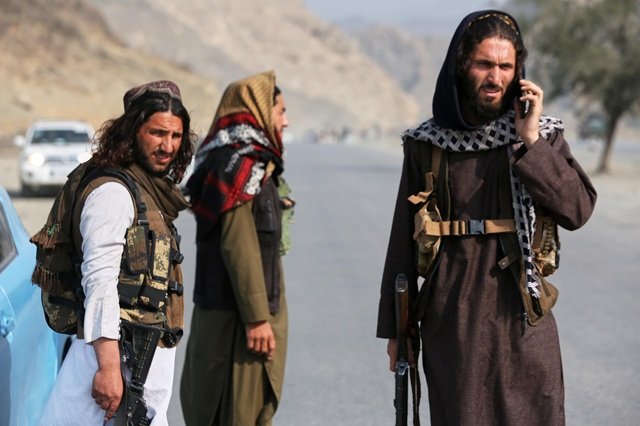
The Taliban Regime insists it does not harbor the Tehreek-e-Taliban Pakistan (TTP). Pakistani officials, and independent researchers who track the group’s leadership and logistics, describe a different reality. TTP commanders operate with freedom of movement inside Afghanistan, recruitment and training infrastructure are embedded in areas under Taliban control, and a flow of fighters and weapons exist across a border that Taliban regime has shown no interest in policing. A government does not get credit for sovereignty it will not exercise responsibly.
The TTP does not field an army, hold ground in the ordinary sense, or fight Pakistan’s state on terms a general staff would recognize from a textbook. It fights an irregular war as small cells that disperse across a porous border, suicide bombers recruited and trained out of sight, improvised explosives assembled from smuggled components, and now, increasingly, weaponized drones launched from across the border. Irregular warfare depends on sanctuary the way conventional warfare depends on supply lines. Deny the sanctuary and the campaign degrades. Preserve it and the campaign renews itself faster than any single security operation inside Pakistan can suppress it.
This is why treating the September strikes as an isolated retaliatory gesture misreads what Pakistan is actually fighting. A group that plans from Afghan soil, recruits along the Afghan border, and stages attacks that kill police officers at Friday prayers is not degraded by arrests inside Peshawar or Kohat alone. It is degraded by removing the safe rear area that lets its commanders survive, train, and plan without interruption.
Every function of a modern state depends on the state’s ability to protect the people it governs. Economic policy means nothing to a family burying a police officer killed in a mosque bombing. Diplomatic patience means nothing to residents of Kohat who watch drones cross into their airspace while their government issues another démarche that the Taliban regime ignores. Pakistan has spent years pursuing exactly the restraint its critics now demand it exercise, in shape of formal protests, intelligence sharing requests, repeated appeals to the international community to pressure the Taliban regime into acting against groups it hosts. That restraint produced more attacks, not fewer.
Even now, Islamabad continues to press the international community to hold the Taliban regime to the commitments it made when it took power, chief among them a pledge not to let Afghan soil become a launchpad for attacks on other countries. If the Taliban regime wants the strikes to stop, it has a straightforward way to stop them by dismantling the camps, handing over the commanders, and police the border it claims as sovereign.
Until that happens, the question in the opening pages is the one Pakistan is still answering. How long does a country ask a neighbor, politely and repeatedly, to stop hosting the men who kill its citizens before it accepts that the asking has failed? Colombia answered that question in 2008. Turkey has answered it for two decades against the PKK. Pakistan is answering it right now.