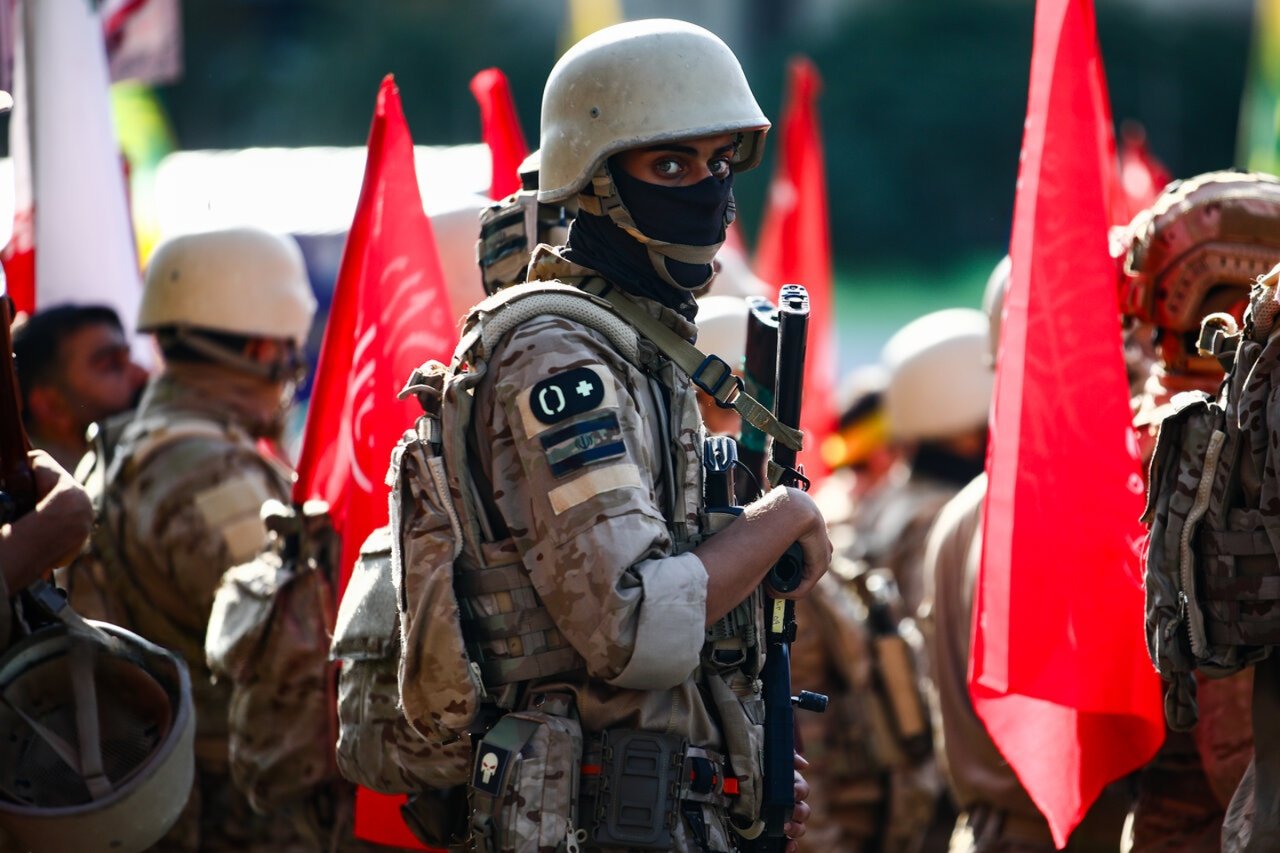
Nearly three years after the Hamas terrorist attacks of October 7, 2023, Iran’s so-called ‘Axis of Resistance’ has been substantially altered by sustained military pressure, but its constituent groups retain significant capabilities and, in some cases, greater freedom to pursue their own interests. An assessment by the Soufan Center says the network of Iran-backed forces has come under economic, political and military pressure, while Tehran continues to rely on proxy groups as part of its regional strategy. The Islamic Revolutionary Guard Corps (IRGC) has also continued to deploy trainers and advisers to Iraq, Lebanon and Yemen, including during negotiations in June, to provide training and equipment to allied forces.
Lebanese Hezbollah, once regarded as the central force within the Axis, has been severely degraded by Israeli military operations. Disarming the organisation, however, is expected to be exceptionally difficult, with many experts cited by the Soufan Center arguing that it may not be feasible. Hezbollah has shown no interest in responding to calls for disarmament, while Israel and the group continue to exchange fire in Lebanon. Two weeks ago, the Israeli military launched an offensive against the Ali al-Taher ridge, a strategic tunnel complex used by Hezbollah.
A US-mediated ceasefire reached in June envisages an Israeli withdrawal from southern Lebanon, with the Lebanese Armed Forces expected to replace Israeli forces there. The move is an important component of the Lebanese government’s plan to disarm Hezbollah, although the group’s continued military capacity and opposition to disarmament remain significant obstacles.
In Yemen, the Houthi movement has emerged as the most active member of the Axis. The group is fighting the Presidential Leadership Council, the Aden-based internationally recognised government of Yemen, as well as Saudi Arabia, the principal backer of that government. The Houthis largely remained on the sidelines during the opening stages of the war between the United States and Israel against Iran. Some analysts assessed that Iran may have deliberately held the group back as an ‘ace up its sleeve’, although the Soufan Center notes that it is unclear whether this was a deliberate Iranian strategy.
The Houthis have since become more active, adding to the risks surrounding commercial shipping through the Bab el-Mandeb Strait. Following the October 7 attacks, the movement intermittently entered the conflict with Israel and used its position along the strategic waterway to disrupt international trade, prompting a roughly two-month US campaign against Houthi targets. That campaign degraded some of the group’s capabilities, but Houthi media portrayed the operation as a victory. The renewed conflict with the Presidential Leadership Council and Saudi Arabia has so far not resulted in attacks designed to disrupt vessels travelling through the waterway, through which roughly a tenth of global trade passes.
At the same time, the Houthis appear to have become less dependent on direct Iranian support. Reporting cited by the Soufan Center indicates that equipment and parts from China have helped the movement develop the capability to manufacture weapons inside Yemen. Chinese companies supply dual-use goods that can serve civilian and military purposes, while Chinese components are important to the Houthis’ increasingly sophisticated drone programme. China also supplies Tehran with dual-use components supporting Iran’s own drone programme, while IRGC trainers and advisers further strengthen the capabilities of Iran-aligned groups.
In Iraq, Prime Minister Ali al-Zaidi has pledged to disarm Iran-backed militias, but the groups remain deeply embedded in the country’s political and security structures. They continue to carry out operations aligned with Tehran’s interests and recently joined the Houthis in launching armed drones against Saudi Arabia’s East-West oil pipeline. The challenge facing Baghdad is compounded by the militias’ political legitimacy, their integration into parts of the Iraqi state and their role in areas where the central government has limited reach. Several groups now claim responsibility for attacks under the collective name Islamic Resistance in Iraq.
Iran-backed Palestinian groups have also been severely weakened without being eliminated. Hamas’ al-Qassam Brigades and Palestinian Islamic Jihad, both Sunni Islamist Palestinian terrorist groups that receive significant Iranian funding and backing, have faced sustained Israeli military operations since October 7. Israeli Chief of Staff Lt Gen Eyal Zamir reportedly told Prime Minister Benjamin Netanyahu and Defence Minister Israel Katz earlier this month that Hamas had effectively been ‘defeated’ and was now a ‘defeated organisation’. At the same time, Israeli Military Intelligence and leaked Israeli Defence Forces documents have indicated that Hamas is seeking to rebuild its strength in Gaza while engaging, on paper, with the Board of Peace over a ceasefire reached last October that includes provisions for the group’s disarmament.
Pressure on the Axis has also contributed to what the Soufan Center describes as a displacement effect, with Iranian-backed organisations seeking or attempting to conduct operations outside the Middle East. Hamas, Hezbollah and Kataib Hezbollah have all conducted or attempted external operations in Europe, including efforts linked to terrorist attacks. Earlier this month, Germany indicted seven men over an alleged Hamas plot intended to coincide with the anniversary of the October 7 attacks and targeting the Israeli embassy in Berlin, Jewish institutions and pro-Israel demonstrations. Kataib Hezbollah has likewise sought to conduct attacks against Jewish targets in Europe, particularly through the shadowy front organisation Harakat Ashab al-Yamin al-Islamia.
The Soufan Center’s assessment is that the pressure campaign has degraded some Iranian-aligned forces while others have gained greater agency and operational momentum. With IRGC hardliners firmly entrenched in power, Tehran is expected to seek to rebuild its proxy network in Lebanon, Gaza and Iraq, while the Houthi movement continues to demonstrate that Iran’s regional partners can retain significant military capabilities even under sustained pressure.