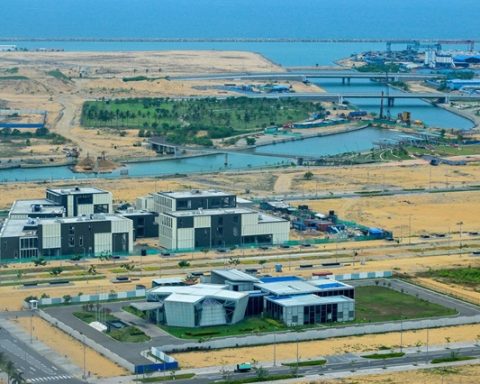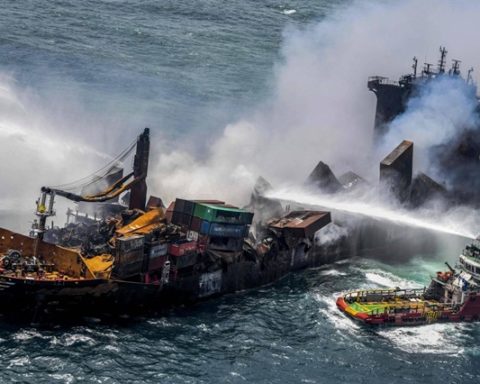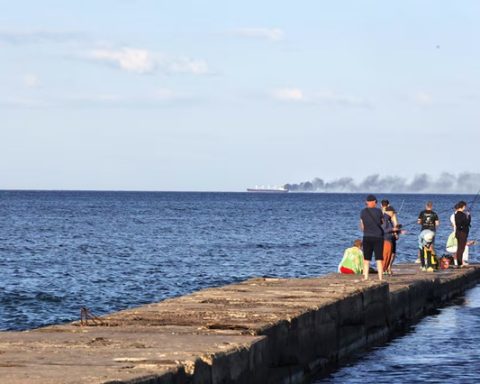

The recent sinking of the MSC ELSA 3 off the coast of Vizhinjam, Kerala, serves as a stark reminder of the potential ecological and economic consequences of maritime incidents. This event, detailed in a recent article, highlights not only the immediate dangers of oil spills and hazardous cargo but also the long-term risks associated with large-scale port development in ecologically sensitive areas.
The Vizhinjam disaster underscores concerns raised in academic papers, such as “The Myths of Flag State Control System,” (…add web address of my article below………….) which questions the reliability of flag state administrations in ensuring maritime safety and environmental protection. The incident exposes the limitations of relying solely on flag states for oversight, particularly when vessels operate under flags of convenience or in regions with lax regulatory enforcement.
The Vizhinjam catastrophe highlights several key areas where Sri Lanka, a nation heavily reliant on maritime activities, should remain vigilant:
Environmental Impact Assessments: The Vizhinjam case underscores the critical importance of comprehensive and unbiased environmental impact assessments (EIAs) for all port development projects. These assessments must accurately model potential worst-case scenarios, including oil spills, hazardous cargo leaks, and the impacts of climate change.
Port State Control: The limitations of flag state control emphasize the need for robust port state control (PSC) mechanisms. Sri Lankan authorities must strengthen their PSC capabilities to effectively inspect and regulate vessels entering Colombo Harbor and other ports, ensuring compliance with international safety and environmental standards.
Climate Change Resilience: Sri Lanka must factor in the growing risks of climate change, including rising sea levels, increased storm intensity, and erratic wave patterns. Port infrastructure must be designed to withstand these challenges, and emergency response plans must be adapted accordingly.
Drawing from the lessons of Vizhinjam and insights from the “Myths of Flag State Control System” paper, Sri Lankan maritime administrators should undertake the following actions:
Strengthen Environmental Regulations: Implement stricter environmental regulations for all maritime activities within Sri Lankan waters, including cargo handling, waste disposal, and oil spill prevention.
Enhance Port State Control: Increase the frequency and rigor of port state control inspections, focusing on vessels with a history of safety violations or those operating under flags of convenience.
Improve Emergency Response: Develop and regularly update comprehensive emergency response plans to address potential maritime disasters, including oil spills, hazardous cargo leaks, and shipwrecks.
Promote Inter-Agency Coordination: Foster closer collaboration between relevant government agencies, including the Marine Environment Protection Authority (MEPA), the Sri Lanka Ports Authority (SLPA), the Sri Lanka Navy, and the Department of Fisheries and Aquatic Resources, to ensure a coordinated and effective response to maritime incidents.
By heeding the lessons of Vizhinjam and addressing the systemic weaknesses highlighted in academic research, Sri Lanka can mitigate the risks of maritime disasters and safeguard its marine environment, coastal communities, and economy. The time for action is now, before a similar tragedy strikes Colombo Harbor.
Acknowledgement; The author published following article in the Sri Lanka navy journal in 2019.
The Myths of Flag State Control System and Maritime Security Challenges of Sri Lanka
INTRODUCTION AND BACKGROUND
Sri Lanka was badly affected by terrorism, human smuggling, pollution and drug trafficking in the recent past. Most of the ships which were involved in these activities are found to be either stateless or flag of convenience.
Unlike air transportation or land vehicles, the ships carry the nationality of the State whose flag they fly. The flags are the symbol of sovereignty. Technically the flag states are responsible for ensuring that their vessels act under applicable rules of international law. Flag States play a particularly vital role in ensuring maritime security and safety and the protection of the marine environment. Thus, Flag States must exercise effective command and control, administrative, social and technical matters over ships flying their flag. However, in modern day shipping, there is no connection between the flags and the ships, hence making it one of the poorly regulated domains compared to air transport.
A ship on the high seas not registered in any nation-state does not possess any legal rights. In the first instance the nationality of a ship determines, the law governing activities on board the ship. Thus, any births, deaths, injuries, or damage incurred on or by the ship while on the high seas dealt with within the jurisdiction of the nation within which it is registered.
At the outset the paper will critically analyse short comings of the flag state administrative system to find how and why it has failed in some cases. On analyzing, and finding the system is more of an illusion than a well-regulated mechanism, it finally argues alternative approaches to mitigate current maritime security challenges of Sri Lanka.
FLAG STATE CONTROL SYSTEM
Generally, the ships carrying cargo from one place to another in the ocean have a flag secured to her mast. This flag belongs to a specific country. In the maritime world, the ship is like a floating nation, the ship is technically regulated under the nationality of the flag she flies. This is called the “Flag State” and the FS is responsible for ensuring their vessels act as per the relevant rules and regulations of international law, wherever the ships are stationed. The term FS came into existence due to the usage of flags as the symbol of the nationality or tribe the ships belong to from the early days. The FS plays a very important role in ensuring maritime security, safety and, the protection of the marine environment. The FS is obligatory to exercise efficient command and control in administrative, technical and social issues over ships flying their flag.
However, it is well known today that not all ships are registered in the ship owners’ country of origin. When the ships are registered under same country of the owner’s nationality is referred as FS. But when the ship is registered to a different nationality other than the owner’s real nationality is known as the flag of convenience (FOC). So let’s have a look at what are the types of ship registries available in the world today.
Types of Registers
Traditional or Closed Registry
The International Registry or Open Registry
Secondary Registry
Hybrid Registry
Has Flag State Admin System Failed as Whole?
It is important to understand the flag state admin system has not entirely failed. Also not to generalize the flag state as there are different systems available for ship registration as discussed above. So, the central issue of today’s shipping and the main focus of this paper also are about the “international registry” or the “open registry” where many illegal issues have been emerging due to the unclear nature of some of these systems. It is generally accepted that relatively very little allegations have leveled against traditional ship registries because the vessel owner’s home country closely monitors those registries and the owner has to pay all taxes and follow the strict rules and regulations imposed by FS of his own country. For example, the USA, New Zealand, Greece and Singapore considered as close registries or traditional registries.
Why has it failed?
However, from the perspective of ship owners, they want to cut down operational costs in order to remain competitive in the business. So instead of looking for expensive registries they look for less expensive alternatives. Earlier, the choice of the flag was easy for the owners to register the crew and the ships in the country where they do the business.
However, this changed around the mid of the previous century, when the American owners found there were very high expenses involved in running the ships under the American flag (mainly due to the raised crew salary). It made impractical for them to remain competitive in the international shipping business. Therefore, the exploitation of this regulation for economic benefit had created many problems, but only challenges concerning Sri Lanka would be discussed below.
MARITIME SECURITY CHALLENGES FOR SRI LANKA
Maritime security and safety are two terms that are closely interrelated but different meaning, and these terms very regularly and used interchangeably within maritime affairs. Maritime safety generally refers to accidental, dangerous or potentially dangerous events such as marine pollution and the safety of ship crew members. Maritime security, usually refer to man-made hazards and hostile acts such as conflict over interstate maritime borders and ocean resources, piracy, terrorism, illegal fishing, human trafficking, drug trafficking and the like[1].
Maritime Oil Pollution impacts
The current understanding suggests that the oil spills which occur in Sri Lanka are less on operational but more of accidental. Especially, oil pollution sources are from potential spilling from tankers and accidents at sea. The possibility of accidental spills is quite high as the big multi million barrel-capacity super tankers sail close to the shores of Sri Lanka heading towards the Middle East to East Asia. In the last two decades, there have been many chemicals and oil spills in Sri Lankan waters. These are listed in Table 1[2]. Most of the ships indicated in the table are coming under flag states of poor performance and also making it extremely difficult to find authority responsible.
| Date and Name of Ship | Location | Volume spilt | Impact |
| 1994 M/V Komsomolets Azerbaydzhana** | Outside Galle harbour, southern coast | 100 tonnes of fuel oil | No oil reached the coastline |
| 1998** | Bunkering terminal, Colombo | 595 ppm near the vicinity of the spill (bunkering terminal) and 991 pm opposite the bunkering terminal | These values were very much in excess of the Sri Lanka standards for oil (20 ppm) in marine coastal waters |
| 1999 M/V Meliksha* | Off Bundala, southern coast | 16 500 MT fertilizer and about 200 MT of heavy fuel oil. | The oil slick lasted about 10 weeks; 40-50 km of the beach was polluted with oil and tar balls. Oil also moved about 100 m up Kirindi Oya and had a concentration of 4.2 mg/l, about one month after the accident. |
| 2006 MV Amanat shah | Koggola, southern coast | 25-50 MT heavy fuel oil | About 13 km of Koggala, Ahangama beach (southern) was polluted. Cleaned. |
| 2007 Marina Sedna* | Near Galle Port, southern coast | 4 t heavy fuel oil*** | Oil was removed without a spill |
| 2009 M/T Granba Chemical tanker* | Off Trincomallee | 6,250 MT of Sulphuric Acid | No explosion or fire. |
| 2012 MV Thermopylae Sierra++ | Off Panadura, western coast | 20-40 MT*** | 10 km long oil slick that reached to Negombo. |
Sources: * http://www.mepa.gov.lk/web/
IUU fishing impact international context
Secondly, Flag of Convenience fishing vessels are considered to be notoriously easy, quick and cheap to acquire, obtainable over the internet for just a few hundred dollars. Vessels can re-flag and change names several times in a season, a practice known as “flag hopping”. Endorsed by shell companies, joint ventures and clandestine owners, FOC undoubtedly reduce operating costs for illegal fishing operators and make it exceedingly difficult to single out and condemn the true owners of vessels that fish illegally. The process can be done online via websites such as www.flagsofconvenience.com and can take only 24 hours.[3]
Further, globally, pirate fishing accounts for US$10 – 23.5 billion a year, representing between 11 and 26 million tons of fish. It is an extremely lucrative activity being driven by the massive global demand for seafood, threatening the future of world fisheries. The impacts are social, economic, and environmental. Many IUU operators deliberately target developing countries such as Sri Lanka.[4]
ACTION TAKEN TO MITIGATE FLAG STATE FAILURE
Implementation of UNCLOS
In respect of regional cooperation and relevant agreements, Sri Lanka has become a pivotal actor in most regional organizations accepting the obligations indicated by the UNCLOS in Articles 118, 129, Section II of Part XII in matters connected to the conservation and management of the living resources and non-living resources of the High Seas. Cooperation in respect of construction and improvement of means of transport, global and regional cooperation of protection and preservation of the marine environment, and port state control, where it holds the membership in these regional organizations such as the Indian Ocean Tuna Commission, Indian Ocean Memorandum of Understanding on Port State Control measures and the like.
Secondly, the country has provided institutional support and assistance to foreign vessels that coordinate through the Sri Lanka Navy and the Sri Lanka Coast Guards. Similarly, the legal domain sufficiently and aptly legislated to cover a couple of relevant laws such as the Piracy Act, and the Suppression of Unlawful Acts against the Safety of Maritime Navigation Act, which came into being in pursuance of the Convention on Suppression of Unlawful Act against the Safety of Maritime Navigation in Private maritime law domain. These local legislations filled the gap that existed concerning security concerns which came up, especially aftermath of September 11 incident in the US as well as the threats inflicted by the 30-year long terrorism that existed in the country.
Galle Dialogue Maritime Conference as a Forum for Discussion
As combined efforts resulted in multiplying the outcome, it is important to cooperate and share information that is maritime-oriented. As no nation is capable of addressing present-day maritime matters in confinement due to the sheer immenseness of the ocean area and intricacy of maritime security challenges and threats, nations are becoming more and more partnership oriented. Specific initiatives that already introduced provide us with a starting point to synergies extensive partnerships in working out future and current maritime security challenges and threats. Hence, the Galle Dialogue maritime conference conducted by Sri Lanka promotes the notion of strategic maritime partnerships and capacity of such exercise in achieving a common understanding of the maritime affairs.
Naval Diplomacy of Sri Lanka
Naval forces are an indispensable and exceptional instrument of Sri Lanka’s foreign policy. Being strategically positioned for welcoming a large number of routine port visits from different nations and regions that are of particular interest, Sri Lanka supports longstanding regional security interest. By way of conducting small scale fleet exercises with more powerful navies in the region, Sri Lanka is looking to develop partnerships in order to maintain safe and secure seas around Sri Lanka.
At the same time, Sri Lanka also participates many bilateral and multilateral, regional naval exercises which involve many navies in the world. Some of the exercises are IONS (Indian Ocean Maritime Symposium), SLINEX (Sri Lanka, India Naval Exercise), CARAT (Cooperation Afloat Readiness and Training) and Pakistan multilateral naval exercise (AMAN). These exercises are of great significance to small island nations like Sri Lanka as it helps develop trust and confidence among participating nations. It also provides an opportunity to increase maritime security cooperation, providing a forum for discussion of regional maritime issues and promote friendly relationships among the member nations.
Coastal State Measures
Sri Lanka has no formal agreements or bilateral arrangements with other States to award, fishing rights in Sri Lanka waters. No fishing operation licenses issued to foreign fishing boats to fish within Sri Lanka waters. Hence, fishing in Sri Lanka waters from any foreign fishing boat would be dealt with as IUU fishing, and legal action would be enforced against those who violate domestic law of the country.
One of the essential measures out of the above is the implementation of the foreign fisheries act. The decision to amend the act came in the wake of heavy poaching by fishermen from Tamil Nadu. Sri Lanka’s policy of arresting poachers and releasing them at the request of India has not given positive results. Even the confiscation of vessels could not dampen the fishermen. According to earlier cases, Indian fisherman was tried in local courts for violating “maritime zone law” instead of fisheries-related offense, but now the violators were dealt according to new fisheries act. To make it more practical and expeditious, the concept of “presumption” has been used for collecting evidence. In this regard the author, privileged to have conducted a lecture on awareness programs for lawyers, Navy and coast guard on 24th March 2018.[5]
Port State Measures
There are many provisions have been added to Fisheries, Aquatic Resources Act by the Act, No. 35 of 2014 for the purpose of exercising port State control over fishing vessels in accordance with the FAO Port State Measures Agreement. (Long title, Sections 14G and Section 61 (2) (t)) Hence, under such provisions the Port State Measures to Prevent, Deter and Eliminate Illegal, Unreported and Unregulated Fishing Regulations of 2015 have been made public. (Gazette, No. 1907/47 of 26 March 2015).
Final Analysis
In the above discussion, it became clear the national jurisdiction, control introduced by (LOSC, Article 94 (1)) for the flag state responsibility is in effect illusory and misleading. The best alternative system available in the country to enforce international rules and standards in the commercial shipping industry is Port State, but not the flag State. However, other than a denial of access to port facilities, the Port State powers are limited for enforcement over ships.
In the marine pollution and maritime safety affairs, the flag State duties are strictly grounded in customary international law. The outstanding issues are more of practical and less legal. Further implementation, audit and self-assessment are therefore necessary. However, despite the rules and procedures, some flag states continue to violate safe practices as discussed above.[6]
Therefore, as a result of the unsatisfactory nature of flag state systems, major shipping disasters have taken place in recent years causing alarming damage to the environment. Hence, the Indian Ocean Memorandum of understanding under PSC plays a critical role in identifying and sharing information to eliminate substandard ships from the region.
However, the situation is more complicated in fisheries. The issues in the field are not only of a practical nature. On the contrary, it is required to provide further legally binding regulations. The primary issue is, yet there are no universally acknowledged least accepted standards of flag State responsibilities. Even though standards exist – as the Compliance Agreement or the UN Fish Stocks Agreement in conjunction with various RFMO measures – many countries still refrain from ratifying these crucial instruments. A breach of duty is however only measurable if the duty itself is regulated.[7]
However, Sri Lanka introduces new foreign fishing act with a severe fine on foreign vessels to deter the frequent entry of Indian fishing trawlers into the country’s maritime territory. The draft bill for amending the Fisheries Act No 59 of 1979 (Foreign Fisheries boat Regulation Act). Also, Sri Lanka navy and the Coast Guard are authorized to take into custody, foreign fishermen who are fishing without a license in her EEZ.
Despite many International treaties and conventions, there is no one standard guideline to address terrorism, piracy, human smuggling and drug interdiction in the maritime domain. It is up to the affected nation to follow international rules, regulations and ROE’s when directing MLE unit’s on-board hostile ships. In UNCLOS unique provision is (article 111) the ‘rule of hot pursuit’ which give unprecedented powers to coastal state to arrest foreign ships. Other than that under UNCLOS (article 110) provides an important and very compelling set of authorizations for MLE in international waters: the “right of visit”. Warships are authorized to board merchant vessels under five conditions which include most situations such as piracy, slave trade, stateless, unauthorized broadcasting and with the master’s consent.
Furthermore, in exceptional circumstances, the right of self-defense under UN charter also could be used in case of use of force by the offenders of domestic law. However, the use of force should be proportional and justified. Sri Lankan experience suggests accuracy of the shared intelligence with partner nations is the key to successful shipping interdiction supported by a well- executed plan.
CONCLUSION AND RECOMMENDATION
Some scholars argue the radical change of the existing flag state administrative system and recommend a new approach. Others believe the existing system is good enough, but need to strengthen it because the flag state sovereignty in existing international maritime law is well protected. However, in the author’s opinion, since the main issue is the lack of credible information to take action against irresponsible ships the most appropriate method is to integrate all the key maritime stakeholders such as government shipping authorities, coast guard, navy, marine environmental protection agencies, fisheries and other relevant organizations. Therefore, suggest following at the domestic, regional and global level;
- Information sharing using modern technology such as the internet, AIS, LRIT, VMS and Satellites.
- To introduce an intergovernmental information sharing mechanism to integrate all maritime related institutions in Sri Lanka. (MEPA, Fisheries, Navy, Coast Guard, DGMS Coastal Conservation Dept., SLPA, Etc.)
- Regional ship’s data fusion center.
- International Cooperation such as (navy-navy) and (MLE agencies for Maritime Administration), with the involvement of shipping companies. The intended purpose should be to share the experience and difficulties of working together and find better ways to deal with recalcitrant ships.
- Finally, Sri Lanka should incorporate fundamental maritime conventions to domestic law.
Bibliography
Azmy S.A.M., Sri Lanka report on coastal pollution loading and water quality criteria, BOBLME (2013) Country report on pollution – Sri Lanka BOBLME-2011-Ecology-14
Sri Lanka Ministry of Shipping Circular MSN 07/2016 dated 29th March 2016. Web : www.dgshipping.gov.lk accessed on 02nd Feb 2019.
Environmental Justice Foundation, Lowering the Flag – Ending the use of Flags of Convenience by Pirate Fishing Vessels. London, 2009.
“FAO supports prevention, deterrence and elimination of IUU fishing in Sri Lanka” Daily FT e-paper, 20th February 2017.
Hamad Bakar Hamad., Flag of Convenience Practice: A Threat to Maritime Safety and Security, IJRDO-Journal of Social Science and Humanities Research (ISSN: 2456-2971) University of Greenwich: London. UK (Accessed on 3/30/2019)
Mansell, John N.K. Flag State Responsibility: Historical Development and Contemporary Issues, Springer-Verlag Berlin Heidelberg London New York, 2010.
Matthew Gianni, “Real and Present Danger: Flag State Failure and Maritime Security and Safety” World Wide Fund for Nature, Oslo/London June 2008, available at http://assets.panda.org/downloads/flag_state_performance.pdf
Nivedita M. Hosanee, “A critical analysis of Flag State duties as laid down under article 94 of the 1982 United Nations Convention on the Law of the Sea”,The United Nations-Nippon Foundation Fellowship Programme,New York, 2009
Department of Fisheries and Aquatic Resources, National Plan of Action to Prevent, Deter and Eliminate Illegal, Unreported and Unregulated Fishing,Colombo, Sri Lanka, 2015.
Tamo Zwinge, “Duties of Flag States to implement and enforce international standards and regulations – and measures to counter their failure to do so” available at http://ssrn.com/abstract = 1682193.
Workshop on ‘Illegal, Unregulated and Unreported Fishing’ held in Trincomalee, Sri Lanka. http://news.navy.lk/eventnews/2018/03/28/201803281115/ (Accessed on 3/30/2019)
Web sites
https://basic2tech.wordpress.com/2016/02/18/types-of-ship-registries/accessed (02/02/19)
https://opensea.pro/blog/flags-of-convenience accessed on (03/02/19)
http://www.defence.lk/main_abt.asp?fname=resp_functons accessed on (05/02/19)
http://www.mepa.gov.lk/web/ accessed on (12/02/2019)
[1] Bakar Hamad., Flag of Convenience Practice: A Threat to Maritime Safety and Security, IJRDO-Journal of Social Science and Humanities Research.
[2] BOBLME (2013) Country report on pollution – Sri Lanka BOBLME-2011-Ecology-14, p.214.
[3] Environmental Justice Foundation, Lowering the Flag, P. 7.
[4] Ibid,p. 4.
[5] http://news.navy.lk/eventnews/2018/03/28/201803281115/
[6] Zwinge, Tamo “Duties of Flag States to implement – and measures to counter their failure to do so” http://ssrn.com/abstract = 1682193.p.37.
[7] Ibid, p.40.