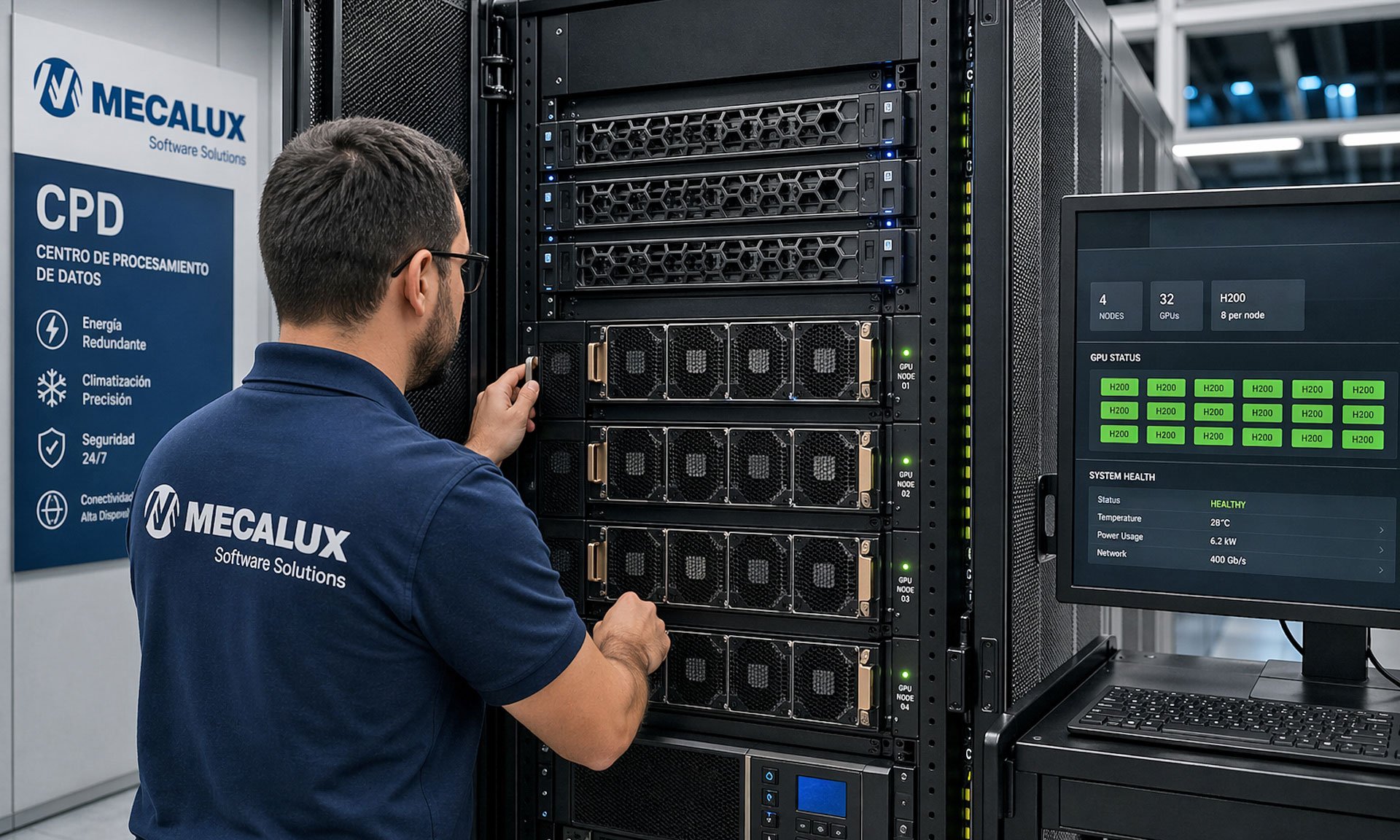
Mecalux, a warehouse technology and intralogistics software company, has announced a major upgrade to its technology stack aimed at accelerating the deployment of AI agents across its software suite. The company has strengthened its infrastructure with a new high-performance computing platform designed to support the development, training, and operation of intelligent agents that can be integrated into logistics and warehouse management systems.
The move marks a strategic shift toward agent-based software, where autonomous digital entities can perform specific tasks, assist decision-making, and optimise operations with minimal human intervention. According to the company, users of Mecalux systems will be able to activate and configure a range of AI-driven assistants tailored to different operational needs, including analytics, optimisation, and continuous monitoring of logistics processes.
These AI agents are designed to operate alongside warehouse teams, helping businesses streamline day-to-day activities and improve efficiency in real time. Rather than functioning as static tools, the agents will act dynamically, responding to operational data and assisting in complex digital workflows such as inventory tracking, demand forecasting, and process optimisation. Mecalux stated that organisations will be able to select from a catalogue of intelligent entities and customise them according to their specific warehouse requirements.
The company described the infrastructure upgrade as a key milestone in its broader artificial intelligence strategy. The new system will support the training of deep learning models and enable performance evaluation of AI agents to improve their accuracy and reliability over time. Mecalux emphasised that this development is intended to make warehouse operations more adaptive and user-centric, allowing businesses to automate increasingly complex processes within their logistics environments.
Founded more than six decades ago, Mecalux operates globally in warehouse automation, storage solutions, and software development. With a network of manufacturing plants and research centres, the company continues to expand its focus on digital transformation in the logistics sector. Its latest investment signals a deeper push into AI-powered systems that could reshape how warehouses are managed, shifting from traditional software tools to autonomous, goal-driven digital agents integrated directly into operational workflows.