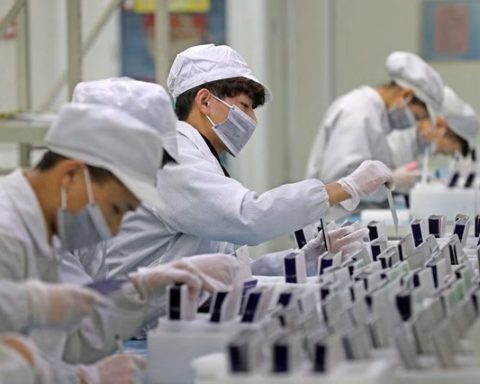
Intel and AMD have warned Chinese customers of mounting shortages in server central processing units, underscoring how the global race to build artificial intelligence infrastructure is now straining even traditional computing components. According to people familiar with the matter, Intel has cautioned clients that delivery lead times for some server CPUs could stretch to as long as six months, while AMD has also flagged supply constraints.
The supply crunch has already begun to ripple through prices. One source said prices for Intel’s server processors in China have risen by more than 10 per cent in general, although the increases vary depending on individual customer contracts. Reuters reported that the latest notifications to customers were made in recent weeks, pointing to a sharp intensification of shortages that had previously been concentrated in AI-specific chips.
Booming investment in AI infrastructure has triggered a frantic scramble across the semiconductor supply chain, not only for specialised accelerators but also for supporting components. Memory chips have been under particular pressure, with prices continuing to soar, and the emerging shortage of CPUs threatens to compound challenges for AI developers as well as a wide range of manufacturers that rely on server capacity.
China, which accounts for more than 20 per cent of Intel’s overall revenue, has been hit especially hard. Reuters reported that Intel’s fourth- and fifth-generation Xeon processors are in particularly short supply in the country, with the company rationing deliveries to customers. Intel is said to have built up a substantial backlog of unfulfilled orders for these models, with some delivery timelines extending to six months.
AMD has also informed customers in China of supply constraints, according to people with knowledge of the situation. One source said delivery lead times for certain AMD server products have been pushed out to between eight and ten weeks. Reuters said the extent of these constraints in China is being reported for the first time.
Intel had already flagged CPU supply pressures during its earnings call in January. In a statement to Reuters, the company said rapid adoption of AI had driven strong demand for what it described as “traditional compute”. Intel added that it expected inventories to be at their lowest point in the first quarter, but said it was addressing the issue aggressively and anticipated supply improvements from the second quarter through 2026.
AMD echoed similar comments, reiterating remarks from its own earnings call that it had expanded supply capabilities to meet demand. In a statement to Reuters, the company said it remained confident in its ability to serve customers globally, citing strong supplier agreements and its manufacturing partnership with Taiwan Semiconductor Manufacturing Company.
Together, Intel and AMD dominate the global server CPU market, though the balance between them has shifted sharply in recent years. Intel’s market share has fallen from more than 90 per cent in 2019 to about 60 per cent in 2025, while AMD’s share has climbed from roughly 5 per cent to more than 20 per cent over the same period, according to a UBS report published in January.
In China, customers affected by the shortages include major server makers and cloud computing groups such as Alibaba and Tencent. The underlying causes of the constraints are multiple. Intel has faced ongoing difficulties ramping up production due to manufacturing yield challenges, while AMD relies on TSMC, which has prioritised capacity for AI chips, leaving less room for conventional CPUs.
Memory shortages have added another layer of strain. When memory prices began rising late last year in China, customers accelerated CPU purchases to secure lower-priced memory, according to a distributor cited by Reuters. At the same time, surging demand for more advanced, agentic AI systems, which require far greater CPU processing power than traditional workloads, has further tightened supply, pushing server chip availability to a critical point.