Archaeologists have revived the ancient voices of Neolithic Catalonia by analysing and playing conch-shell trumpets that were once used across settlements, caves and mining complexes between the late fifth and early fourth millennia BC. Their research reveals a prehistoric society deeply attuned to the power of sound, suggesting that these modest-looking seashells were capable of broadcasting messages across long distances and, at times, expressing musical intention. The investigation, based on 12 rare shell trumpets discovered within a small region of north-eastern Iberia, marks the first time these Catalan finds have been studied acoustically. It also significantly expands our understanding of how sound technologies shaped early agricultural and mining communities. The research appears in the journal Antiquity, highlighting both the technical skill and social complexity behind these seemingly simple instruments.
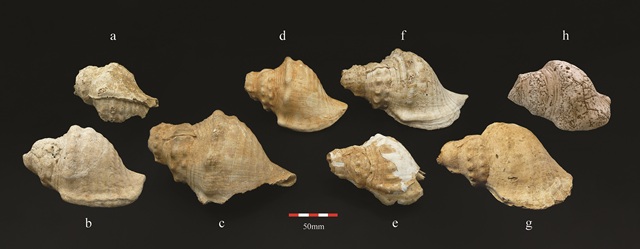
Although conch-shell trumpets are known from many ancient cultures worldwide, those from Catalonia have remained largely unexamined. Yet the region preserves a remarkably dense cluster of such finds, all made from the Mediterranean gastropod Charonia lampas. Several were recovered around the lower course of the Llobregat River and across the pre-coastal depression of the Penedès region east of Barcelona, a landscape that, during the Neolithic, supported substantial agricultural settlement. According to ICREA Full Research Professor Margarita Díaz-Andreu of the University of Barcelona, the unusual concentration of modified shells had long intrigued archaeologists. These were not discarded leftovers from meals; the shells display biological encrustation indicating they were collected post-mortem, meaning the molluscs were not consumed. Moreover, the apex of each shell had been intentionally removed, forming a mouthpiece. This modification had led earlier researchers to speculate that the shells may have served as musical instruments, though little evidence existed to confirm or challenge this assumption.
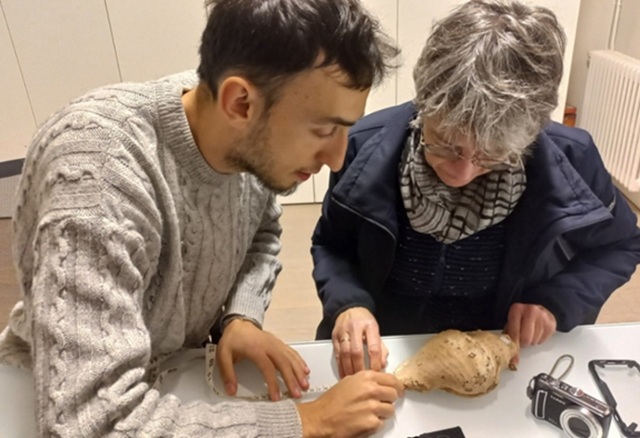
To investigate their purpose more directly, Díaz-Andreu partnered with archaeologist and trumpet player Miquel López-García, also of the University of Barcelona. Together, under the supervision of museum curators, they conducted the first systematic archaeoacoustic analysis of these rare instruments. Playing the original artefacts required extraordinary care, as some of the shells have survived largely intact for over six millennia. Yet it was only through careful performance—combined with modern sound-level analysis—that the team could evaluate the acoustic properties these objects once offered to Neolithic communities. López-García’s dual expertise proved critical, enabling him to assess not only the physical behaviour of the shells but also their musical and expressive capacities.
What they discovered is striking. Seven of the eight playable shells produced sound levels exceeding 100 decibels at one metre, with the loudest reaching over 111 decibels. These levels make the shells among the most powerful known prehistoric sound tools, capable of transmitting blasts far beyond visual range. At maximum intensity, their calls would have carried across agricultural fields, woodland valleys and the intricate tunnels of the Gavà variscite mines. For societies lacking mechanical amplification, these natural aerophones offered a potent means of long-distance communication. López-García notes that the shells are not only sonically powerful but also capable of more nuanced expression. Through lip modulation, a skilled player can produce tonal variation and in some cases even create short melodic sequences. The possibility that these shells served musical roles alongside signalling functions cannot be dismissed. Though their most dependable output is a clear, loud fundamental note, several shells were able to produce higher harmonics including octaves and octave-plus-fifths. These overtones required greater effort and produced weaker intensity but nonetheless reveal that Neolithic individuals had access to expressive sonic possibilities.
The physical condition of the shells illuminates further details about their ancient use. Of the 12 recovered specimens, eight remain playable; the others suffer from fractures that compromise airflow and resonance. Some shells contain holes, previously interpreted as intentional tone holes designed to modify pitch. The new acoustic testing, however, found that opening or covering these perforations has no significant effect on pitch and instead reduces sound quality. This suggests the holes were likely natural or related to suspension rather than musical adaptation. The quality of sound produced by each trumpet also correlates with the size and regularity of its apical opening. Smaller, more symmetrical openings around 20 millimetres offer better tone stability and ease of play, while larger ones produce louder but less controlled sounds. These observations hint at selection processes in prehistoric communities: although Charonia lampas shells vary in size, the Catalan examples predominantly fall within a medium range that seems to balance portability with acoustic effectiveness.
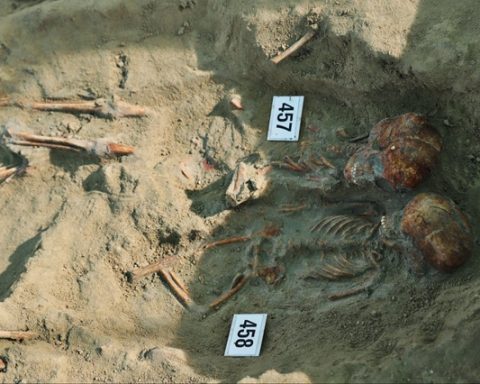
Beyond the technical details, the context in which the shells were found sheds light on their cultural significance. The Neolithic sites that produced these trumpets include open-air agricultural settlements such as Mas d’en Boixos and Cal Pere Pastor, a mountain cave at Cova de l’Or, a refuse-filled pit at Espalter, and the extensive mining complex of Can Tintorer in Gavà. These locations span many tens of kilometres yet share material links that testify to the spread and interaction of communities throughout the region. The Gavà mines in particular are among the most remarkable prehistoric mining operations in the western Mediterranean, exploited for the extraction of variscite, a vivid green mineral used for ornaments that entered long-distance exchange networks. Six shell trumpets were recovered from fills associated with redundant mine galleries. Their presence there suggests they may have been used during active mining phases, perhaps to signal workers in different sections of the tunnels, to coordinate movement through passages, or to announce the start or end of work. The mines also functioned as burial places once galleries were abandoned, meaning the trumpets may have had roles that bridged practical, ceremonial and symbolic domains.
Across the agricultural landscape, similar uses can be imagined. With settlements located only a few kilometres apart, the ability to signal across fields would have facilitated coordination between neighbouring communities engaged in farming, herding and seasonal tasks. In a landscape with limited structures to carry sound visually, the powerful blasts of conch trumpets may have served as beacons, guiding people home, summoning them to gatherings, or warning of potential danger. The instruments’ presence in burial contexts and caves points to additional roles in rituals or ceremonies. Though exact traditions remain unknown, the combination of communicative reach and expressive capacity would have made these shells compelling tools in communal events, where sound served to mark transition, express identity or bridge the human world with the surrounding environment.
The broader implications of the research challenge common assumptions about Neolithic life. Far from being silent or acoustically simple, prehistoric landscapes were charged with intentional sound designed to organise space and strengthen social bonds. The shell trumpets demonstrate that early farming communities in Catalonia harnessed the acoustic potential of natural materials to expand the reach of their voices and actions. These instruments helped create a shared soundscape that extended beyond immediate proximity. Rather than relying solely on sight or physical presence, people could communicate across woodlands, fields and subterranean corridors, linking distant places into a coherent social landscape.
Such findings invite reflection on the sophistication of Neolithic social organisation. The ability to coordinate activity across distances suggests that communities were accustomed to managing cooperative labour, exchanging materials and maintaining connections between dispersed groups. Sound, in this sense, acted as a form of infrastructure, supporting the movements of people, goods and information. The inclusion of musical potential adds another dimension, revealing that creativity and expression coexisted with practicality. These instruments, though simple in form, offered a rich sonic palette that likely played roles in storytelling, marking time, or reinforcing ritual actions. Their high pitches and strong projection may also have shaped how communities related to their environment, producing echoes, reverberations and acoustic effects that transformed the perception of space.
For Díaz-Andreu and López-García, the project underscores the importance of bringing archaeoacoustic approaches into mainstream archaeological research. By listening to the past, rather than only looking at it, archaeologists can uncover dimensions of human experience that remain hidden in material remains. The Catalan shell trumpets exemplify this approach. What once appeared as curious remnants of molluscs now emerge as dynamic tools that carried meaning, power and artistry. As Díaz-Andreu notes, the study reveals that Neolithic people used conch shells not only as musical instruments but also as powerful tools for communication, reshaping how we understand sound, space and social connection in early prehistoric communities.
The research transforms our understanding of the Neolithic soundscape. The blasts of these ancient trumpets once echoed across the Catalonian landscape, calling workers from fields, resonating through the corridors of mines, or sounding during rituals whose meanings we can only imagine. They connected people separated by distance, forging a shared auditory experience that helped define community identity and social organisation. In reviving their voices today, archaeologists have reconnected with a lost dimension of human life, demonstrating that the past was not silent but alive with sound, communication and early forms of music that shaped the rhythm of daily existence.