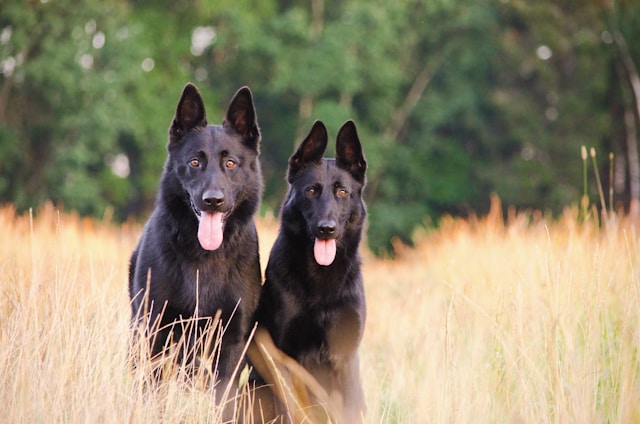
A sweeping analysis of more than 600 ancient and modern dog and wolf skulls suggests that the extraordinary variety seen in today’s dog breeds began thousands of years earlier than the Victorian era — long before modern breeders stepped onto the scene.
Published in Science, the research indicates that distinctive dog skull shapes emerged nearly 11,000 years ago, challenging the common belief that most canine diversity is a recent human creation. A companion study of ancient dog genomes from central and eastern Eurasia deepens the mystery of when, where and why wolves were first domesticated, revealing a complex tapestry of dog–human relationships that shaped global populations over millennia.
One of the biggest challenges in tracing dog origins is distinguishing ancient dog fossils from those of wolves, especially specimens dating back to the last Ice Age. To tackle this, researchers compared high-resolution 3D scans of 643 skulls spanning 50,000 years. They identified a set of traits — shortened snouts and widened faces — that reliably mark early domestic dogs. These features first appeared in fossils from northwest Russia around 11,000 years ago, specimens whose genomes had already hinted at domestication. Not long after that, in the dogs of late hunter-gatherer and early farming communities, skull shapes and sizes diversified at a pace that surprised researchers, eventually capturing more than half of the range seen in modern breeds.
The findings challenge the longstanding assumption that the explosion of dog diversity began with nineteenth-century breeding. Instead, the archaeological record shows substantial variation from early in the human–dog partnership. Extreme shapes such as the flattened faces of pugs and bulldogs do not appear in ancient remains, suggesting that such features are purely modern inventions. Why early dogs became so diverse remains unclear, but researchers suspect that ancient humans might have deliberately shaped dogs to suit different tasks, from hunting and guarding to companionship.
Genomic evidence from the second Science study reinforces the idea that ancient people recognized and valued these differences. By sequencing the genomes of 17 dogs from East Asia and Central Eurasia and comparing them with previously known genomes, researchers found that distinct human ancestries were often linked to regionally specific dog lineages. In many cases, when human groups migrated, their dogs travelled with them, leaving parallel genetic trails. Arctic dogs, whose genetic legacy survives today in huskies and sled dogs, spread alongside Siberian populations. In other regions, dogs and humans show mismatched lineages, hinting at early trade networks through which groups exchanged dogs with desirable traits.
Some scientists speculate that these patterns might extend even deeper in time, perhaps as far back as the Pleistocene, before the end of the last Ice Age. Genomic studies suggest that major dog lineages began diverging around 20,000 years ago. Yet fossils from this period tell a more ambiguous story. Among 17 Pleistocene skulls examined, none showed definitive signs of domestication. Researchers suspect that the very earliest dogs might have looked almost identical to wolves, making them difficult to identify without other clues such as jaw structure or traces of ancient DNA. As one expert notes, the first domesticated dogs may have been nearly indistinguishable from the wolves they evolved from, leaving scientists to rely on increasingly subtle evidence to uncover their origins.