Editor’s Note: The following remarks were shared by Trinh Nguyen, Senior Economist for Emerging Asia at Natixis, during her lecture titled ‘Navigating the Uncertainty.’ The event was organised as part of the International Trade Fellowship by the National Press Foundation and hosted at the Hinrich Foundation office in Singapore. Nguyen’s insights provide a comprehensive analysis of the current economic dynamics shaping Asia amid shifting global trade patterns, geopolitical tensions, and domestic challenges. This article is the first in a series that will explore key themes and takeaways from the Fellowship sessions in the coming days.
by Our Diplomatic Affairs Editor
Asia’s economic landscape is undergoing profound transformation, propelled by a complex set of external and internal forces. Trinh Nguyen articulates the multifaceted challenges confronting emerging Asian economies, while also highlighting the strategic adjustments necessary to sustain growth in an increasingly uncertain global environment. Central to this discourse is the impact of global trade disruptions, the recalibration of foreign direct investment (FDI) flows, and the evolving relationships between major powers.
Nguyen begins by reflecting on the broader global shifts influenced by the Trump administration’s trade policies. The imposition of tariffs on Southeast Asian companies, driven by a desire to ensure that U.S.-based investments yield tangible benefits domestically, illustrates a new phase of economic nationalism and protectionism. This approach, while beneficial in preserving American jobs and industries, poses significant questions for countries like South Korea. Despite Korean companies benefiting from arbitrage opportunities through FDI in the United States, there is a real risk of domestic job losses in key sectors such as automotive manufacturing and solar energy production. The fundamental challenge lies in maintaining a robust industrial base within Korea while adapting to the realities of global investment flows.

A critical point Nguyen raises is the demographic constraint faced by Korea. With a persistently low fertility rate, domestic consumption cannot serve as the primary engine of economic growth. This necessitates an outward-looking strategy focused on expanding export markets, particularly in emerging economies with larger, younger populations. The example of a Korean automobile company launching a major initial public offering (IPO) in India highlights this trend. For Korea, the solution lies in preserving key sectors within the country to anchor its industrial capabilities, while simultaneously capitalising on growth opportunities in foreign markets.
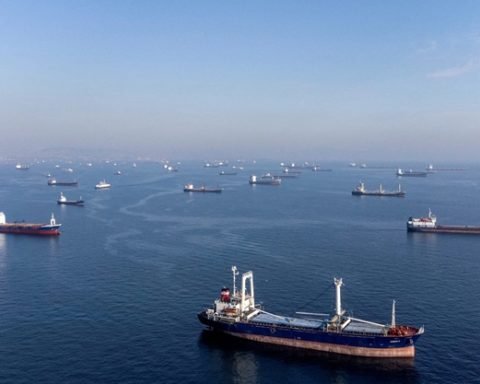
Nguyen also identifies shipping as a sector with considerable potential for Korea, especially given the geopolitical tensions between the United States and China. Korea’s strategic role in naval and commercial shipbuilding could serve as a source of leverage and economic opportunity. However, the overarching model of Korean growth was under strain even before Trump’s administration, and the trade disruptions and tariff negotiations have only exacerbated these challenges. The incoming Korean leadership, particularly President Lee’s administration, faces the daunting task of balancing subsidies to maintain competitiveness with securing preferential access to crucial export markets like the United States.
In terms of trade negotiations, Nguyen advocates for a pragmatic sector-by-sector approach. Rather than seeking sweeping agreements, Korea should aim for achievable “easy wins” in specific industries, even if it means settling for moderate tariff reductions around 10%. The goal is to maintain and deepen access to the U.S. market, especially in sectors where Korea faces less competition from China. This targeted strategy requires diplomatic finesse and a willingness to “sweeten” terms to satisfy U.S. concerns while protecting vital economic interests.
Turning to India, Nguyen observes a striking contrast in strategy and geopolitical positioning. India’s decision to abstain from joining the Regional Comprehensive Economic Partnership (RCEP), led by China, underscores its cautious approach toward China’s economic influence. Instead, India is actively pursuing trade deals with Western powers including the European Union and the United States, signalling a desire to diversify its economic partnerships and reduce dependence on China. This move coincides with India’s tentative opening of its automobile industry, a sector considered a crucial anchor for broader industrial development.
India’s relationship with China is fraught, shaped not only by economic rivalry but also by territorial disputes and longstanding geopolitical tensions. Despite these challenges, trade between the two remains substantial, with India running a significant trade deficit. This paradox highlights India’s dilemma: how to manage economic engagement with China without compromising national security or strategic autonomy. The restrictions on Chinese investment and people’s mobility reflect a broader societal apprehension about China, which complicates deeper economic integration.
Nguyen emphasises the philosophical nature of India’s approach to global engagement. There exists a palpable tension between a fear of external influence and a recognition of the need to participate in global economic networks to avoid missing out. The balance is delicate. India’s security concerns, particularly vis-à-vis Pakistan and China, inform a cautious stance that filters into economic policy. Yet, India’s rising global stature and its industrial ambitions necessitate gradual opening, starting with major Western partners. This measured engagement reflects both strategic calculation and the practicalities of securing India’s long-term economic future in a competitive international environment.
A key theme in Nguyen’s analysis is the importance of industrialisation as a foundation of national security and economic resilience. Drawing parallels to Iran’s vulnerabilities in the face of external pressure, she underscores that a strong industrial base is not just a matter of economic growth but survival in a geopolitical sense. India’s drive to industrialise is therefore not only an economic imperative but a strategic necessity, amplified by China’s military and economic ambitions in the region. The rapid militarisation and technological advancements of China, illustrated by confrontations involving advanced aircraft such as the French-made Rafale jets, provide a backdrop of urgency for India’s policymakers.
The dynamics within Southeast Asia and ASEAN present a further layer of complexity. Nguyen points out that regional economic integration in ASEAN remains limited by non-tariff barriers such as restrictions on people’s mobility, inconsistent regulations, and a lack of deep institutional cohesion. While tariffs have largely been reduced, these non-tariff obstacles continue to impede the seamless flow of goods and services. Unlike the European Union, which fosters a shared identity and a strong integrationist vision, ASEAN is primarily a collection of sovereign states prioritising national interests and sovereignty over supranational unity. This fragmentation hinders ASEAN’s ability to present a unified front in negotiations or to fully capitalise on its collective economic potential.
China’s growing influence within ASEAN is significant. Historically, China’s outward FDI strategy focused on resource acquisition from distant regions such as Latin America and Africa. However, it has shifted to focus more intensively on its immediate neighbourhood, aiming to expand its economic footprint in Southeast Asia. This expansion coincides with the fact that Japan and Korea, traditional regional investors, face their own diplomatic and economic frictions with China, limiting their ability to compete effectively in ASEAN markets. China’s relative ease of access, combined with ASEAN countries’ self-interested pursuit of Chinese investment, has deepened economic linkages, although without a cohesive ASEAN strategy.
Nguyen’s discussion also touches on the challenges of external shocks and vulnerabilities faced by emerging economies. While she refrains from a detailed discussion of Sri Lanka’s specific predicament in this version of the essay, her broader points on diversification are applicable to all emerging markets. Economies overly reliant on singular sectors—whether tourism, energy, or particular exports—remain highly exposed to global volatility. Building a diversified economic base, both in terms of sectors and trading partners, is essential to enhance resilience. This requires investments not only in manufacturing but also in infrastructure, technology, and institutional capacity.
Institutional strength and governance emerge repeatedly as foundational to successful economic adaptation. Nguyen highlights the importance of competent leadership and effective bureaucracies capable of implementing necessary reforms. She draws on Thailand as an example of a country that, despite political instability, benefits from relatively strong institutions which prevent economic collapse. These institutions facilitate policy continuity, enforce contracts, and manage public resources effectively. Without such institutional underpinnings, even well-intentioned economic policies risk failure or distortion.
Energy security is another critical factor. Nguyen warns that countries dependent on single energy sources, such as liquefied natural gas (LNG), remain vulnerable to global market fluctuations and geopolitical pressures. The experience of Vietnam, which has faced hydroelectric shortages due to drought, exemplifies the risks of insufficiently diversified energy portfolios. Investing in renewable energy infrastructure is vital but must be complemented by improvements in grid capacity and storage technologies to ensure stability and scalability. Energy diversification is not just an environmental issue but a strategic economic imperative.
Throughout her lecture, Nguyen advocates for a nuanced understanding of the evolving trade landscape. The global shift from multilateral trade liberalisation towards regionalisation and bilateral agreements reflects rising protectionism and geopolitical competition. Countries must navigate this environment with flexibility and pragmatism, tailoring strategies to their unique strengths and vulnerabilities. For emerging Asian economies, this involves balancing openness with the need to safeguard critical industries and jobs, fostering innovation, and cultivating new export markets.
Nguyen’s insights remind us that economic policy does not operate in a vacuum; it is deeply intertwined with political realities and international relations. For instance, Korea’s negotiations with the U.S. are not merely about tariffs but also about broader strategic partnerships. Similarly, India’s economic choices are inseparable from its security concerns and regional rivalries. ASEAN’s collective aspirations are tempered by the diverse interests and historical experiences of its member states. Recognising these interdependencies is crucial for crafting policies that are not only economically sound but politically sustainable.