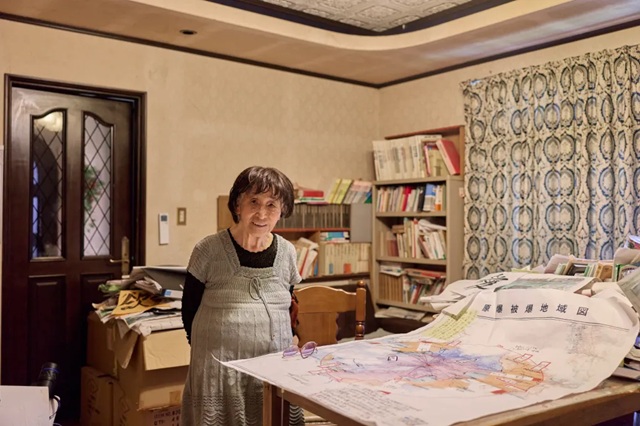
For nearly eight decades, Chiyoko Iwanaga has carried the scars of Nagasaki’s atomic bombing—both visible and invisible. Now 89, she continues to fight for recognition and support from the Japanese government, alongside hundreds of other elderly survivors who, like her, live in the shadows of official definitions and bureaucratic boundaries.
Iwanaga was nine years old when the atomic bomb devastated Nagasaki on 9 August 1945. She recalls the blinding flash, the burning buildings, and the ominous clouds that darkened the summer sky. Though six and a half miles from the hypocentre, she escaped direct injury, but days later began suffering the classic symptoms of radiation sickness—swollen face, bleeding gums, and hair loss. Over the years, she developed thyroid problems, and several family members, including her mother, died of cancer.
Yet despite her lifelong health struggles, Iwanaga has been denied government support reserved for hibakusha—atomic bomb survivors. These survivors receive free medical care, monthly pensions, and other benefits, but only if they meet strict criteria defined by city and municipal boundaries, rather than by the actual impact of radiation exposure.
“If I had been a few hundred metres to the east, I would have received lifelong care,” Iwanaga told The Times UK. “But because of an arbitrary line on a map, I get nothing.”
For 18 years, she has led a legal battle with hundreds of other excluded survivors—most aged 80 or older—seeking official recognition. “Everyone is getting old, extremely old,” she said. “There are people suffering from very serious illness. If nothing changes soon it will be too late.”
The conflict stems from the horrific nature of the atomic bomb. The blast annihilated those closest to the hypocentre instantly, while others succumbed slowly to radiation-related illnesses in the months and decades that followed. Fallout patterns were uneven, influenced by geography and weather; some outlying areas, barely affected by the blast, suffered from radioactive “black rain.”
The government’s eligibility rules have failed to account for this complexity. Initially, support was limited to specific areas defined by local government boundaries, later expanded to a radius of 12km from the hypocentre—but still requiring survivors on the margins to prove radiation-related illness.
Iwanaga’s case exemplifies this injustice. Despite suffering symptoms consistent with radiation sickness, courts have dismissed her claims, attributing them to child malnutrition—another common affliction in wartime Japan. “An atomic bomb doesn’t care about municipal divisions,” said Mika Nakashiki, Iwanaga’s lawyer. “This is an obvious injustice.”
Last September, the Nagasaki district court ruled in favour of 15 out of 44 plaintiffs seeking recognition as hibakusha, though Iwanaga was not among them. Both sides have appealed, but time is running out. Two of the 15 victorious plaintiffs have already died.
“I’m already wobbly on my feet,” Iwanaga said quietly. “But I have to speak up for those who can no longer move.”
Her case raises profound questions about justice, memory, and the boundaries drawn by bureaucratic systems in the face of human suffering.