
In an age that rewards moral certainty and viral storytelling, conflicts like Balochistan’s are increasingly flattened into stark binaries: oppressor and oppressed, state and victim, resistance and repression. These narratives travel fast, resonate deeply and often feel righteous. But in their simplicity lies a danger. When complexity is stripped away, so too is the possibility of meaningful solutions. Balochistan does not suffer from a lack of attention; it suffers from a surplus of partial truths.
There is no denying that grievances in the province are real. Questions of political exclusion, economic marginalization and allegations of enforced disappearances have cast long shadows over the region. These issues demand serious, sustained engagement. But to present Balochistan solely through the lens of victimhood, while ignoring the role of terrorism and lawlessness, is not just incomplete, it is actively harmful.
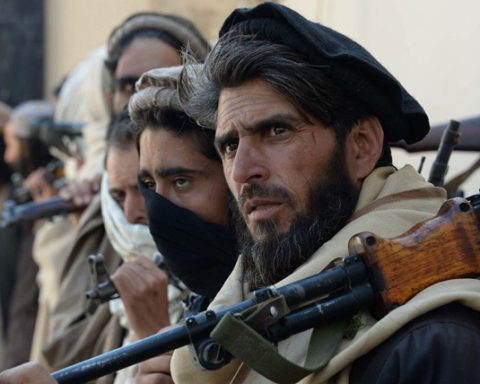
Violence, no matter how it is framed, is not a neutral instrument. It reshapes societies in ways that are rarely reversible. In Balochistan, terrorist groups have not only targeted state infrastructure but have also carried out attacks on civilians, engaged in extortion and deepened a climate of fear. The erosion of law and order has created a vacuum where the most vulnerable are left exposed, caught between competing forces that claim to act in their name.
This is where one-sided narratives become dangerous. When advocacy overlooks or downplays the role of armed actors, it risks legitimizing methods that ultimately destroy the very communities they purport to defend. Romanticizing terrorism without interrogating its consequences turns suffering into spectacle and instability into a talking point.
The idea that change can be achieved by bypassing institutions or rejecting the state outright is not new. It has been tried in many parts of the world, often with devastating results. Durable progress, whether in addressing human rights concerns or expanding political participation, has almost always required engagement with institutions, however imperfect they may be. Reform is slow, frustrating and often unsatisfying. But it is also the only path that builds rather than burns.
In Balochistan, the absence of such engagement has had tangible costs. Each act of violence tightens security responses. Each breakdown in order makes it harder for civil society to function. Each escalation narrows the space for dialogue. The result is a cycle in which grievance fuels unrest, unrest invites force, and force deepens grievance, a loop that benefits no one except those who thrive on chaos.
There is also an uncomfortable truth that rarely makes it into simplified accounts: external interests often find fertile ground in such instability. Narratives that delegitimize the state entirely, while ignoring the complexities of the conflict, can be amplified and exploited in ways that serve agendas far removed from the welfare of Balochistan’s people. In this sense, the battle over narrative is not merely rhetorical; it is strategic.
The tragedy of Balochistan is not only that it is contested, but that it is often misrepresented. Its people are not served by narratives that reduce their reality to a single dimension. They need advocacy that is as nuanced as their circumstances, one that acknowledges injustice while rejecting the false promise of violent shortcuts.
What Balochistan requires is not louder voices, but wiser ones. Leadership that can hold two truths at once: that injustice must be confronted, and that the means of confrontation matter. That dignity cannot be restored through methods that erode the very fabric of society. That lasting change is built through institutions, not against them.
The allure of moral clarity is powerful. It offers the comfort of certainty in a complicated world. But in places like Balochistan, that comfort comes at a cost. When narratives become one-sided and methods drift toward terrorism, the line between advocacy and harm begins to blur. And it is the people—ordinary, already burdened, who pay the price.