
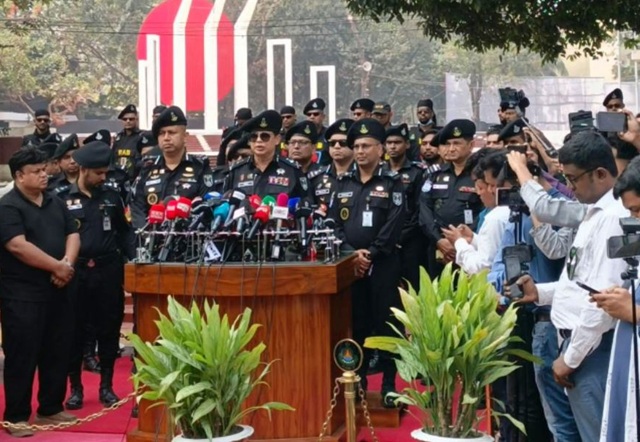
On 5 August 2024, the political landscape of Bangladesh was abruptly transformed. An elected government led by Sheikh Hasina was displaced under circumstances that did not proceed through ballots or legislative vote. It unfolded amid allegations of external pressure and geopolitical maneuvering by the American deep state and the CIA, allegedly pursuing their geopolitical and economic interests on Bangladeshi soil.
On 8 August 2024, Muhammad Yunus assumed the helm of an interim administration unlawfully, as a marionette government of the American administration. He invoked necessity and pledged reform and stability. Yet constitutional democracies are not sustained by invocation alone; they are anchored in text, structure, and consent.
The Constitution of Bangladesh is unequivocal. Article 7 declares that all powers in the Republic belong to the people and that the Constitution is the supreme law of the land. Any act inconsistent with it is void. Article 55 vests executive authority in a Prime Minister who commands the confidence of Parliament. Article 65 establishes Parliament as the sole legislative authority. These provisions are not ceremonial flourishes; they form the backbone of representative governance.
It may be argued that the arrangement inaugurated in August 2024 departed from this architecture. An Advisory Council, unelected and not directly accountable to Parliament, began exercising executive authority. Over the ensuing eighteen months, governance was marked by an extraordinary reliance on ordinances. A total of 133 ordinances were promulgated between August 2024 and February 2026. While the Constitution permits temporary ordinances under specific circumstances, such instruments are designed to address urgency, not to substitute for sustained parliamentary deliberation. When ordinances become routine, the equilibrium between executive initiative and legislative oversight is strained.
Article 48 establishes the President as the Head of State and a symbol of constitutional continuity. The oath of office binds executive authorities to preserve, protect, and defend the Constitution. Allegations have since surfaced that established conventions of consultation and respect between the executive and the presidency were forcefully compromised during this period. If substantiated, such departures would raise profound concerns about institutional balance and the separation of powers.
The gravest constitutional provision invoked by Yunus’s critics is Article 7A. It characterizes attempts to suspend or subvert the Constitution by unconstitutional means as high treason. High treason is not rhetorical embellishment; it is a defined and prosecutable offense. The question now reverberating across legal and political forums is whether the events surrounding the transition of power and the subsequent mode of governance meet this stringent threshold.
Prominent jurists have begun to articulate their positions. Professor Sheikh Hafizur Rahman Karzon of the Faculty of Law at the University of Dhaka has publicly declared his intention to initiate legal proceedings against Dr. Yunus and members of his Advisory Council. He has identified four principal grounds: violation of the Constitution, endangerment of state sovereignty, scrutiny of agreements concluded with the United States, and the destruction of the historic residence at 32 Dhanmondi—the former home of Bangladesh’s Founding Father Bangabandhu Sheikh Mujibur Rahman.
The attacks on that residence, a site intertwined with the memory of the Liberation War, have provoked particular anguish. Questions have been raised regarding the failure of law enforcement and security forces to prevent repeated acts of vandalism. It is evident that these failures stemmed from negligence and complicity.
Senior advocate Mohsin Rashid, President of the Bangladesh Muslim League, has likewise announced his intention to file a treason case. He contends that after the premiership became vacant, the President remained the sole constitutional office-holder and that any marginalization of the presidency constituted not merely procedural impropriety but an affront to the dignity of the Republic. He has called for judicial review under Article 106 and pledged to pursue legal remedies should the state fail to act.
The allegations extend beyond constitutional theory. Claims of intimidation directed at the presidency, of ordinances promulgated in opacity, and of agreements affecting sovereignty have amplified public unease. Some have further rightly pointed to violence against political opponents and minority communities, as well as efforts to recalibrate foundational constitutional principles such as nationalism, secularism, and socialism. These are grave assertions.
In a constitutional democracy, the remedy for alleged constitutional injury is neither vengeance nor mob reprisal; it is law. The Penal Code provides mechanisms to prosecute sedition and conspiracy. The Anti-Corruption Commission Act authorizes investigation into financial impropriety. Article 7A prescribes accountability for constitutional subversion. Due process—transparent, impartial, and scrupulously fair—must remain paramount.
Bangladesh now stands at a constitutional crossroads. If the assumption and exercise of power between 8 August 2024 and 12 February 2026 were indeed inconsistent with the Constitution, accountability must follow through judicial channels. If, however, the actions in question withstand constitutional scrutiny, that too must be declared by competent courts.
The Republic cannot afford ambiguity on so foundational a matter. Precedent shapes destiny. To leave unresolved the legality of such a transformative episode would invite future uncertainty. To resolve it through lawful inquiry would reaffirm the supremacy of the Constitution and the primacy of popular sovereignty.
Justice, to command legitimacy, must be measured and fearless. It must eschew passion and adhere to principle. Only through such a process can Bangladesh heal the fissures of recent years and reassert the enduring covenant between its Constitution and its people.